

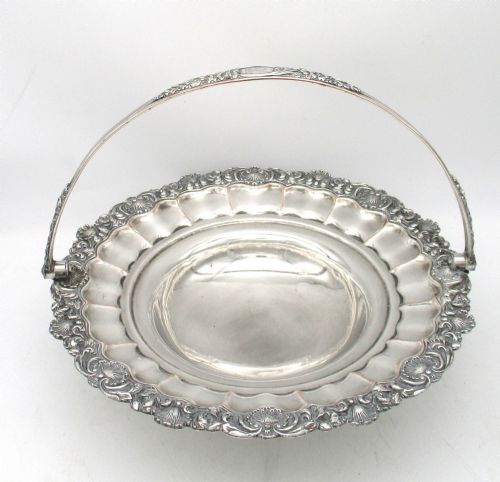

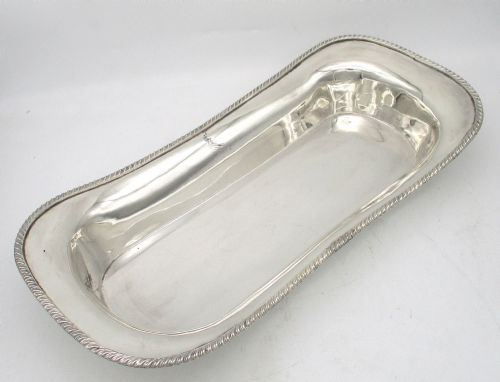


Silver Bread Dish
When you handle a silver bread dish, you hold a piece of dining history designed to present daily bread with elegance.
Silver Bread Dish
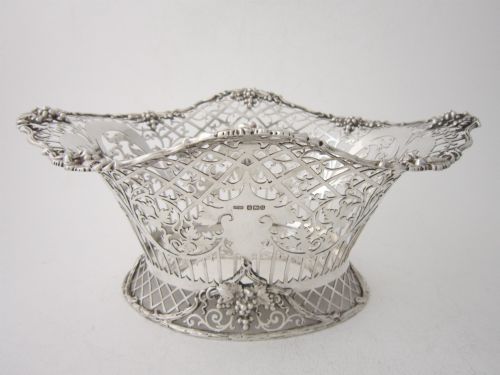
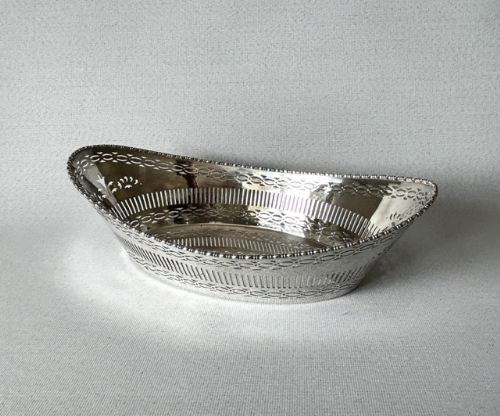
A silver bread dish encompasses open baskets, pierced bowls, and swing-handled vessels designed for table service. These items originate across the nineteenth and twentieth centuries, spanning periods from Georgian and Victorian to Edwardian and Art Deco.
The pieces frequently overlap with fruit baskets, cake baskets, and serving trays. Silver plate and solid sterling silver dominate the selection, alongside older methods like Old Sheffield Plate.
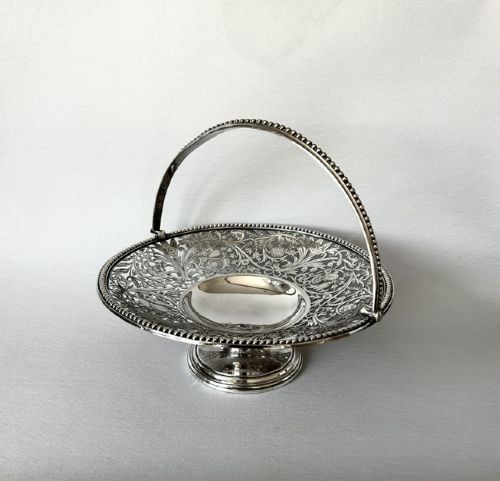
Victorian and Edwardian silver plated baskets with pierced rims or swing handles appear most often. Examples range from British makers to continental workshops in Vienna and Paris.
How they were made
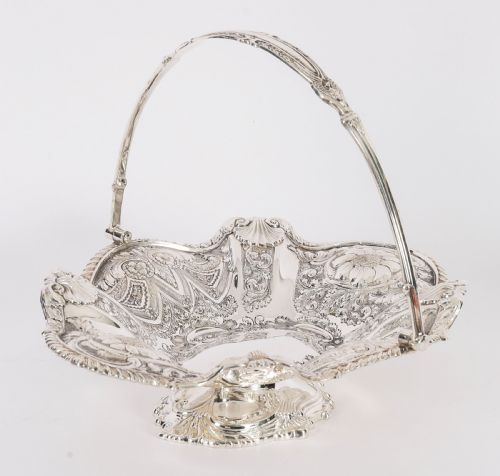
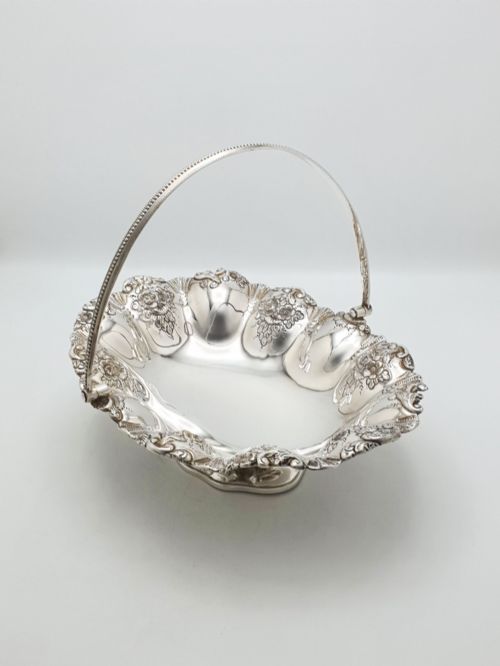
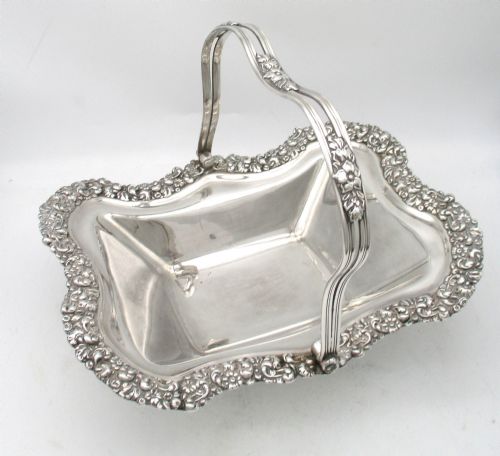
Silversmiths utilised sterling silver and various plating methods, including Old Sheffield Plate and electroplating on nickel silver or copper bases. Piercing, embossing, and repoussé decoration required skilled hand-working to shape the metal into openwork lattices or floral rims.
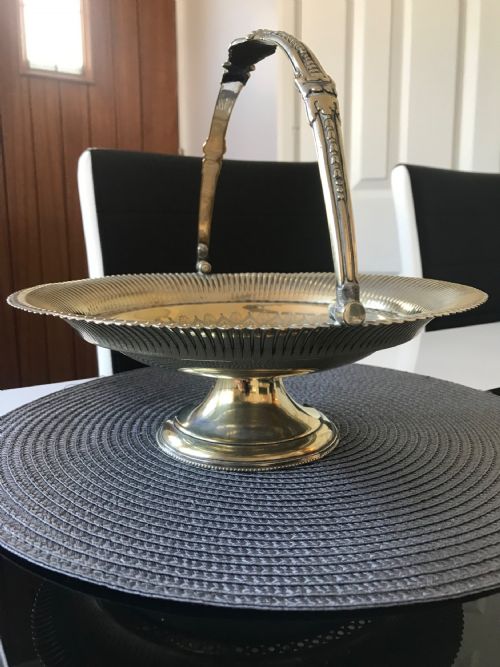
Swing handles depended on sturdy hinges integrated into the rim, while wirework baskets relied on soldered copper or silver wire structures fused before plating. Engraving and chasing added surface detail to handles and interior wells.
Silver Bread Dish Retail Price Guide 2026
Typical asking prices for silver bread dish among the pieces listed under this phrase on Sellingantiques today, from the lower quarter to the upper quarter. They describe what is for sale here now, not the wider market.
Some nineteenth century bread baskets feature hinged swing handles designed to drop silently when lowered after passing around the table.
What varies in quality
The weight of the metal and the depth of the piercing or repoussé work distinguish heavier, superior items from lighter press-formed pieces. Crispness in the floral engraving and the smoothness of the swing handle mechanism indicate the maker's original standard of production.
The preservation of the plating layer on silver plated and Old Sheffield Plate pieces affects the surface appearance. Thicker silver deposits and intact copper margins on fused plate demonstrate finer initial manufacture.
George W Scott And Sons Ltd·Mappin And Webb·Creswick·Walker And Hall·Robert Breading·John Hunt·William Comyns·James Deakin And Sons·Martin Hall·Walker Knowles·Brille Paris·Archibold Knox For Liberty And Co
The Silver Bread Dish Glossary
- Old Sheffield Plate
- A composite material made by fusing a sheet of silver to a thicker copper base. This technique preceded modern electroplating and produces characteristic subtle copper edges on wear points.
- Repoussé
- A metalworking technique where the artisan hammers the design from the reverse side to form raised ornamentation. It appears frequently on floral rims of Edwardian and Victorian baskets.
- Piercing
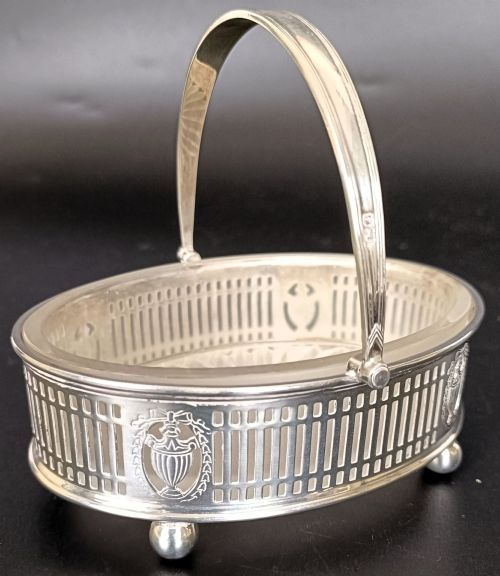
- The practice of cutting decorative apertures through the metal wall of a dish or basket. This creates lightweight openwork lattices common in Victorian serving pieces.
- EPNS
- Electroplated Nickel Silver. A base metal alloy of copper, nickel, and zinc coated with an electrolytic layer of silver, widely utilised from the nineteenth century onwards.
- Swing handle
- A movable arched handle attached to pivots on opposite sides of a basket or dish. It allows the vessel to fold flat for storage or extend upward for serving.
Silver Bread Dish: Frequently Asked Questions
How were silver bread dishes used?
These dishes sat on dining tables to hold sliced bread, rolls, or baked goods during formal meals. They allowed hosts to pass bread around the table with ease.
In many households, similar vessels doubled for serving fruit, cakes, or pastries as dining habits evolved through the nineteenth and twentieth centuries.
How do I clean a silver dish?
Use a soft cloth and a dedicated silver polish designed for sterling or plated surfaces. Avoid harsh abrasives that can wear away thin silver plating.
Wash the dish in warm soapy water and dry it immediately with a soft towel to prevent water spots from forming on the metal.
Can I use an antique bread dish daily?
These pieces function well for serving dry foods like bread, biscuits, or fruit during meals. Direct contact with acidic foods should be kept brief to protect the surface.
Hand washing is essential, as modern dishwashers use harsh detergents and high heat that damage older silver plating and solid silver alike.