



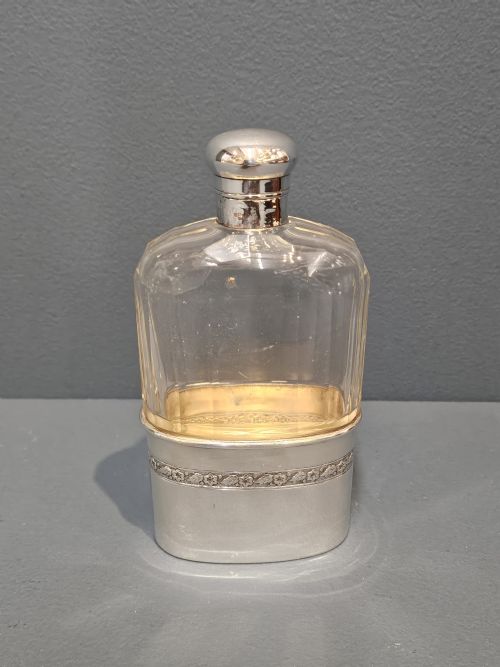
Silver and Glass Cups
Silver and glass cups span pocket flasks, portable tot sets and cocktail goblets built for portable drinking.
Silver and Glass Cups
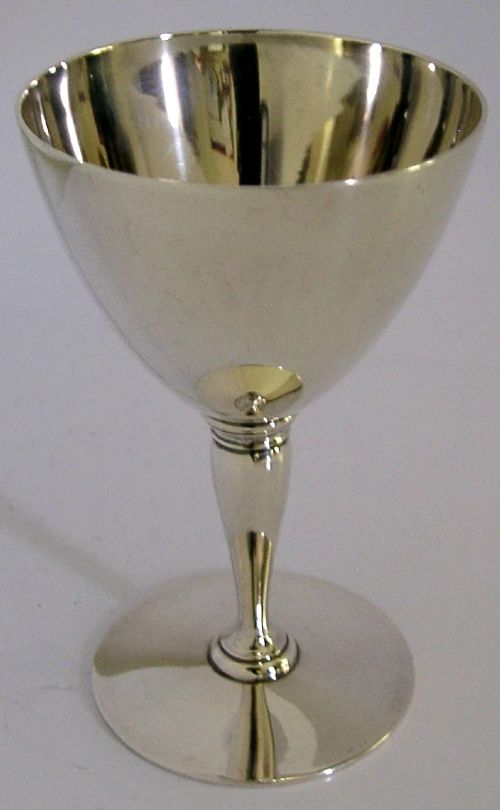
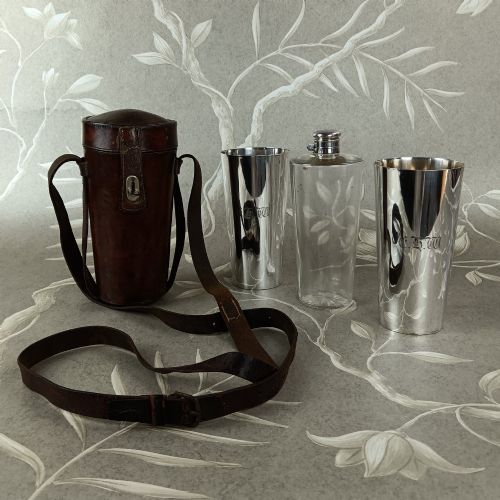
Silver and glass cups combine sturdy vessels for spirits and cocktails with metal mounts, slip-on base cups and protective leather sleeves. These objects range from Victorian field campaign spirit sets and heavy cut-glass hip flasks to Edwardian shot glasses and Art Deco cocktail goblets.
Collectors encounter numerous hip flasks featuring removable lower drinking cups alongside specialised barware like silver-plated dispensers and solid silver beakers. The selection draws on late nineteenth-century Victorian pieces, Edwardian novelties and twentieth-century deco designs.
How they were made
Makers combined blown and cut glass with sterling silver, silver plate, and 800 or 84 grade silver components. Glass bodies frequently received deep wheel-cut decoration, while metal mounts were fashioned through casting, hammering, and parcel gilding.
Protective outer elements relied on crocodile leather and smooth bridle leather bound tightly around glass or metal containers. Internal gilding protected silver surfaces from the acidic nature of spirits and liqueurs.
Silver and Glass Cups Retail Price Guide 2026
Typical asking prices for silver and glass cups among the pieces listed under this phrase on Sellingantiques today, from the lower quarter to the upper quarter. They describe what is for sale here now, not the wider market.
Listings feature items utilising sterling silver, silver plate, 800 silver, crocodile leather, and cut glass across Victorian and twentieth-century periods.
What varies in quality
Quality rests on the crispness of glass cutting, the thickness of silver gauge utilised in the cups and mounts, and the preservation of original leather casings. Superior examples retain matching hallmarks across detachable drinking cups and main bodies.
The finesse of hand-hammered finishes and the presence of enamel work separate standard utilitarian pieces from high-end workshop production. Original fitted presentation boxes and complete multi-piece service sets elevate the status of individual vessels.
James Dixon & Sons·Tiffany & Co·Asprey London·Elkington·George Ernest Hawkins·Aleksandr Timofeyevich Shevyakov·W A Ellwick Ltd
The Silver and Glass Cups Glossary
- Hip Flask
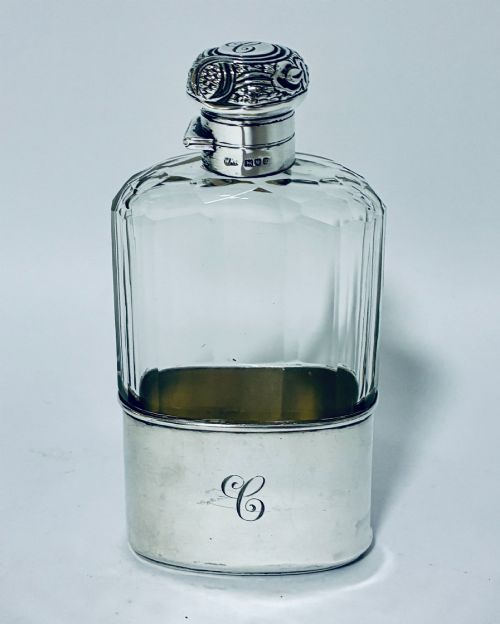
- A pocket vessel designed for carrying spirits, frequently fitted with a removable cup at the base. These items often combine glass bodies with silver mounts and leather jackets.
- Tyg
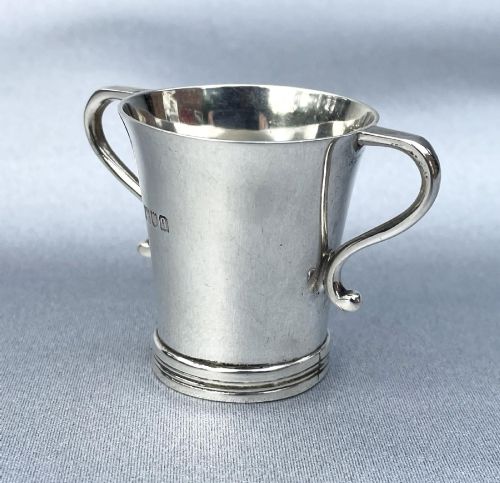
- A large drinking vessel featuring multiple handles, built for communal passing during gatherings. Examples in this category pair solid silver mounts with cut glass bodies.
- Kovsh
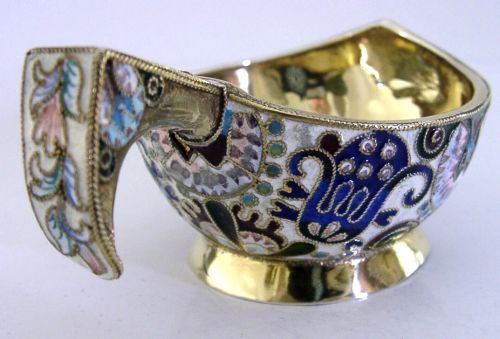
- A traditional boat-shaped drinking vessel originating from Russia. These pieces are frequently fashioned from high-grade silver and ornamented with enamel.
- Parcel Gilt
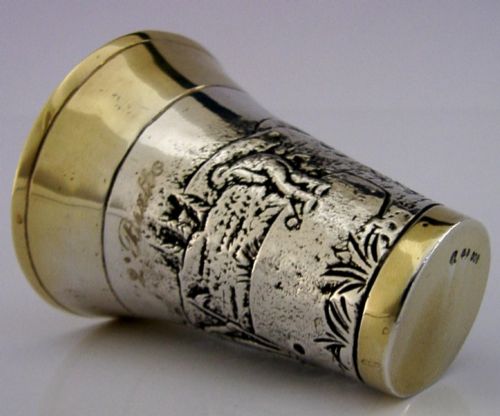
- A metalworking technique where specific areas of a silver object receive a thin coating of gold. This process creates a two-tone decorative contrast on interiors and highlights.
- Cut Glass
- Glassware decorated by grinding patterns into the surface using mechanical wheels. This technique provides grip and refracts light across barware and flasks.
Silver and Glass Cups: Frequently Asked Questions
What is a removable cup on a flask?
The lower portion of a hip flask often doubles as a slip-on drinking vessel held in place by friction or a bayonet catch. Pulling this section free allows the owner to pour a tot without exposing the main container.
Such designs kept the kit compact for travel and field sports. Matching hallmarks between the flask collar and the base cup confirm original pairing.
Why are some silver cups gilded inside?
Internal gilding, or parcel gilding, applies a layer of gold over the silver surface to prevent tarnishing from alcohol and acidic liquids. This technique protects the wearer from metallic tastes.
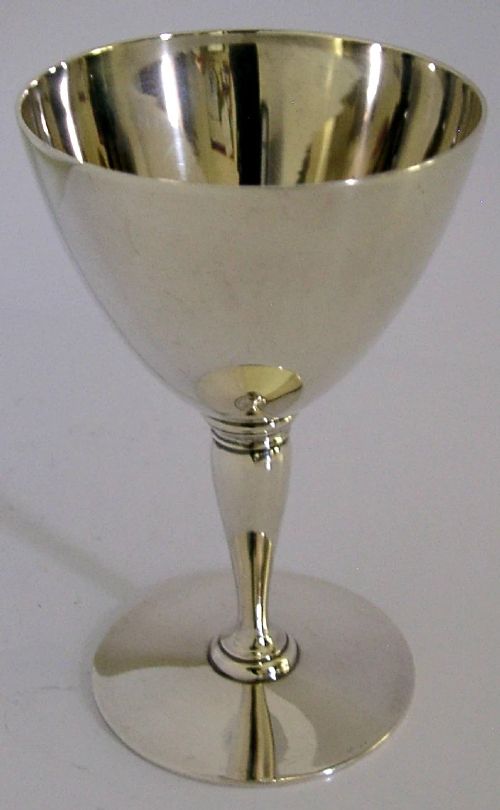
Historical cocktail goblets and spirit beakers utilised this method for both hygiene and visual contrast. The gold layer wears thin with centuries of regular cleaning and use.
How do I date an unmarked silver mount?
Dating relies on stylistic markers such as cut-glass patterns, leather wrapping techniques, and the general silhouette of the piece. Edwardian items lean toward streamlined elegance while Victorian examples favour heavy ornamentation.
Comparing the object to fully hallmarked pieces from similar workshops narrows down the decade of production. Glass manufacturing traits also offer clues to the period of origin.
Were these cups meant for travel?
Many silver and glass drinking vessels were engineered specifically for hunting, military campaigns, and railway journeys. Leather bindings protected the glass from shocks inside pockets and saddlebags.
Travelling medical kits and field sets incorporated secure stoppers to prevent leaks during movement. The inclusion of collapsable or detachable cups facilitated drinking away from home.