





Silver and Glass Container
A silver and glass container combines metal mountings with transparent vessels, holding everything from biscuits to dressing table creams.
Silver and Glass Container
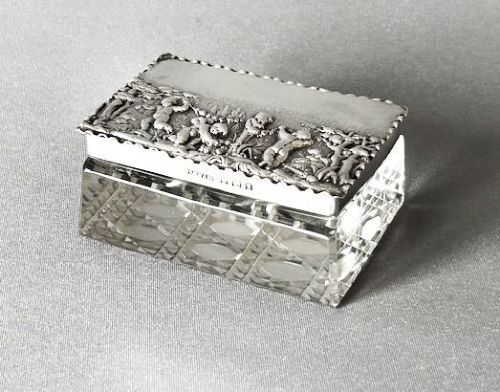
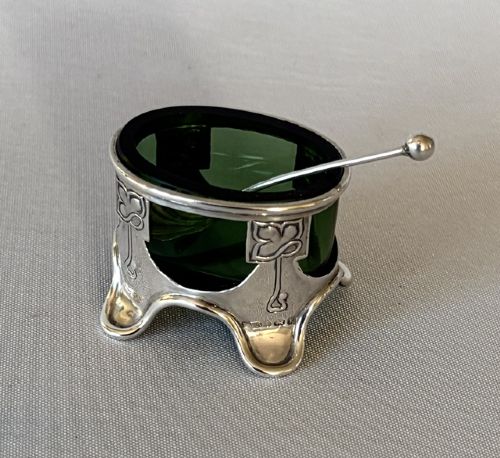
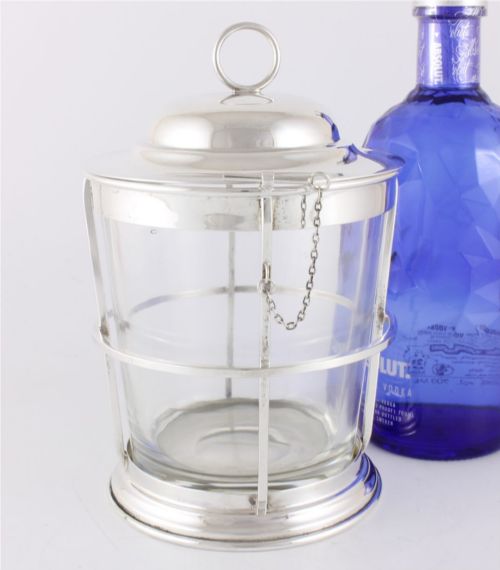
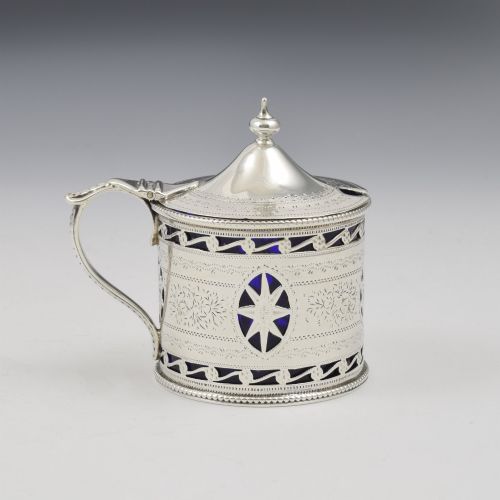
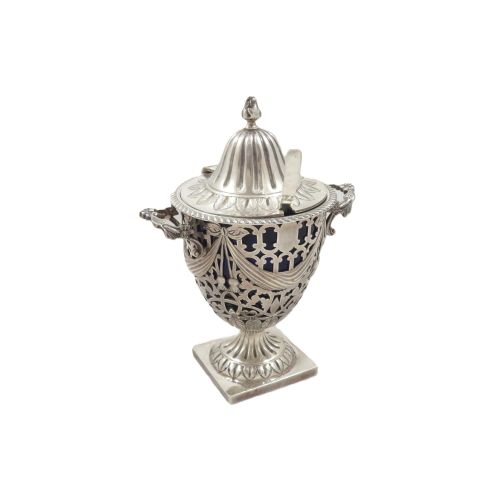
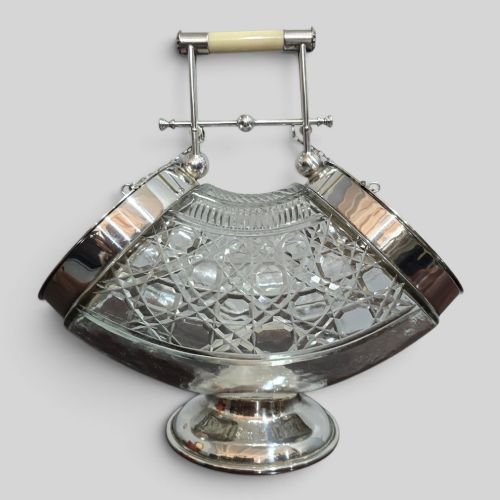
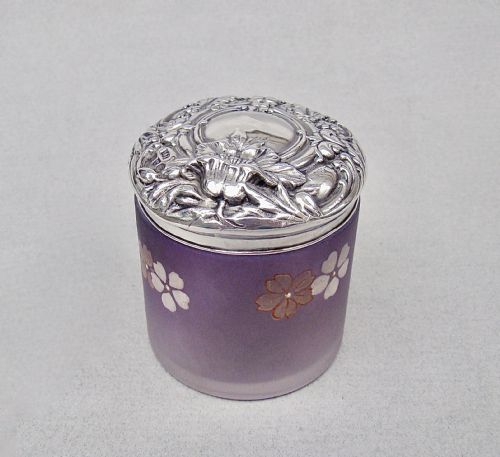
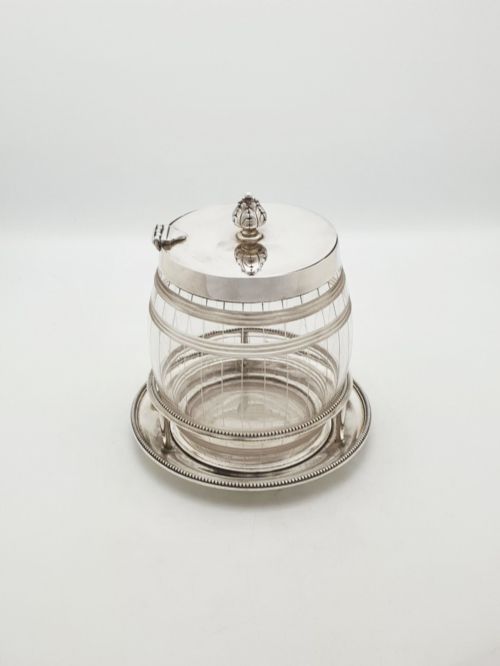
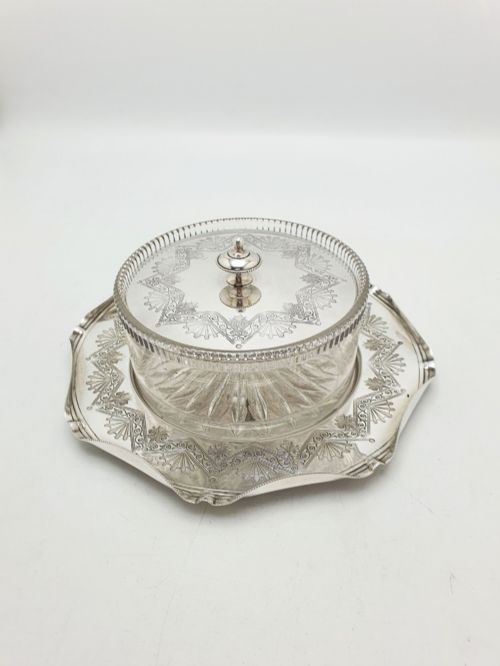
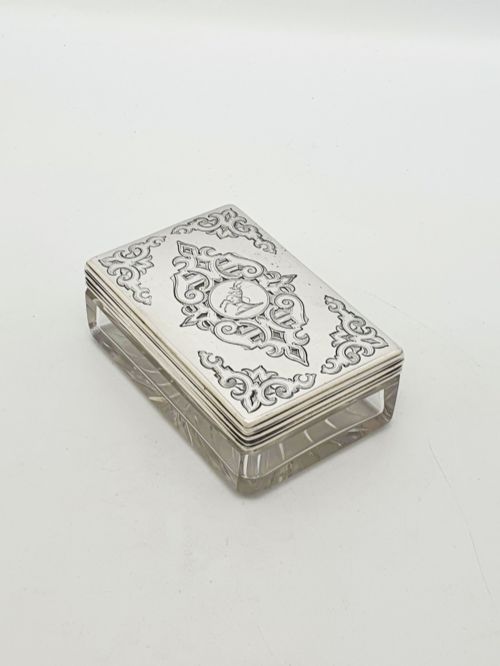
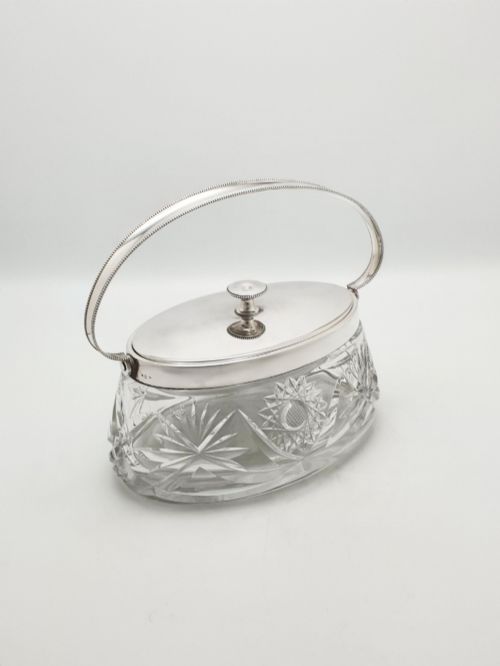
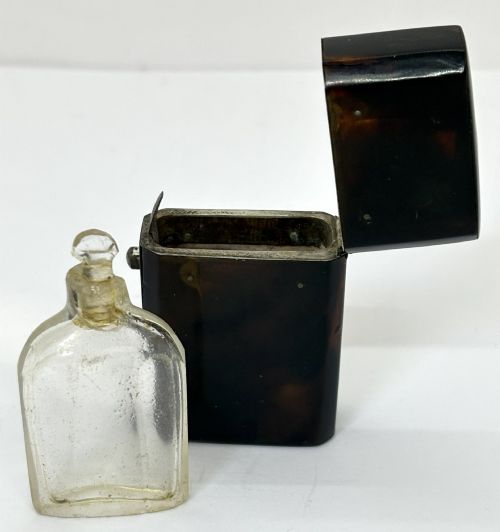
When searching for a silver and glass container, buyers encounter a diverse range of domestic objects spanning the Victorian, Edwardian, and Art Deco periods. Biscuit barrels, vanity jars, mustard pots, and ice buckets form the majority of the pieces seen on this page.
Makers utilised various glass types including cut crystal, cranberry glass, cobalt glass, and frosted glass, paired with sterling silver or silver plate. Originating primarily from British workshops, these items served functional roles on dining tables and dressing stations.
Materials and Techniques
Craftsmen shaped heavy crystal and glass bodies through cutting, moulding, and faceting to catch the light, frequently incorporating hobnail patterns or coloured tints. Metal mounts, hinged lids, and swing handles in sterling silver or silver plate were then fitted securely to the glass vessels.
Silversmiths applied techniques such as piercing, embossing, and guilloche enamel work to the metal components, often adding maker marks and assay office stamps for identification.
Silver and Glass Container Retail Price Guide 2026
Typical asking prices for silver and glass container among the pieces listed under this phrase on Sellingantiques today, from the lower quarter to the upper quarter. They describe what is for sale here now, not the wider market.
Listings span the Victorian, Edwardian, and Art Deco periods, utilising sterling silver, silver plate, cut crystal, and cranberry glass.
Defining Quality
The standard of a silver and glass container depends upon the depth and crispness of the glass cutting, alongside the thickness and weight of the silver mounts. Pieces featuring intact colour runs, such as cranberry or amethyst glass, alongside clear hallmarks on the metal, sit at a higher level.
Design complexity also dictates the tier of the piece, with specialised forms like figural jam pots or vessels incorporating detailed heraldic finials demonstrating greater workshop skill than plain utility wares.
PH Vogel·Nathan and Hayes·Elkington·WMF·Hukin and Heath·Mappin and Webb·Hasset and Harper·Levi and Salaman·James Dixon and Sons
The Silver and Glass Container Glossary
- Biscuit Barrel
- A covered ceramic or glass container designed for storing dry biscuits on the dining table. They frequently feature silver-plated or sterling silver swing handles and mounts.
- Guilloche Enamel
- A decorative technique where intricate geometric patterns are engraved beneath a translucent coloured enamel layer. It appears frequently on twentieth-century vanity jars and boxes.
- Hobnail Cut
- A raised, sharp-pointed diamond pattern cut into the surface of glassware. This treatment maximises sparkle and is typical of Victorian and Edwardian crystal.
- Sterling Silver
- An alloy consisting of pure silver and other metals, standardised at a fineness of ninety-two point five per cent. It is the primary metal used for the lids and mounts of higher-end containers.
- Silver Plate
- A base metal substrate coated with a thin layer of pure silver. Many nineteenth-century biscuit barrels and ice buckets utilise this method for durability.
Silver and Glass Container: Frequently Asked Questions
What were biscuit barrels used for?
Biscuit barrels held dry biscuits and baked goods on Victorian and Edwardian dining tables, keeping them fresh with a fitted lid.
Servants brought them out after meals or during afternoon tea, and the swing handle allowed guests to serve themselves easily.
How do I clean silver mounts?
Clean silver mounts with a soft cloth and a dedicated silver polish, taking care to avoid getting abrasive chemicals onto the glass or enamel.
Keep polish out of engraved crevices and hinges to preserve the original finish and prevent residue buildup.
How are periods identified?
Periods are identified through a combination of assay office hallmarks, maker marks, and stylistic clues like the geometric lines of Art Deco or the heavy ornamentation of the Victorian era.
Glass manufacturing techniques and colours also shift across decades, helping to date the vessel itself.
Can these containers hold food?
Many of these containers were originally designed for foodstuffs like sugar, mustard, or biscuits, making them suitable for similar dry goods today.
Care should be taken with antique silver plate and older glass adhesives when washing them.