
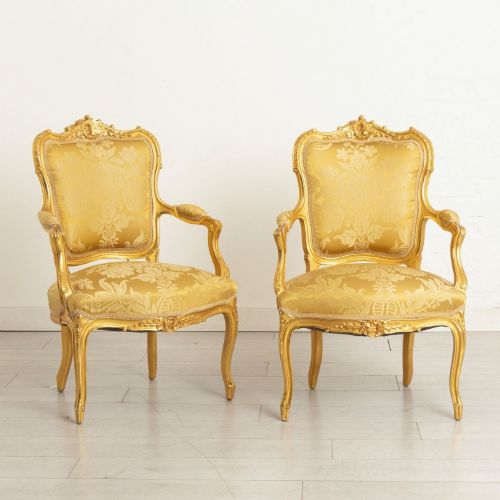


Silk Upholstered Armchair
A silk upholstered armchair brings texture and period elegance to a room, offering a seat designed for both comfort and display.
Silk Upholstered Armchair
A silk upholstered armchair combines robust framing with lustrous textile covering, drawing from centuries of seating design. When searching for a silk upholstered armchair, buyers encounter pieces spanning from the seventeenth century through to the twentieth century, with nineteenth-century interpretations appearing frequently.
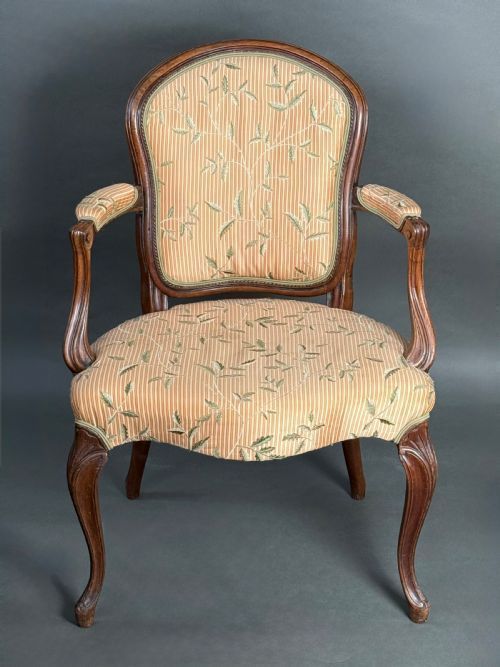
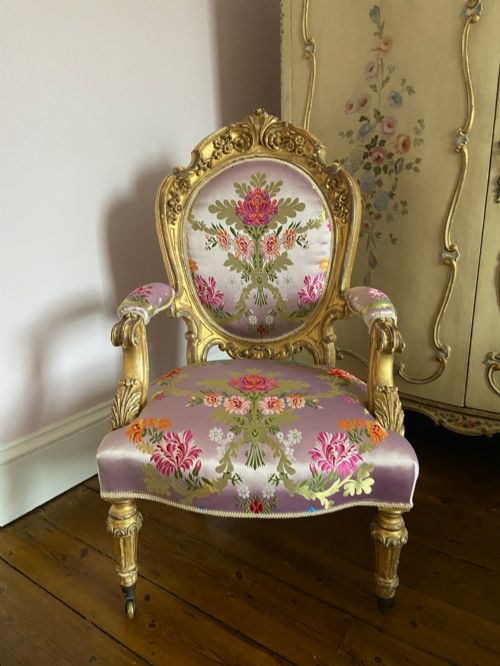
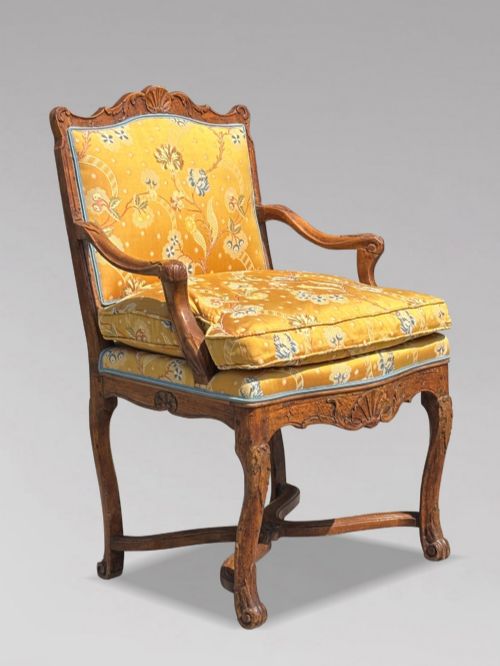
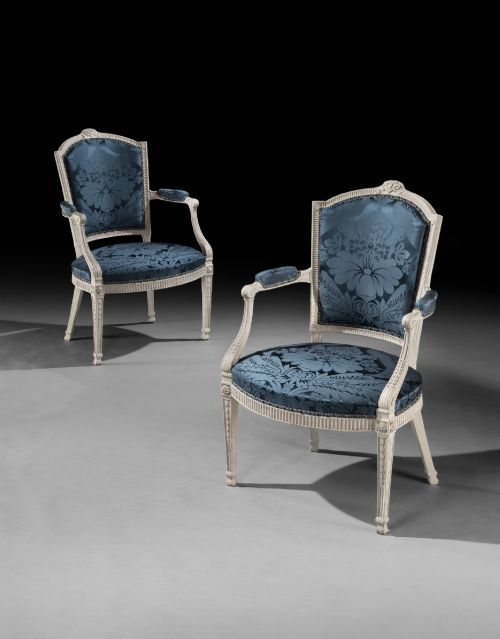
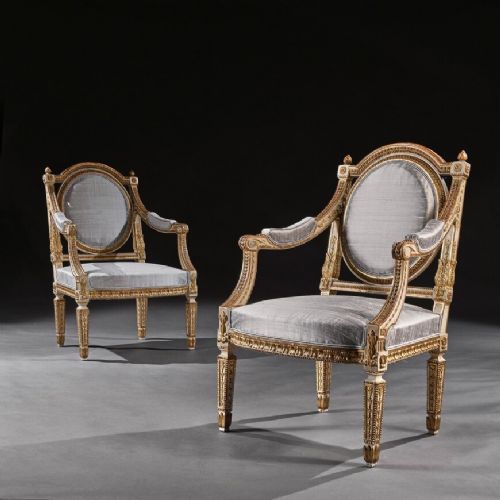
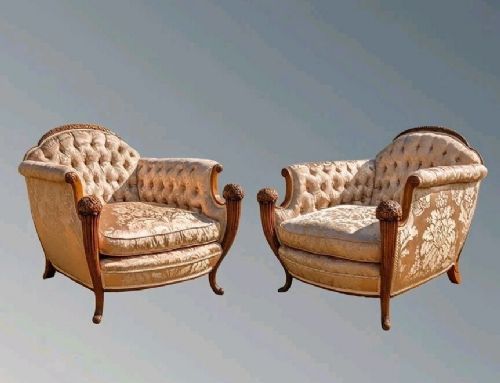
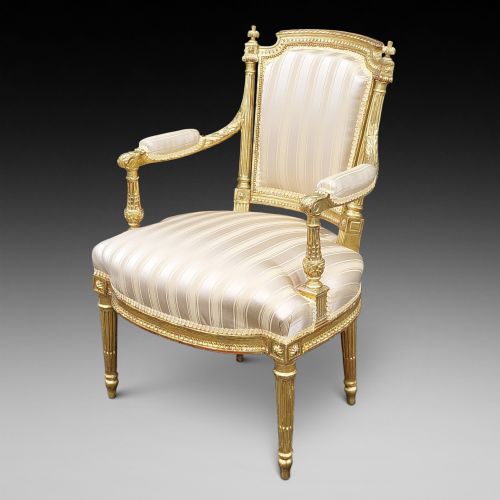
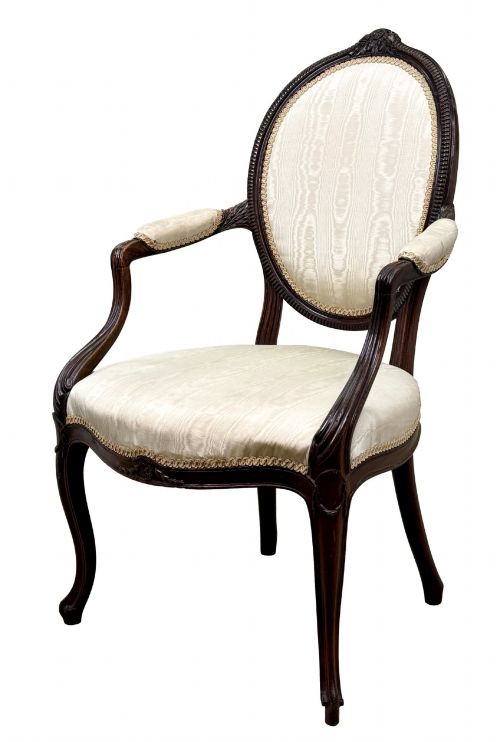
The selection ranges across distinct historical idioms, including Louis XV, Louis XVI, Rococo Revival, and George III neoclassical styles. Frames arrive in forms such as open armchairs, bergere chairs, wingback chairs, and larger salon or library seating.
Origins stretch across French, English, Italian, and Scandinavian workshops, utilising specific regional silhouettes. Many examples emerge as matched pairs or larger dining suites rather than isolated single seats.
Assessing quality in period seating
The crispness and depth of hand-carved ornamentation on wooden frames separate standard production from superior examples. Finishes such as original gilding or carefully applied paint layers demonstrate greater craftsmanship than later alterations.
The integration of the textile covering dictates the overall visual success of the piece. High-quality examples feature silk or silk damask textiles that respect the scale, style, and period of the underlying frame.
Some nineteenth-century salon chairs abandon traditional florals entirely, sporting vibrant silk upholstery decorated with exotic parrots.
The Silk Upholstered Armchair Glossary
- Fauteuil
- An open-arm armchair with an exposed wooden frame originating in France. The arms usually incorporate padded elbow rests.
- Giltwood
- Timber treated with a thin layer of gold leaf or gesso preparation. It appears frequently on formal French and English chairs.
- Damask
- A reversible figured fabric woven on a jacquard loom with patterns formed by contrasting warp and weft threads. Silk variants are common on formal seating.
- Neoclassical
- A design style drawing inspiration from classical antiquity, prevalent during the eighteenth and nineteenth centuries. It emphasises straight lines, symmetry, and restrained ornamentation.
Silk Upholstered Armchair: Frequently Asked Questions
Where should I place a silk upholstered armchair?
These chairs suit low-traffic reception rooms, bedrooms, or parlours where delicate textiles receive less wear. They function effectively as accent pieces alongside sofas or within traditional seating arrangements.
Positioning them away from direct sunlight preserves the colour and integrity of the silk fabric over time.
How do I identify French versus English styles?
French designs like Louis XV and Louis XVI emphasise flowing cabriole legs, carved floral motifs, and exposed gilt or painted woodwork. English equivalents from the Georgian or Hepplewhite periods tend to display straighter lines and rich mahogany or walnut grain.
Regional upholstery methods and framing geometry further distinguish continental workshops from British cabinetmakers.
How should I care for antique silk upholstery?
Regular, gentle dusting with a soft brush prevents surface debris from settling into the weave of the fabric. Professional textile cleaners should handle any deeper maintenance to avoid damaging delicate silk fibres.
Maintaining stable indoor humidity levels also protects both the wooden frames and the mounted textiles.