




Signed Watercolour Study
A signed watercolour study captures an artist's direct observation on paper, offering an intimate connection to the hand of the maker.
Signed Watercolour Study
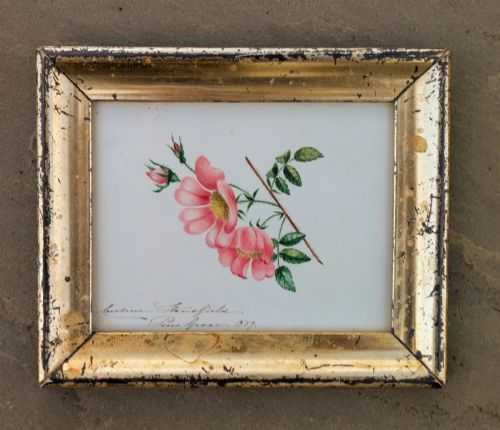
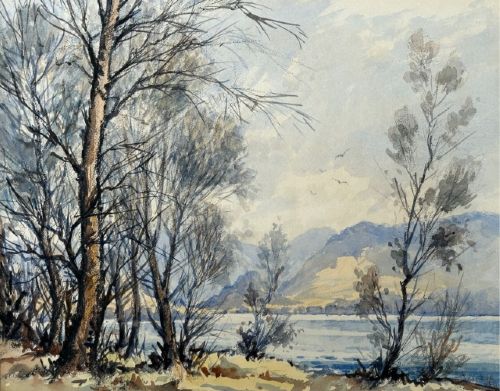
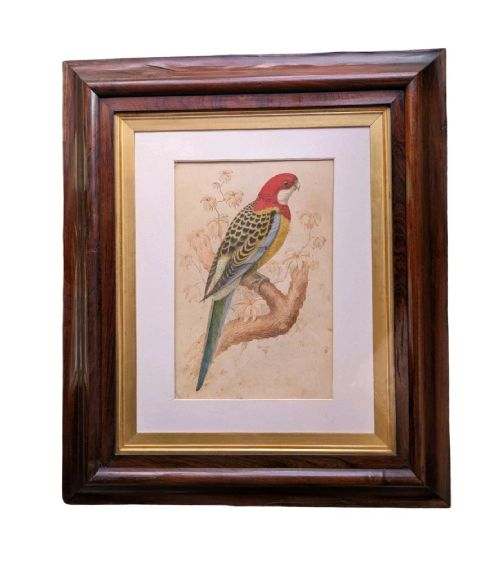
When you search for a signed watercolour study, you encounter original works on paper spanning from the Victorian era through the mid-twentieth century. These paintings include landscapes, botanical illustrations, bird and animal studies, portraits, and abstract compositions.
The pieces on this page range from early Victorian natural history studies and landscapes by regional artists to modern British and mid-century impressionist works. Common formats are framed artwork and wall art, executed by named practitioners whose signatures anchor their authenticity.
How they were made
Artists painted these works on paper supports, frequently employing watercolour pigment alongside gouache, ink, and pencil underdrawing to build depth and line. The application ranges from translucent washes to opaque layers that define form and texture.
Framing typically involves wood and glass to protect the delicate paper surface from atmospheric moisture and handling damage. Some pieces retain their period frames, while others have been reframed to modern conservation standards.
Signed Watercolour Study Retail Price Guide 2026
Typical asking prices for signed watercolour study among the pieces listed under this phrase on Sellingantiques today, from the lower quarter to the upper quarter. They describe what is for sale here now, not the wider market.
Sheep, jays, parrots, and pansies share the paper alongside human portraits, proving that nineteenth and twentieth-century artists painted whatever caught their eye.
What varies in quality
Quality rests upon the sureness of the brushwork and the clarity of the composition, distinguishing rapid sketches from fully realised studies. The strength of the artist's draftsmanship, visible in the underlying pencil lines or ink work, dictates the visual impact.
Condition also separates examples, particularly the preservation of pigment vibrancy and the absence of paper acidification or foxing. Works that retain their original colour saturation and paper integrity command greater attention.
Muriel Metcalfe·Robert Leslie Howey·R. Hurst·Dame Elisabeth Frink·Raoul Millais·Adrian Heath·Grace Hastie·Phyllis I Hibbert·Rowland Henry Hill·Dame Laura Knight·M.K Rhodes·Donald Watson·Minnie Smythe
The Signed Watercolour Study Glossary
- Watercolour
- A paint consisting of colour pigments suspended in a water-soluble vehicle, applied to paper to create transparent or opaque passages.
- Gouache
- An opaque water-based paint containing pigment mixed with a binding agent and added white, producing a heavier, matt surface often used alongside watercolour.
- Works on paper
- A collective category encompassing drawings, watercolours, prints, and other artistic creations executed upon a paper support.
- Victorian natural history
- A genre of detailed scientific and artistic illustration focusing on flora and fauna, popular during the nineteenth century.
- Mid-Century Modern
- A stylistic movement spanning the middle decades of the twentieth century, characterised by simplified forms and a departure from traditional academic representation.
Signed Watercolour Study: Frequently Asked Questions
How do I care for a watercolour study?
Keep the artwork away from direct sunlight to prevent the watercolour pigments from fading over time. Ensure it hangs in a room with stable humidity to protect both the paper support and the wooden frame.
Consult a professional paper conservator if the glass requires replacement or if the backing board shows signs of acid transfer. Proper framing with acid-free mounts preserves the longevity of works on paper.
Why are some watercolours painted over pencil?
Artists used pencil underdrawing to map out composition, perspective, and proportions before applying wet pigment. This preliminary sketch guides the brushwork and remains visible in many authentic studies.
Examining the pencil lines beneath the wash offers insight into the artist's working method and spontaneous decision-making process during creation.
How can I tell a Victorian study from a mid-century one?
Victorian studies tend to focus on meticulous natural history subjects, detailed landscapes, or formal portraiture with tight brush control. Paper quality, framing styles, and signature conventions from the nineteenth century differ markedly from later decades.
Mid-century pieces often embrace looser brushwork, impressionistic lighting, or abstract forms reflective of twentieth-century British modernism. The subject matter and handling of pigment provide clear chronological markers.
What is the difference between a study and a finished painting?
A study is typically an exploratory work executed to capture specific lighting, form, or detail, sometimes serving as preparation for a larger canvas. These pieces reveal the immediate thought process and spontaneous observations of the artist.
Finished paintings are usually more complex, highly resolved compositions intended from the outset as complete exhibition pieces. Both hold distinct appeal for collectors valuing direct artistic expression.