
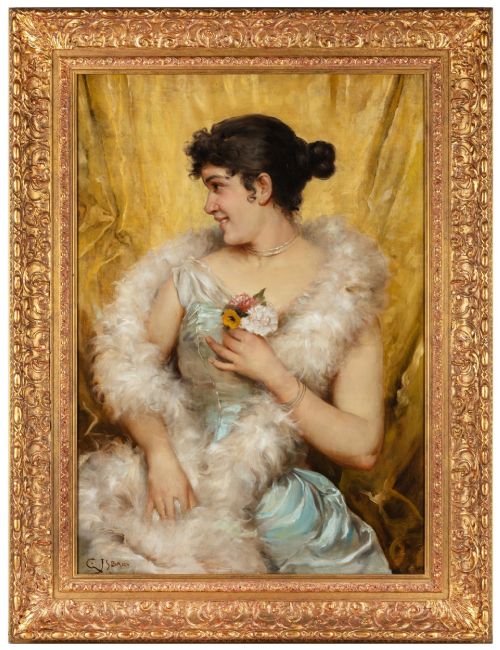
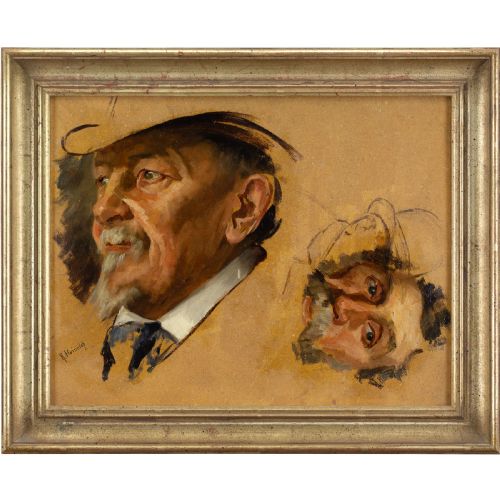
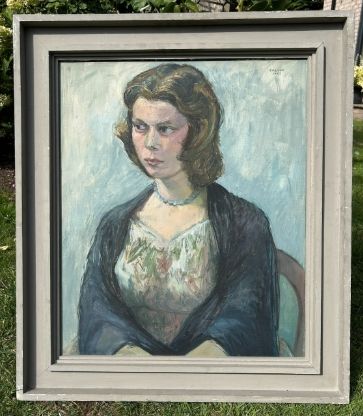
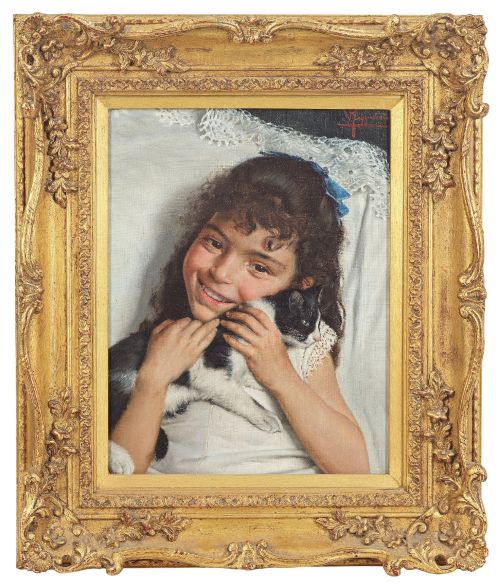
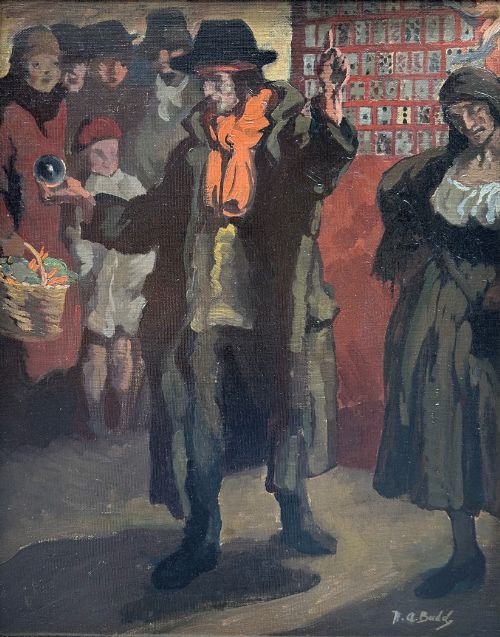

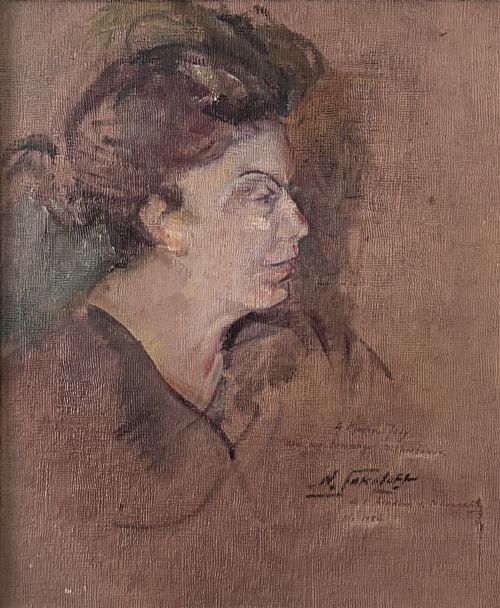
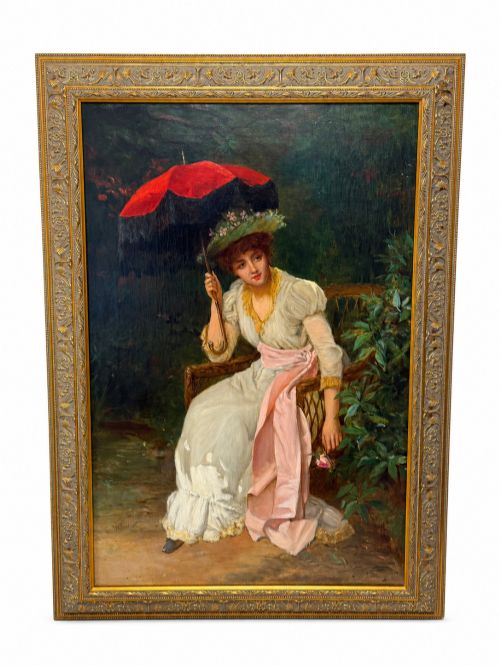
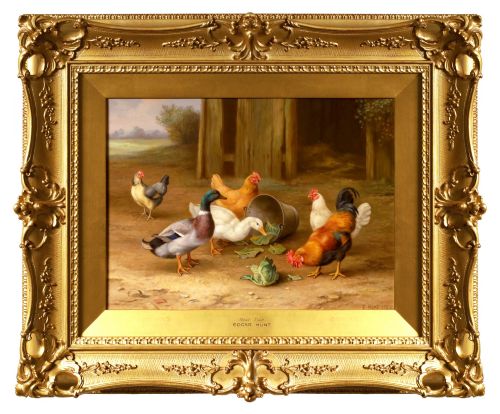
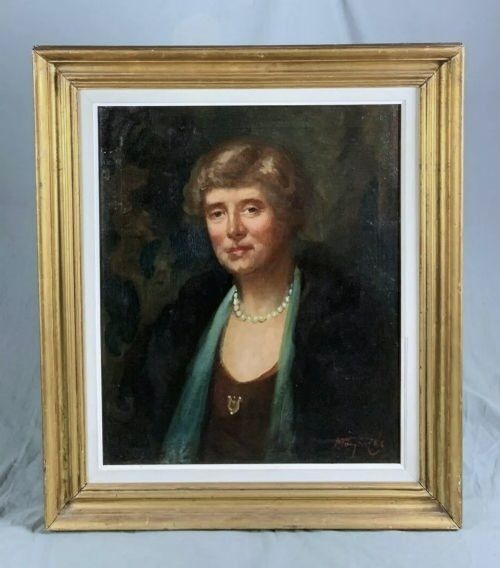
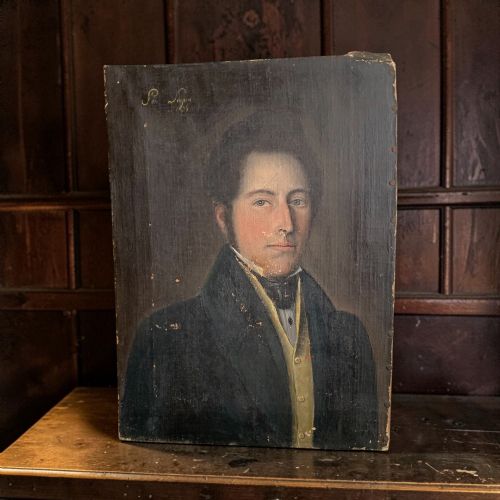


Signed Oil Portrait
A signed oil portrait carries the distinct mark of its creator, capturing human character, animals or society across centuries of British and European painting.
Signed Oil Portrait
A signed oil portrait offers a direct connection to a named artist and their subject, ranging from formal aristocratic depictions to intimate studies of everyday people. These works span several centuries, with particular representation from the Victorian era and the early to mid-twentieth century.
The subjects extend beyond human sitters to include domestic pets, working dogs and horses captured in detailed realism or looser post-impressionist brushwork. Buyers encounter everything from small wood panel studies to large canvases housed in original gilt frames.
How They Were Made
Artists painted primarily with oil on stretched canvas, though prepared wood panels and artist boards also appear frequently across the periods. Oils allowed painters to build rich layers of colour and texture, creating deep shadows and luminous skin tones.
Many works retain their period frames, constructed from carved wood and finished with gilt or gesso to complement the composition.
Listings feature works spanning from the seventeenth century through to mid-century modern movements, executed on canvas, wood and board.
What Varies in Quality
The capability of the hand behind the brush dictates the success of a portrait, visible in the handling of light across fabric and the psychological depth in the sitter's expression. Superior examples demonstrate confident anatomical structure and purposeful brushwork rather than stiff, formulaic rendering.
Condition also plays a vital role, distinguishing works that retain their original impasto and vibrant pigment from those suffering heavy relining, overpainting or surface abrasion.
G. J. S. Bary·Vittorio Reggianini·Herbert Ashwin Budd·John Emms·Nicolaes Maes·Edgar Hunt·Septimus Scott·Lance Calkin·Philippa Maynard Romer·Philip Naviasky·Fred Yates
The Signed Oil Portrait Glossary
- Canvas
- A heavy woven fabric stretched across a wooden frame to form the primary support for oil paintings. It provides a flexible yet durable surface that artists primed with gesso before painting.
- Giltwood
- Wood carved and coated with a thin layer of gold leaf or metallic gilt powder. It is commonly found on period picture frames designed to enhance the artwork.
- Impasto
- Paint applied thickly to a canvas or panel so that the brush or palette knife marks stand proud of the surface. This technique adds tactile depth and catches natural light.
- Panel
- A flat piece of wood or board used as a rigid painting support instead of canvas. Wooden panels were favoured in earlier centuries before canvas became dominant.
Signed Oil Portrait: Frequently Asked Questions
How do I date an antique oil portrait?
Dating relies on the sitter's costume, hairstyle and the construction methods of the canvas or stretcher frame. Signatures, dates inscribed on the reverse and framing styles provide additional chronological clues.
Comparison with documented works by the same artist or regional school helps narrow the decade of creation.
Are all portraits on this page of people?
While human sitters form a large portion of the works, many feature animals such as dogs, horses and livestock. These painted subjects reflect the historical importance of pets and sporting animals in domestic life.
Artists frequently applied the same rigorous portrait techniques to animals as they did to human nobility and family members.
Why do some paintings have signatures that are hard to read?
Signatures often fade, become obscured by darkened varnish or were applied discreetly by artists who prioritised the composition. Monograms and initials were also common practice in various periods.
Archival records and stylistic attribution often help identify the hand behind an indistinctly signed canvas.
How should I care for an oil painting at home?
Oil paintings require stable indoor humidity away from direct sunlight and sudden temperature changes to prevent the canvas from slackening and the paint from cracking. Dust should be removed gently with a soft, dry brush without applying moisture or cleaning agents.
Professional conservation should be sought if the varnish yellows or the paint layer shows signs of instability.