
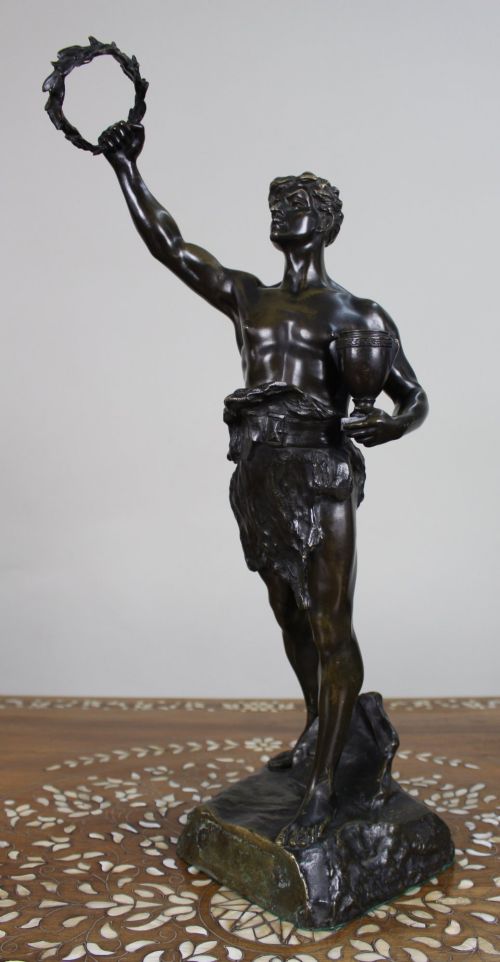
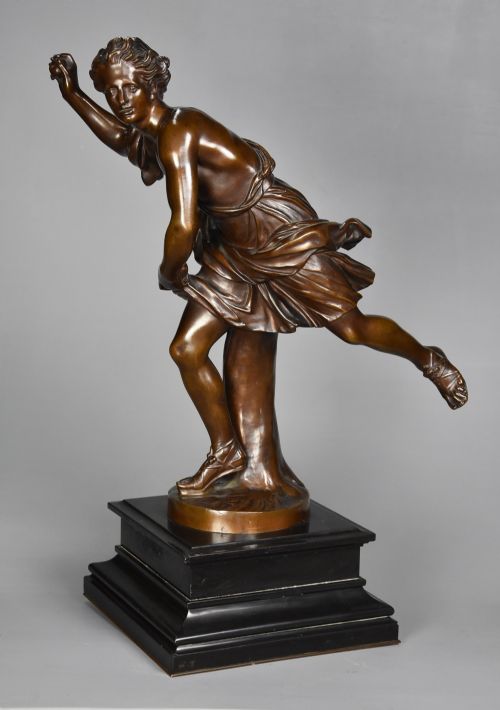
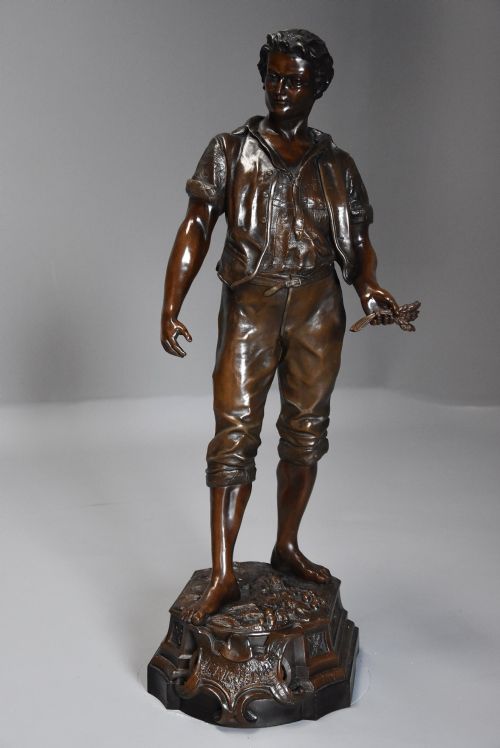
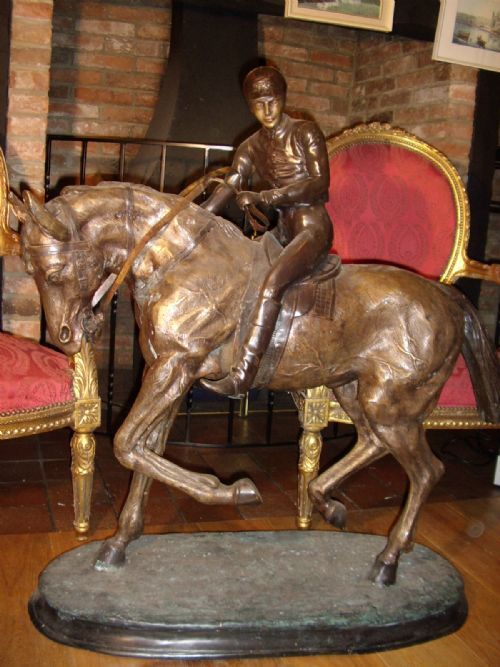
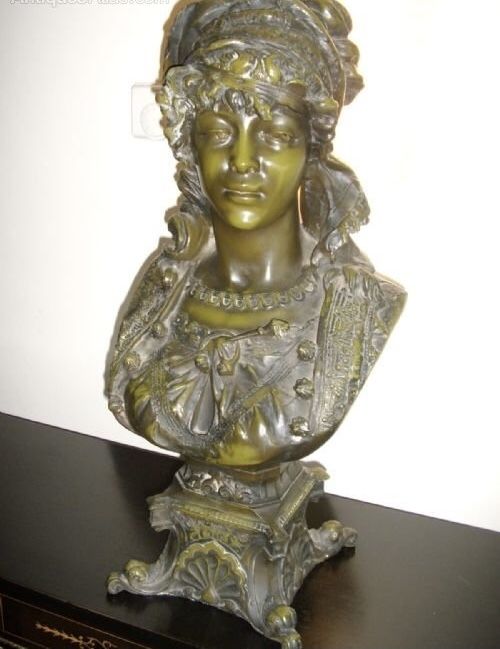

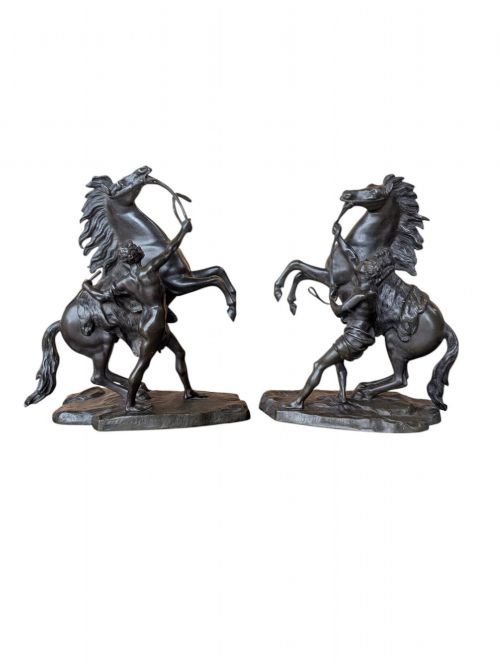


Signed French Bronze Statue
A signed French bronze statue brings 19th-century foundry craft directly into your interior, offering expressive figural presence and detailed patination.

Signed French Bronze Statue
A signed French bronze statue represents sculpted figural work produced in France during the nineteenth and early twentieth centuries, bearing the cast or incised signature of its creator. These pieces encompass mythological figures, historical personages, dancers, animals, and agricultural labourers in various postures.
You will most commonly encounter nineteenth-century interpretations cast in bronze or patinated spelter, often mounted onto turned marble or ebonised wood bases. The forms range from cabinet-sized figures to large floor-standing sculptures and figural lamps.
The subjects draw heavily upon classical mythology, Art Nouveau organic lines, Art Deco geometric styling, and Animalier naturalism. Each piece preserves the sculptural ambition of French salons and independent foundries from the period.
Materials and casting methods
The primary material is copper alloy bronze, though period works frequently utilise patinated spelter as a harder-wearing or more economical alternative. Metal finishes include dark brown patination, painted surfaces, gilt highlights, and bronze-effect coatings.
Foundries employed the lost-wax casting method or sand casting to capture minute details in hair, drapery, and facial expression. Sculptures were subsequently hand-chased to refine textures before being mounted to marble or wood plinths.
Listings feature works spanning the nineteenth and twentieth centuries, utilising bronze, patinated bronze, spelter, marble, and ebonised wood.
Distinguishing quality in sculpture
The structural integration between the figure and its base indicates overall care in production, with finer pieces fitted securely to carved marble or weighted wood rather than relying on loose mechanical fasteners.
Barbedienne·E.Villanis·D.H. Chiparus·Auguste Moreau·E.Drouot
The Signed French Bronze Statue Glossary
- Patina
- The surface coloration and sheen developed naturally through age or applied chemically by the foundry. It protects the metal while defining the tonal quality of the sculpture.
- Spelter
- A zinc alloy commonly utilised in nineteenth-century French manufacturing as a substitute for bronze. It takes a bronze finish effectively but is softer and lighter than copper alloy.
- Chasing
- The process of hand-finishing a raw metal casting using chisels and punches. This step restores lost texture and refines surface details after the mould is removed.
- Animalier
- A nineteenth-century artistic movement focused on the realistic depiction of animals, particularly predators, horses, and domestic pets in motion.
- Lost-wax casting
- A traditional technique where a wax model is encased in a refractory material, melted out, and replaced with molten metal. It allows for intricate undercuts and delicate forms.
Signed French Bronze Statue: Frequently Asked Questions
How do I distinguish bronze from spelter?
Bronze is heavier, colder to the touch, and rings with a clear tone when tapped gently, whereas spelter feels lighter and softer.
Examining the underside or areas of wear often reveals a silvery-grey metal beneath the patinated surface of spelter.
Where should I place a heavy sculpture?
Position statues on stable, level furniture or dedicated pedestals capable of supporting the combined weight of the metal and its marble base.
Keep pieces away from direct heat sources and strong sunlight to protect patinated or painted finishes from degradation.
How do I clean a bronze statue safely?
Dust the surface regularly with a soft, dry brush or microfiber cloth to prevent particulate accumulation within crevices.
Avoid using water, commercial metal polishes, or chemical solvents, as these can strip the original foundry patina.
What does an artist signature indicate?
A signature cast directly into the metal signifies that the model was approved by the sculptor for commercial reproduction by a foundry.
Signatures appearing as later engravings or stamps may indicate retailer additions rather than original foundry marks.