

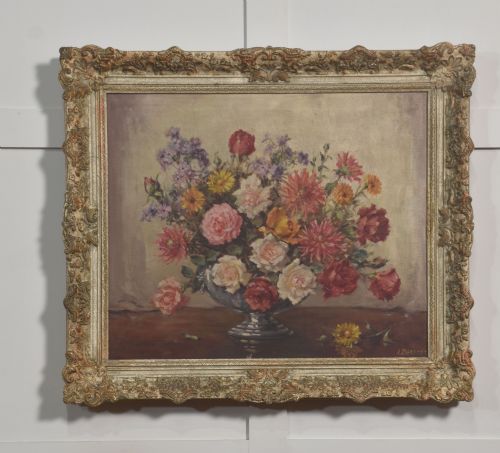

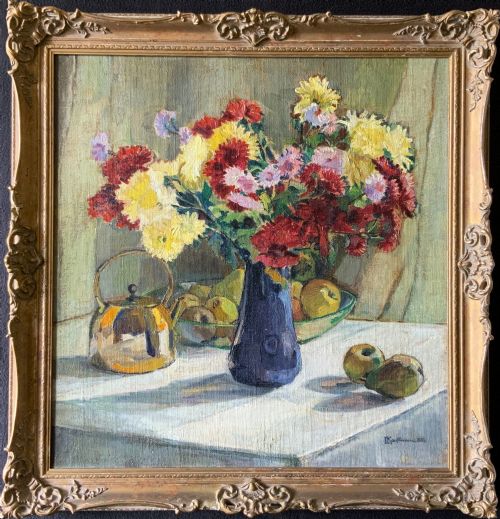


Signed Flower Painting
A signed flower painting brings botanical colour directly into a room, capturing blooms in oils or watercolours from the nineteenth century to the mid-century.
Signed Flower Painting
A signed flower painting represents a botanical study or floral still life bearing the artist's signature. Buyers searching this phrase look for authentic floral artworks ranging from Victorian watercolours to mid-century oil paintings.
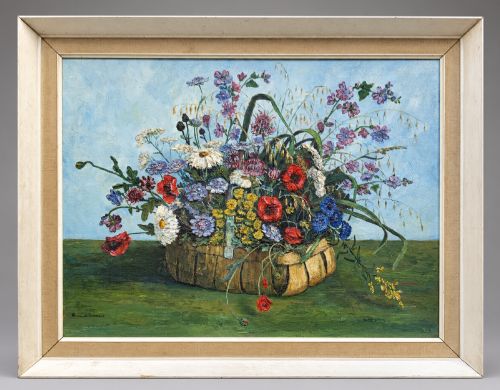
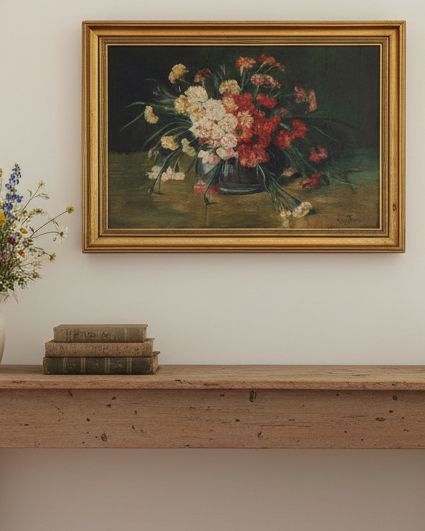
The pieces on this page span several decades, including Edwardian watercolours, Dutch Golden Age style compositions, and post-war modernist canvases. Many feature traditional arrangements of wild flowers, roses, or pansies in baskets and jugs.
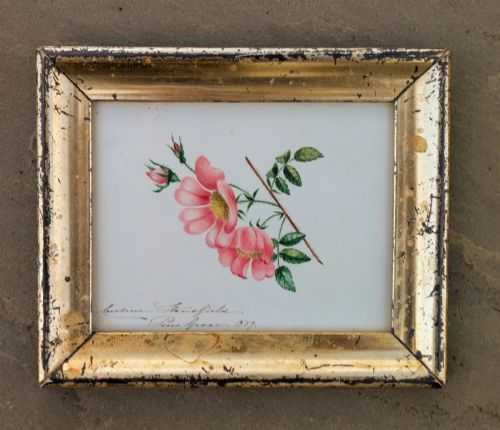
Works appear in various formats such as framed oil on canvas, delicate watercolours on paper, and decorative miniatures. Originating from British, French, Swiss, and Danish makers, these works reflect changing artistic approaches to floral subjects over time.
How they were made
Artists painted these works using oil paint on canvas or board, and watercolours on paper. Oil pigments offer rich texture and depth, particularly on mid-century canvases, while watercolours allow for lighter, translucent botanical detail.
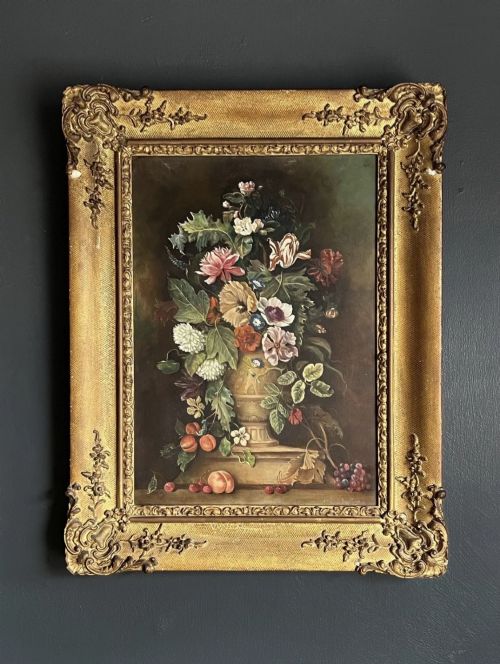
Many of these works are housed in period surrounds such as gilt wood and gilt gesso frames, which complement the painted floral subjects. Supporting materials include glass protection for paper works and occasional metal panels.
Signed Flower Painting Retail Price Guide 2026
Typical asking prices for signed flower painting among the pieces listed under this phrase on Sellingantiques today, from the lower quarter to the upper quarter. They describe what is for sale here now, not the wider market.
Some floral still lifes casually sneak a hat, fruit, or a pigeon in alongside the petals.
What varies in quality
Quality in a signed flower painting rests upon the confidence of the brushwork and the harmony of the composition. Stronger pieces display assured handling of light upon petals, while lesser works can feel stiff or overly formulaic.
The execution of the surrounding frame also dictates overall quality, with hand-carved gilt gesso framing elevating the status of the canvas within. The clarity of the artist's signature and the preserved state of the pigments further separate standard examples from finer works.
I. Berezny·Owen Bowen·Winifred Turner·Harry Wanless·Lester Sutcliffe·Sir Matthew Smith·Robin MacKertich·Sir George Reid·Margaret Laing·Phyllis I Hibbert·L. Wilford·Jennifer Toombs·Maud Frances Eyston Sumner·Harold Edward Conway·Edith Alice Andrews·Emma Løffler·Robert John Hammond·M.K Rhodes·Minnie Smythe·Legras
The Signed Flower Painting Glossary
- Still life
- An artwork depicting inanimate subject matter, typically commonplace objects such as flowers in a vase or fruit on a table. This genre allows artists to focus on colour, light, and arrangement.
- Gesso
- A plaster-like material applied to wooden frames before gilding or painting. It provides a smooth surface that carvers could mould into intricate decorative patterns.
- Watercolour
- A paint consisting of pigment suspended in a water-based solution, typically applied to paper. It produces transparent washes that capture delicate botanical forms.
- Post-Impressionism
- An art movement developing from the late nineteenth century that rejected naturalistic depiction in favour of expressive colours and forms. Artists applied these principles to floral subjects with heightened brushwork.
Signed Flower Painting: Frequently Asked Questions
What periods do these floral paintings cover?
The pieces span from the nineteenth century through the Edwardian and Victorian eras into the mid-twentieth century.
Works range from early watercolours dated eighteen-fifty to post-war modernist canvases from nineteen-sixty.
Are all the artworks painted on canvas?
Not all pieces use canvas as a support for the pigment.
While oil on canvas is common, listings also feature watercolours on paper, oil on board, and even oil applied to metal.
How should I hang a framed floral painting?
Select a wall with indirect light to protect older watercolours and oil pigments from fading over time.
Ensure the wall fixings can support the weight of the piece, particularly for larger canvases housed in heavy gilt wood frames.
How can I identify the artist's signature?
Signatures typically appear in the lower corners of the painted surface or within the paper margin of watercolours.
Matching the handwriting style to known records of the listed makers helps confirm the origin of the piece.