
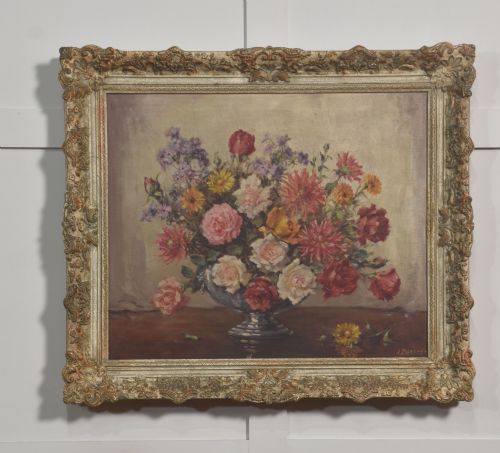
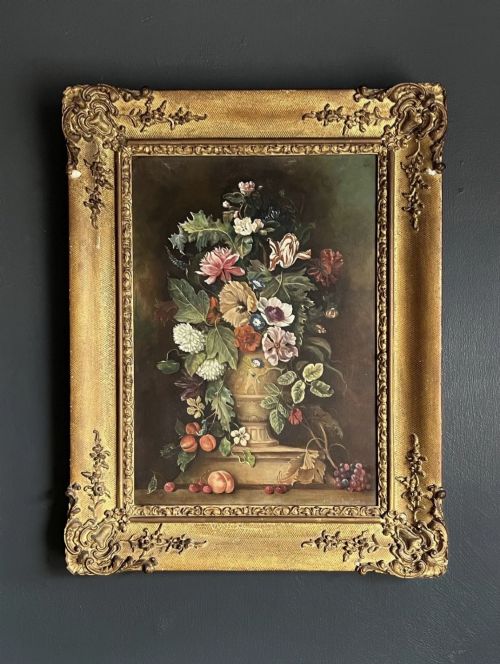
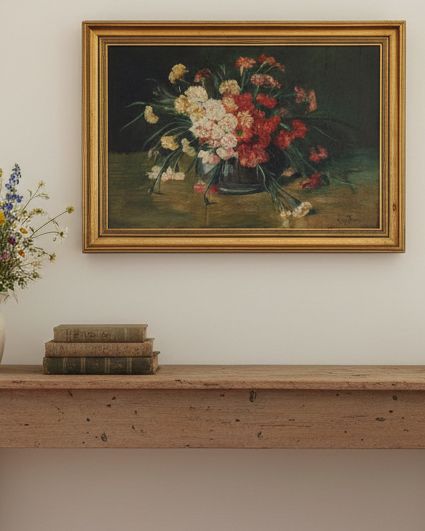
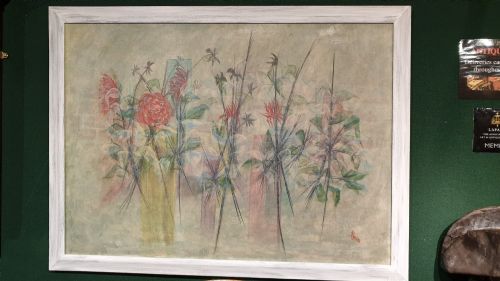




Signed Floral Canvas Painting
A signed floral canvas painting brings enduring botanical colour to a room, captured by artists across the nineteenth and twentieth centuries.
Signed Floral Canvas Painting
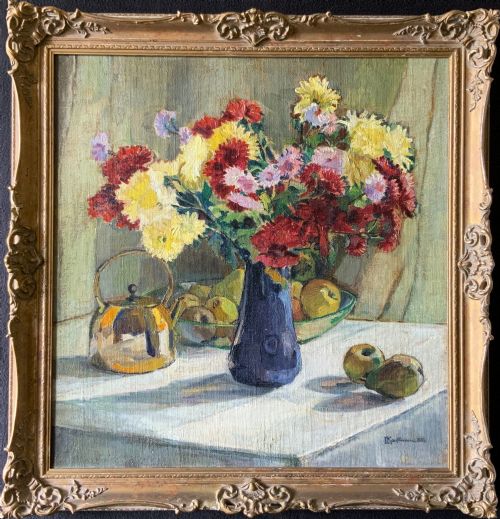
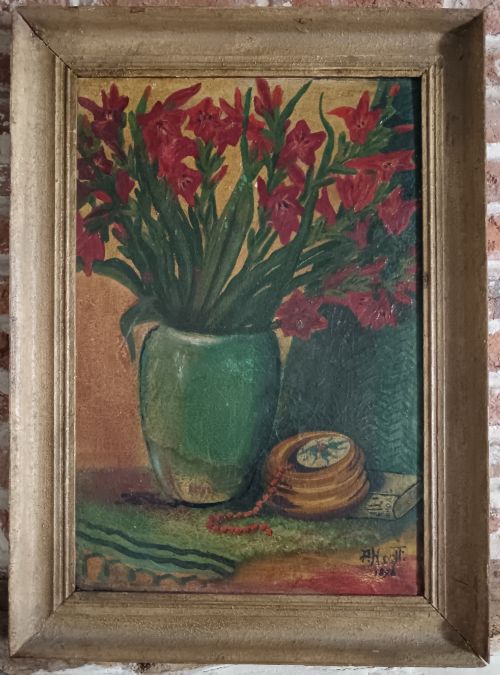
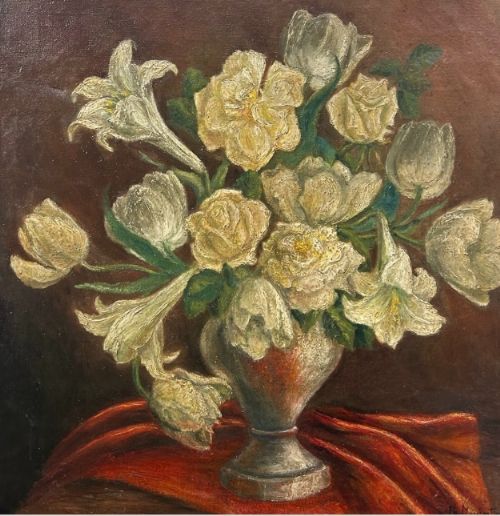
A signed floral canvas painting represents a traditional still-life or botanical study executed in oil paint upon stretched canvas. These works range from late nineteenth-century Victorian academic compositions to mid-century modern and post-impressionist interpretations.
The selections available span diverse domestic scales, encompassing intimate studies of carnations and pansies alongside substantial framed canvases depicting summer flowers in bowls and vases. Originating from British, Dutch, Swiss, and Scandinavian hands, each piece records a distinct period aesthetic.
The core of this selection centres on twentieth-century expressions, particularly from the 1920s, 1930s, and 1960s, alongside nineteenth-century works framed in wood, gilt, and plaster.
How they were made
Artists applied oil paint directly onto prepared woven canvas stretched over wooden frames, building texture and depth with brushwork or palette knives. The resulting pigment layers retain the distinct handling of the maker, whether smooth Dutch Golden Age revival glazing or heavy post-impressionist impasto.
Framing forms an integral part of the physical object, with many works housed in period wood, gilt gesso, or moulded plaster frames that complement the canvas.
Some floral canvases preserve stray artist studio dust and historical brush bristles embedded permanently within the dried oil paint.
What varies in quality
Quality rests in the assuredness of the brushwork and the structural integrity of the canvas and its stretching. Superior pieces display a confident command of light, shadow, and botanical form rather than rigid mechanical copying.
The harmony between the painting and its original or period frame also alters the overall merit of the piece, as a well-matched gilt or wood frame enhances the visual impact of the artwork.
I. Berezny·Mark Ingram·Owen Bowen·J.Milton·Sir Matthew Smith·Robin MacKertich·Sir George Reid·L. Wilford·Harold Edward Conway·Emma Løffler
The Signed Floral Canvas Painting Glossary
- Canvas
- A heavy woven fabric stretched across a wooden frame to serve as the foundation for oil painting. It provides a durable surface that accepts layers of pigment and ground.
- Impasto
- A technique where oil paint is laid thickly on the canvas, standing out from the surface so that the marks of the brush or palette knife remain visible. This adds physical dimension to floral petals and leaves.
- Gesso
- A plaster-like mixture applied to wooden frames before gilding or painting, creating a smooth base for ornamentation. Period frames often utilise moulded gesso for floral and scroll details.
- Still-life
- An artwork depicting inanimate subject matter, typically commonplace objects such as flowers in a bowl or vase. Floral still-lifes focus on transient natural beauty.
- Post-Impressionism
- An art movement extending roughly from the late nineteenth century that rejected rigid naturalism in favour of expressive colours and bolder forms. Works in this style prioritize emotional resonance over photographic accuracy.
Signed Floral Canvas Painting: Frequently Asked Questions
How do I clean a canvas painting?
Dust the surface gently with a soft, dry brush to remove loose particles without disturbing the paint layer. Avoid using water, household cleaners, or damp cloths on oil paint.
For deeper cleaning or older varnished surfaces, consult a professional art conservator to prevent accidental damage to the pigment.
Where should I hang these paintings?
Select an interior wall away from direct sunlight, excessive humidity, and sudden temperature shifts. Stable environmental conditions protect both the canvas and the wooden stretcher.
Keep paintings away from heat sources like radiators to prevent the canvas from warping or the oil paint from cracking.
How can I date a floral painting?
Examine the materials, including the type of canvas weave, the construction of the wooden stretcher frame, and the style of the outer frame. Nails, staples, and canvas stamps often provide clues to the decade of creation.
Compare the artistic style, whether Victorian, Art Deco, or Mid-Century Modern, alongside any legible signatures or dates inscribed on the canvas.
Are these paintings original works?
The listings comprise hand-painted original oil artworks created directly on canvas by individual artists. Each piece represents a unique application of paint rather than a mechanical reproduction or print.
Signatures or attribution marks on the canvas link the physical object to specific historical painters and workshops.