




Signed Art Deco Figurine
A signed art deco figurine is a cast sculpture capturing interwar motion and form, sought for its crisp signatures and period line.
Signed Art Deco Figurine
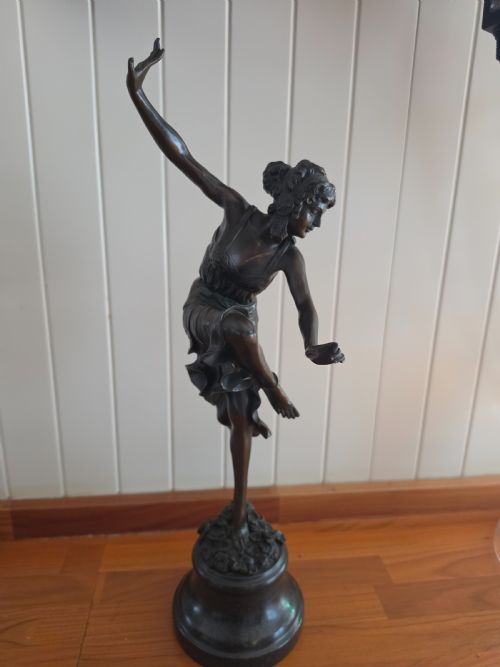
When you search for a signed art deco figurine, you encounter sculptural works primarily from the 1920 and 1930 periods alongside animalier subjects and later twentieth-century casts. These figures take the form of dancing girls, ice skaters, mythological groups, and birds resting on branches, executed as desktop sculptures or match strikers. The majority originate from French workshops or Italian studios, often pairing metal figures with marble or alabaster bases.
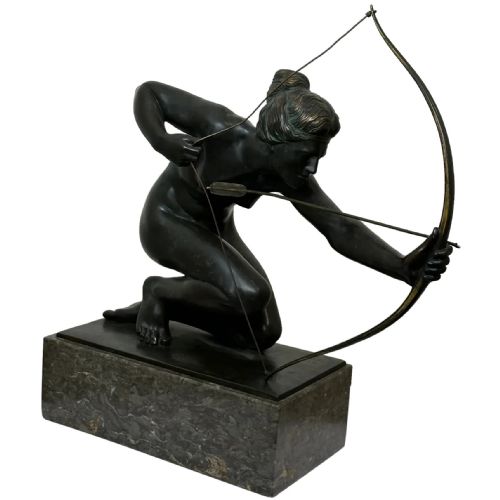
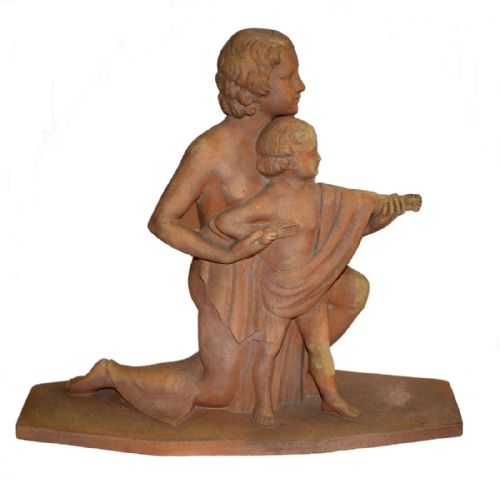
The dominant style is distinctively Art Deco, capturing sleek contours and stylised movement typical of the interwar years. You will regularly find human dancers, goddesses holding bows, and panthers rendered in hot cast bronze, gilded bronze, or spelter. Some pieces incorporate terracotta or bisque materials, offering a matte finish that contrasts with the polished metallic surfaces common to the era.
How they were made
Foundries produced these works using traditional hot casting methods for bronze, pouring molten metal into moulds before refining the surface by hand. Many figures were then patinated, gilded, or painted to accentuate the garments and musculature characteristic of the style.
Makers mounted these metal or terracotta casts onto substantial bases of carved marble or alabaster, anchoring the composition. The signatures of artists and sculptors were typically incised directly into the metal or stone during the finishing process.
Listings demonstrate a strong preference for 1930s production dates, utilising bronze and marble as the dominant material pairing.
What varies in quality
The choice of base material also marks the hierarchy of these objects, with dense carved marble and rich alabaster supporting heavier, more finely finished bronzes compared to lighter spelter alternatives.
C J R Colinet·L Gerfaux·D H Chiparus·Albert Hussmann·R Henn·P Marec·I Rochard·B Rezl·Joseph Lorenzl
The Signed Art Deco Figurine Glossary
- Spelter
- A zinc alloy frequently utilised as a cost-effective alternative to bronze in interwar sculpture. It often mimics bronze through applied patination.
- Animalier
- A nineteenth and twentieth century artistic focus on the realistic portrayal of animals. This style appears frequently in depictions of panthers, stags, and birds.
- Alabaster
- A soft, translucent stone carved into decorative bases for figures. It provides a pale, veined contrast to darker patinated metals.
- Patina
- The surface coloration and sheen developed on metal through chemical treatment or age. It defines the tonal depth of bronze sculptures.
Signed Art Deco Figurine: Frequently Asked Questions
What materials were used?
Sculptors utilised bronze, gilded bronze, spelter, terracotta, and bisque for the figures themselves. These were frequently paired with carved marble and alabaster bases.
Such material combinations defined the aesthetic weight and balance of interwar decorative art objects.
Where were they made?
The records point predominantly to French foundries and Italian studios operating during the interwar decades. Parisian workshops produced a large proportion of the signed bronzes.
Regional styling often reflects the specific artistic centres of early twentieth-century Europe.
How do I spot a signature?
Signatures are generally incised or cast directly into the surface of the metal figure or carved into the stone base. They represent the mark of the individual sculptor.
Examining these inscriptions requires careful lighting to trace the original artist handwriting.
Are later pieces common?
While the primary focus rests on works from the 1920 and 1930 periods, occasional examples date later than 1960. These later casts continue the animalier and figurative traditions.
Comparing base construction and casting weight helps distinguish interwar originals from subsequent productions.