
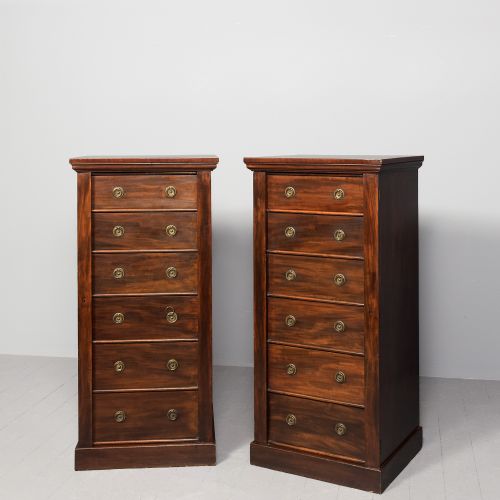
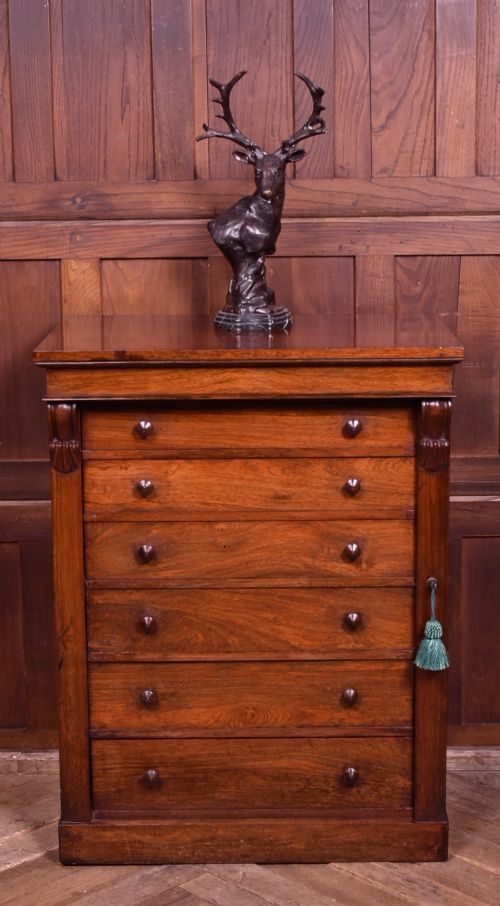


Side Locking Chest
A side locking chest is a tall, narrow drawer unit secured by a hinged locking stile, prized for its clever security and compact proportions.
Side Locking Chest
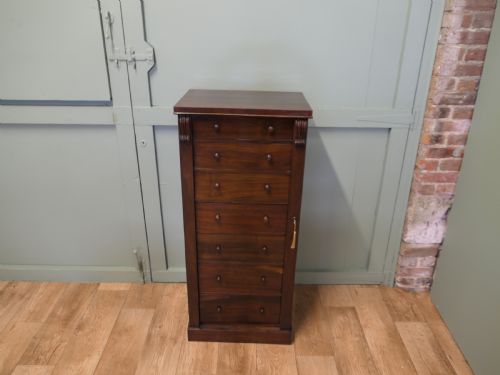
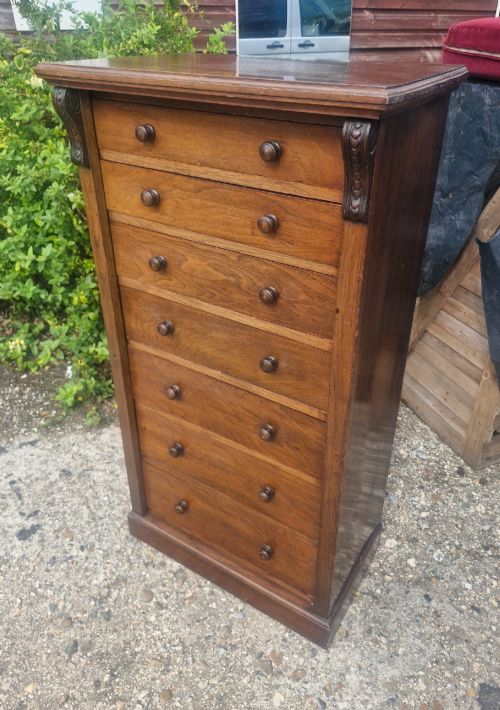
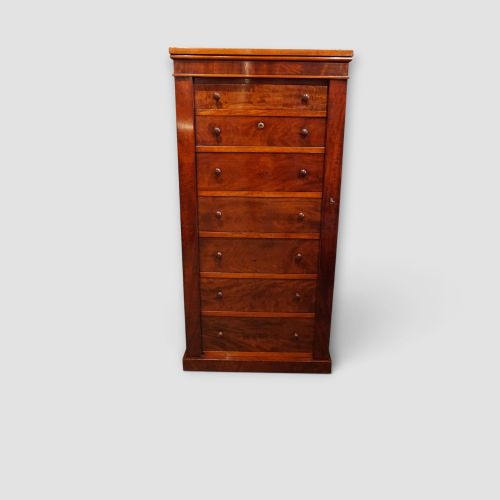
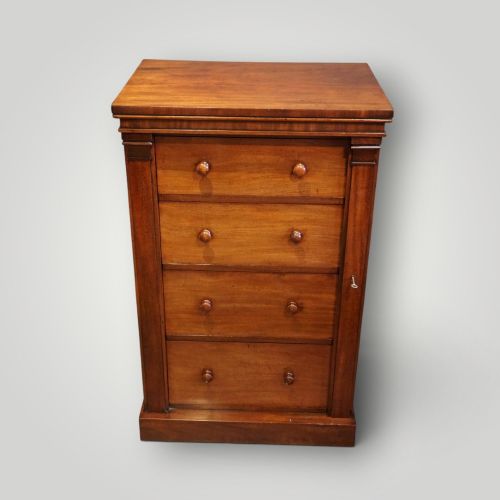
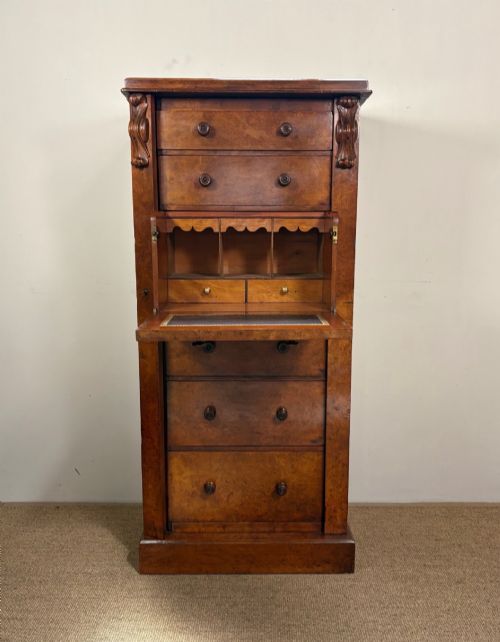
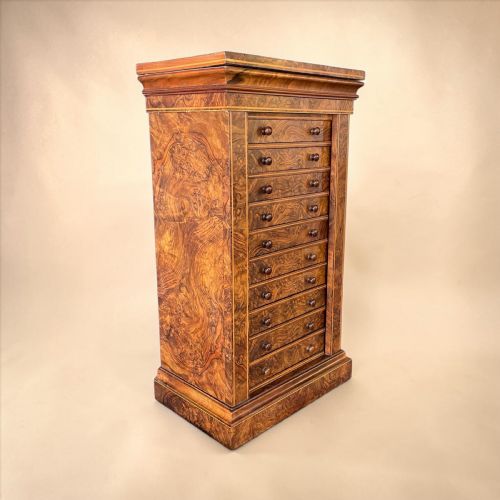
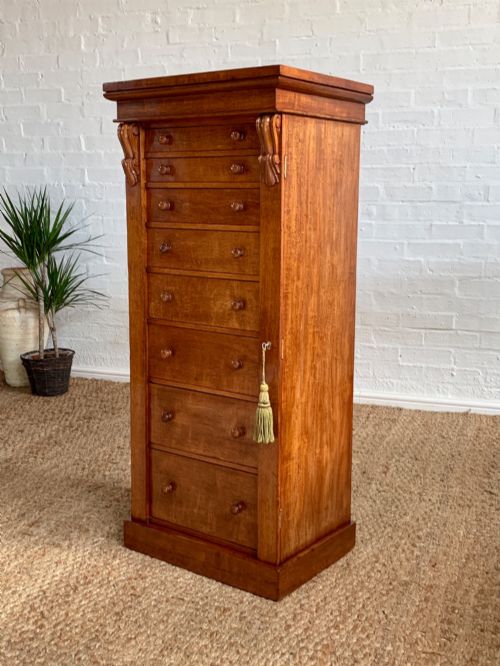
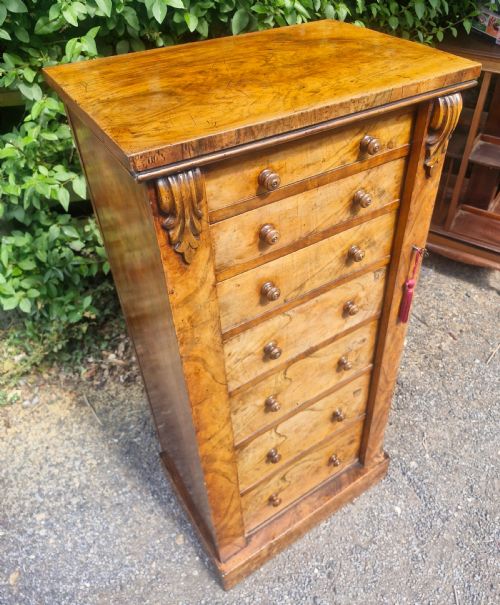
A side locking chest, predominantly found in the form of a Wellington chest, stands out for its vertical proportions and a locking side flap that secures all drawers simultaneously. These pieces appear frequently across the Victorian period, the nineteenth century, and the Regency era, taking the shape of tall chests of drawers, miniature versions, and secretaire variants with hinged fall fronts.
The primary version met on this page is the tall mahogany or walnut chest, often fitted with five to seven drawers and original turned knobs. Alongside these standard drawer configurations, collectors encounter specialised specimen drawers and compact child or miniature editions fashioned from rosewood, satinbirch, and maple.
Materials and construction methods
Cabinet makers constructed these vertical carcasses predominantly from dense timbers like mahogany and walnut, frequently applying flame mahogany veneer, burr walnut, and marquetry to the primary visible surfaces. Secondary timbers provided sturdy internal framing for the multiple narrow drawers.
Security relied on precision joinery and heavy brass mechanisms, where a swinging pilaster or locking flap engaged with the drawer edges when secured by a key. Original turned wooden knobs and leather writing surfaces on secretaire flaps completed the utilitarian yet refined build.
Factors separating the finest examples
Quality rests heavily on the choice of timber figure and veneer selection, distinguishing plain boards from richly figured flame mahogany or burr walnut surfaces. The crispness of the turning on the wooden knobs and the preservation of the original locking flap mechanism also elevate an example.
Internal execution matters equally, observed in the neat dovetailing of the numerous small drawers and the survival of integrated secondary writing compartments or maple and rosewood contrasting interiors.
Druce & Co.
The Side Locking Chest Glossary
- Wellington chest
- A tall, narrow chest of drawers featuring a hinged locking stile on one side that secures all drawers when locked. This form emerged during the nineteenth century and typically contains up to seven drawers.
- Secretaire
- A piece of furniture incorporating a writing compartment with a fold-down or hinged fall front. In these chests, one drawer tier drops open to reveal small pigeonholes and writing surfaces.
- Locking flap
- A vertical wooden bar or pilaster attached by hinges to the side of the carcass. When closed and secured with a key, it blocks the drawer fronts from opening.
- Flame mahogany
- A veneer cut from the fork of the mahogany tree where the branch joins the trunk. It creates a distinctive, rippling, flame-like pattern across the drawer fronts.
- Specimen drawers
- Shallow compartments designed for storing natural history collections, coins, or small artefacts. These are frequently lined with velvet or fabric.
Side Locking Chest: Frequently Asked Questions
What is a side locking chest?
A side locking chest is a tall, narrow drawer unit that uses a hinged locking stile on one side to secure every drawer at once.
Most examples date from the Victorian era and the nineteenth century, built from timbers such as mahogany and walnut.
How do the locking mechanisms work?
A vertical wooden flap or pilaster is hinged to the side of the chest frame. When the key is turned in the side lock, this flap swings or fastens tightly against the drawer edges, preventing them from pulling out.
Opening the side flap first allows individual drawers to function normally.
Where were these chests used?
These vertical units were designed for bedrooms, dressing rooms, and studies where floor space was limited but vertical storage capacity was needed.
Secretaire variants provided a dual function as a compact writing desk.
How do I date a Victorian chest?
Dating relies on examining the timber species, secondary woods inside the drawers, and construction details like dovetailing. Victorian and nineteenth century pieces often feature dense mahogany or walnut veneers, hand-turned wooden knobs, and solid brass locks.
Comparing the drawer linings and overall proportions against documented period styles helps confirm the age.