
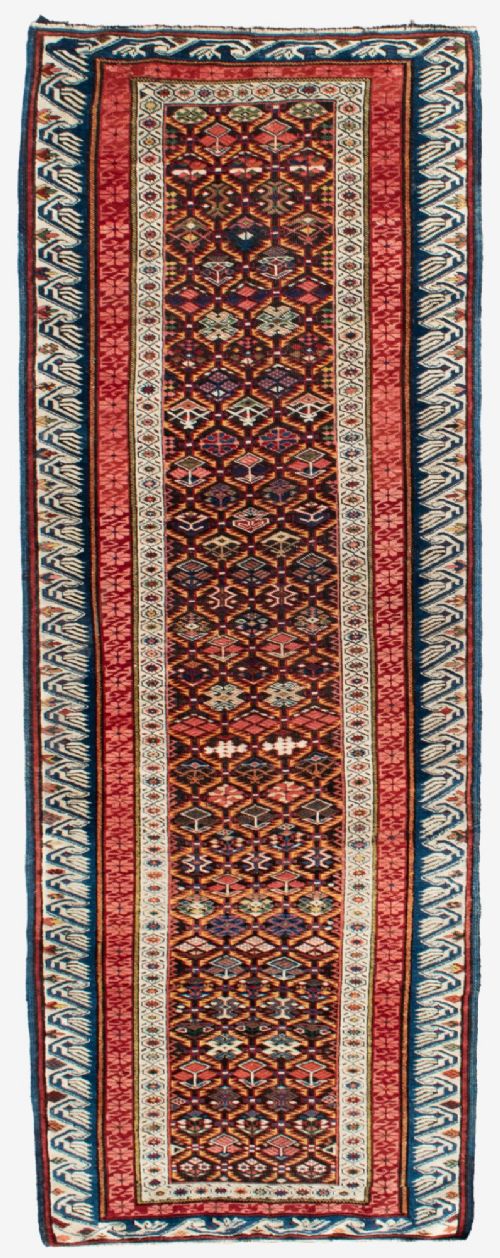
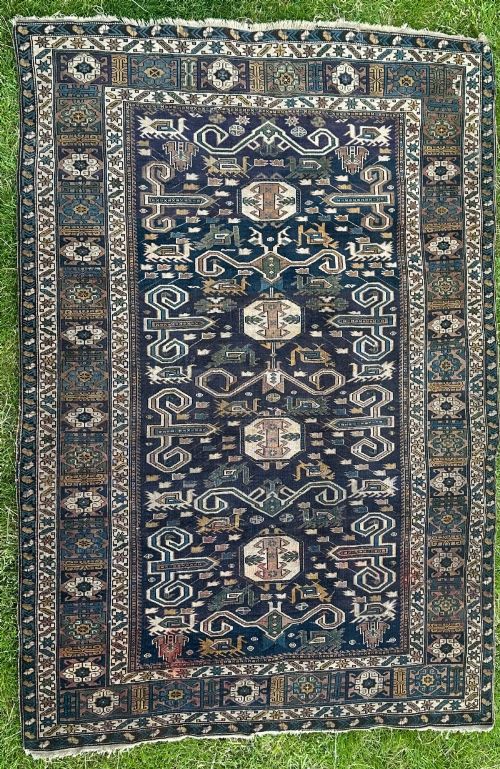
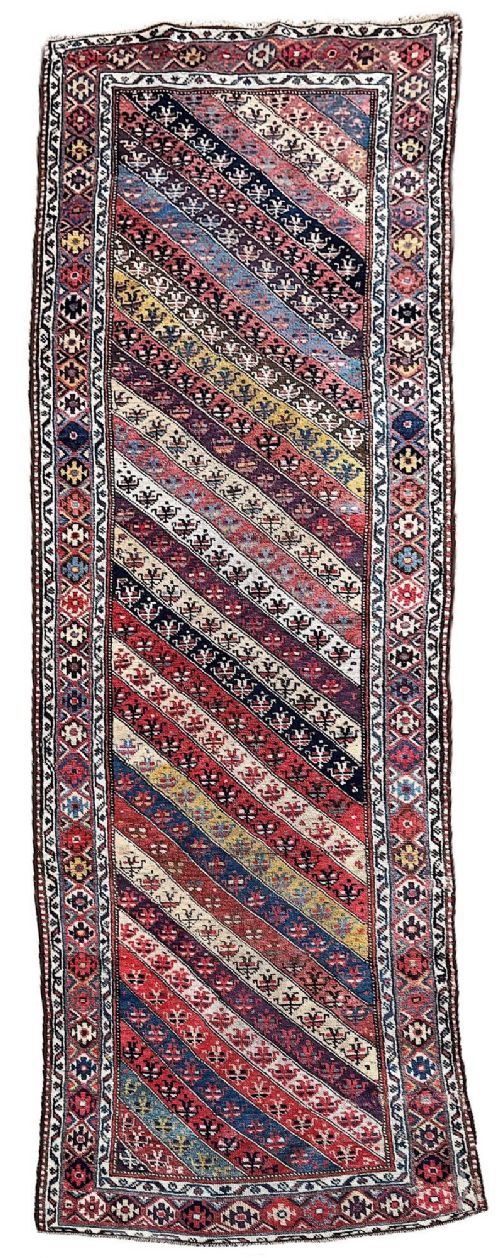
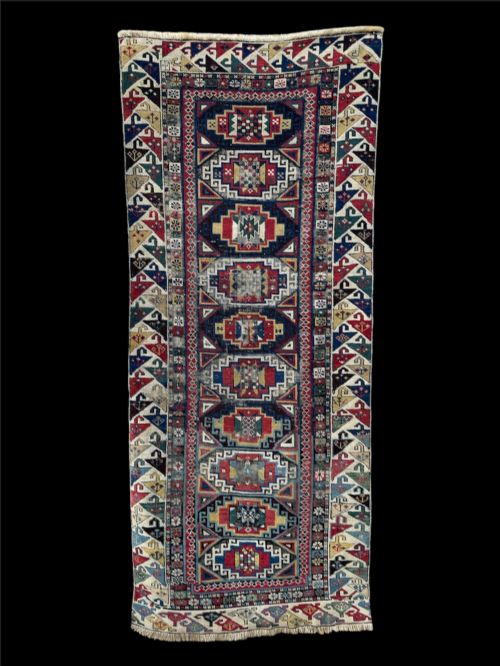


Shirvan Wool Runner
These shirvan wool runner selections bring traditional Caucasian textile artistry into a hallway with dense geometric motifs and rich natural dyes.
Shirvan Wool Runner
A shirvan wool runner offers elongated proportions suited to corridors and narrow spaces, originating from the Eastern Caucasus during the nineteenth and early twentieth centuries. These pieces display distinct regional identities through disciplined geometric layouts rather than sprawling curves.
The selections span narrower formats alongside related format groups like long rugs and village kilims from the same Caucasian workshops. Buyers encounter pieces bearing traditional structures such as star motifs, banded designs, and repeating medallions.
Materials and construction methods
Weavers utilised hand-spun wool for the pile and foundation yarns, yielding a durable surface that responds well to traditional floor use. Natural dyes provide the underlying palette, creating depth and variation across the woven field.
Cotton appears in foundational elements alongside wool, supporting the tension of the weave in specific regional formats. Flatweave techniques also emerge in kilim variants, requiring precise colour changes without a cut pile.
Listings span production dates from eighteen-eighty through nineteen-ten, recording materials such as cotton, hand-spun wool, and natural dyes.
Judging quality and execution
Knot density and structural tightness dictate the longevity and crispness of the geometric pattern work. Finer knotting permits sharper rendering of intricate borders and subsidiary motifs.
The vitality and harmony of the natural dye palette separate standard examples from superior survivors. Uniformity in spinning and consistent pile height throughout the runner length indicate disciplined workshop production.
The Shirvan Wool Runner Glossary
- Shirvan
- A geographical attribution from the Eastern Caucasus associated with finely knotted tribal and village rugs. These textiles typically employ crisp geometric layouts and balanced borders.
- Natural dye
- Colourants derived from plant and insect sources prior to synthetic alternatives. They age gracefully and develop subtle abrash over decades of exposure.
- Hand-spun wool
- Fleece processed manually on a drop spindle or wheel rather than by industrial machinery. This method retains natural lanolin and produces irregular thickness that absorbs dye unevenly.
- Kilim
- A flatweave textile produced without a pile by interlocking horizontal and vertical threads. These pieces offer lighter floor coverings or wall hangings.
- Boteh
- A teardrop or almond-shaped motif with a curved upper end, frequently seen in Caucasian and Persian weaving. It represents a stylized floral or cypress form.
Shirvan Wool Runner: Frequently Asked Questions
How do I place a runner in a narrow hallway?
Measure the corridor width carefully, leaving a uniform border of bare floorboards visible on all sides to frame the textile properly.
Utilise a dedicated rug underlay beneath the wool structure to prevent slipping and protect the foundation threads from excessive friction against the floor.
Are these runners suitable for high-traffic areas?
Traditional village runners tolerate normal foot traffic well due to the resilience of hand-spun wool pile and dense knotting foundations.
Rotate the textile periodically to distribute wear evenly across the length, especially if placed in a straight corridor subject to daily movement.
How do I clean a vintage wool runner?
Vacuum the surface gently using a suction-only attachment without a rotating brush roll that might catch the wool pile or fringe ends.
Address spills promptly with dry absorption methods or professional specialist cleaning, avoiding harsh chemical detergents that strip natural dyes.
How do I identify a Caucasian origin?
Look for crisp rectilinear geometry, hooked polygons, and distinct star motifs arranged in strict vertical alignments down the central field.
The colour palette relies on saturated primary tones contrasted against ivory or deep blue grounds typical of Eastern Caucasian production.