


Shirvan Geometric Carpet
Shirvan geometric carpet examples are woven textiles from the Eastern Caucasus, prized for precise tribal motifs and enduring natural dyes.
Shirvan Geometric Carpet
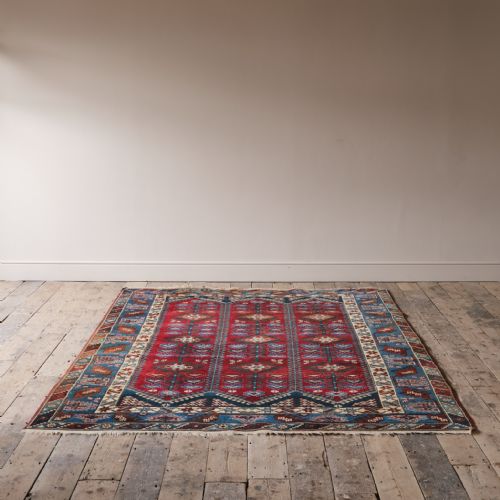
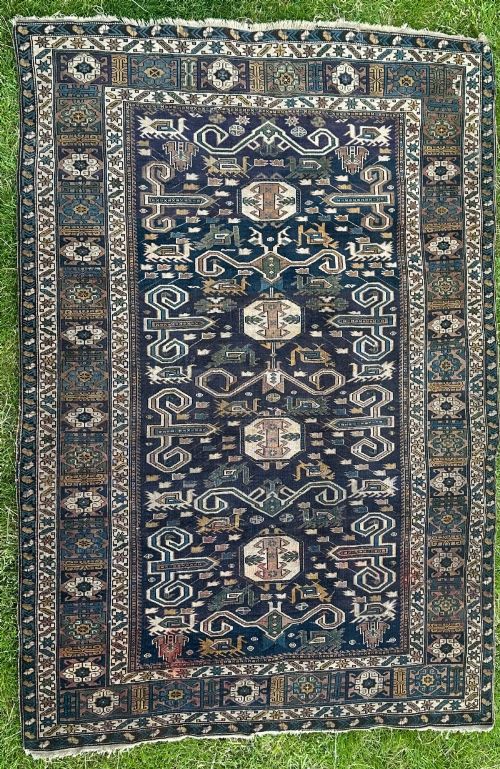
A shirvan geometric carpet brings traditional Caucasian craftsmanship into a room through structured patterns and rich wool construction. The selections here span the nineteenth century and the early twentieth century, showing a strong presence of village and tribal weaving traditions.
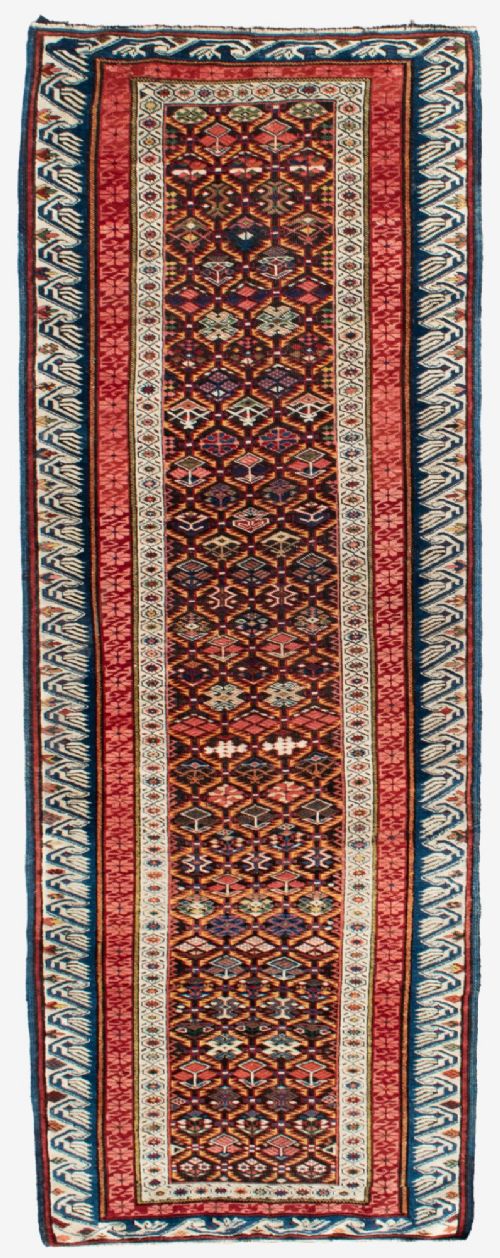
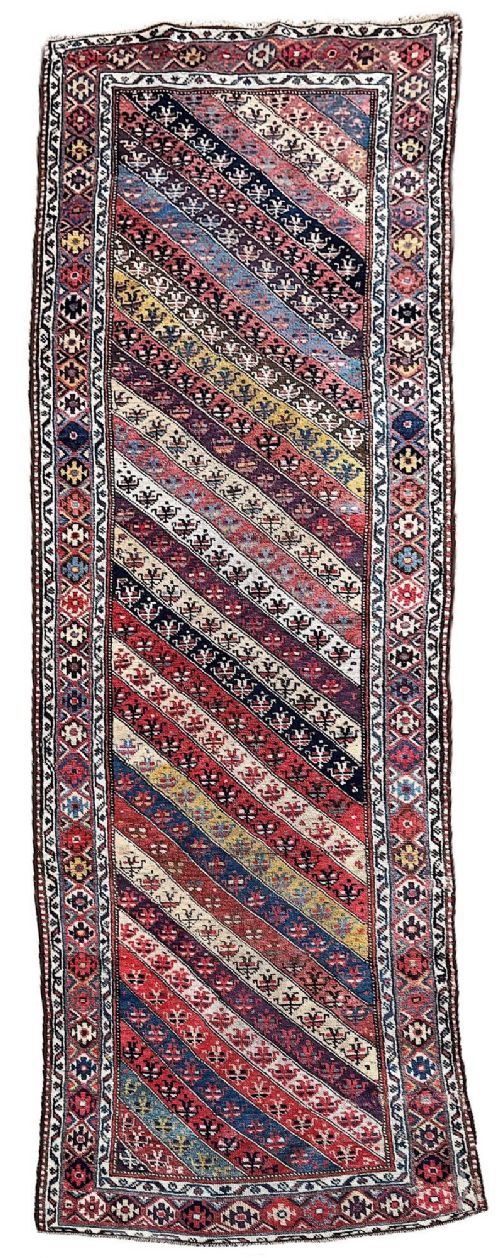
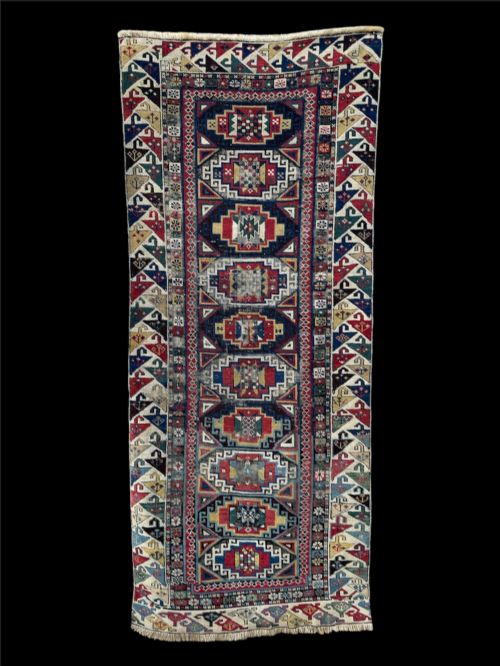
Buyers frequently encounter formats such as narrow runners, square area rugs, and specific regional prayer rugs featuring ivory grounds or distinctive borders. These pieces originate from distinct weaving centres across the Caucasus region, including Baku, Marasali, and Khila.
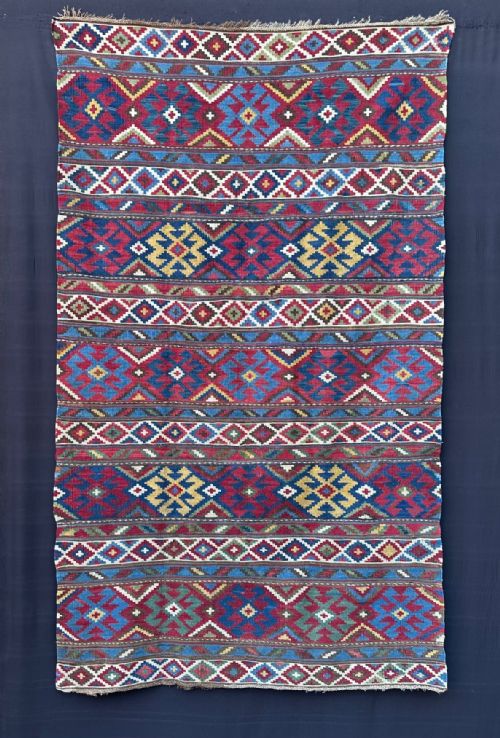
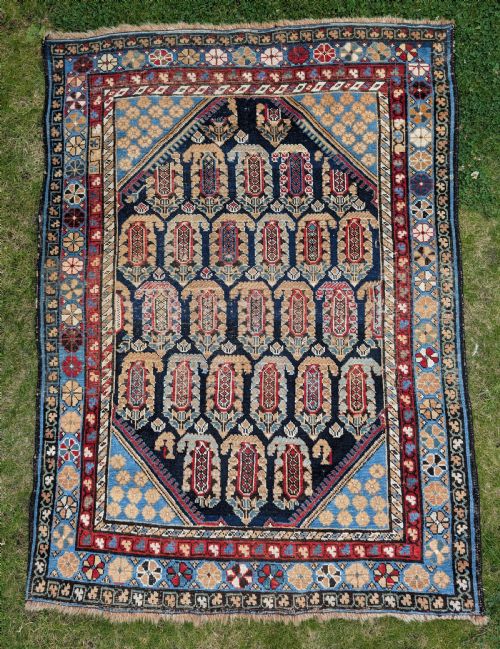
The aesthetic relies heavily on angular medallions, repeating lattice structures, and stylized flora or fauna. Each format demonstrates the disciplined layout typical of eastern Caucasian workshops from this period.
Materials and construction methods
The makers relied primarily on hand-spun wool for the pile, foundations, and flatwoven kilim sections. This dense wool provides the structural integrity necessary for carpets exposed to regular foot traffic.
Weavers utilised natural dyes to achieve saturated hues that age gracefully over time. These botanical and mineral colorants interact with the wool fibres to produce soft faded tones in older examples.
The current selection spans multiple decades, focusing on wool and cotton foundations coloured with natural dyes.
Judging quality and execution
Quality in a shirvan geometric carpet rests on the crispness of the knotting and the precision of the linear motifs. Tighter foundations and denser piles allow intricate patterns like bird borders and floral lattices to retain sharp definition.
The subtlety of the natural dye palette and the integrity of the surviving wool pile distinguish finer examples from standard production. Uniformity in the weave and minimal structural restoration indicate superior initial craftsmanship.
The Shirvan Geometric Carpet Glossary
- Kilim
- A flatwoven textile produced without a pile. These pieces serve as floor coverings or utilitarian covers and feature sharp geometric slits where colour blocks meet.
- Prayer rug
- A small format rug featuring a mihrab or niche design at one end. Weavers historically designed these rugs to direct the user's focus during daily devotions.
- Runner
- A long, narrow carpet format designed for hallways, corridors, or staircases. These pieces balance repeated medallion layouts within restricted widths.
- Natural dyes
- Colourants derived from plants, insects, and minerals rather than synthetic chemistry. These dyes create the nuanced patination seen in nineteenth-century textiles.
- Boteh
- A recurring teardrop or almond-shaped motif with a curved upper end. This ancient symbol frequently appears in Caucasian weaving alongside structured floral lattices.
Shirvan Geometric Carpet: Frequently Asked Questions
How do I care for a historic carpet?
Vacuum gently using suction only without a rotating brush bar to protect the hand-spun wool pile. Keep the textile away from direct sunlight to prevent fading of the natural dyes.
Rotate the piece periodically to ensure even wear across high-traffic areas. Professional textile cleaning should happen infrequently and only by specialists familiar with historic Caucasian rugs.
Where were these carpets originally woven?
These textiles originate from the Caucasus region situated between the Black Sea and the Caspian Sea. Specific towns and districts like Shirvan, Kuba, and Baku developed distinct weaving identities.
Nomadic and village weavers in these mountainous areas passed down specific geometric repertoires through generations. The resulting carpets reflect the cultural intersections of Persian, Turkish, and Caucasian design traditions.
Why do colours change across the surface?
Natural dyes react to light, washing, and age through a process known as abrash. This subtle tonal variation occurs naturally as yarn batches shift slightly in shade across the woven field.
Such shifts confirm the use of traditional dyeing methods rather than synthetic compounds. Collectors appreciate this characteristic for the depth and visual movement it brings to older wool.