
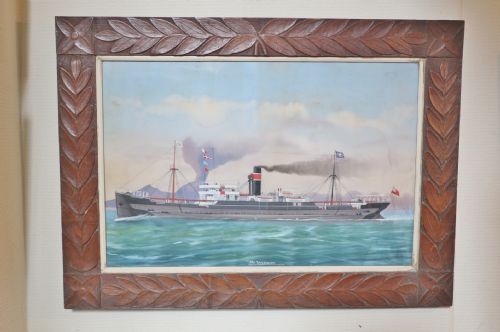
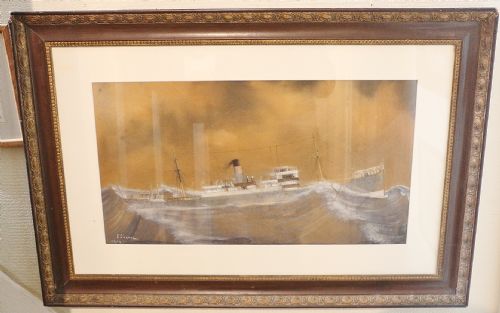
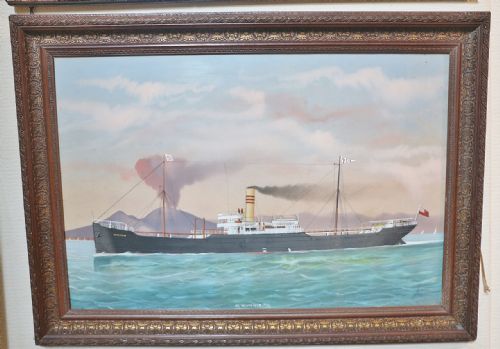
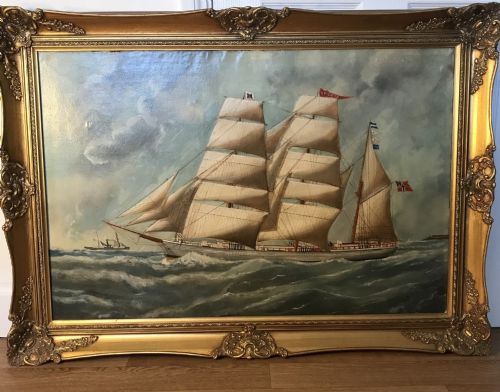


Ship Portrait Painting
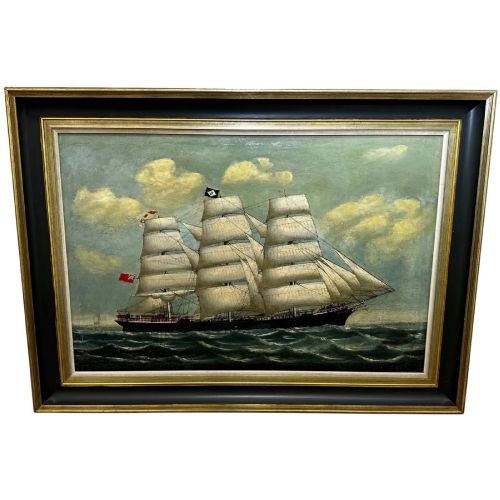
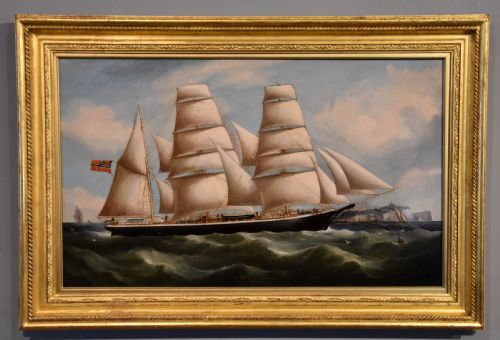
A ship portrait painting records a named vessel with the precise rigging, flags and lines that captain and owner recognised at a glance.
Ship Portrait Painting
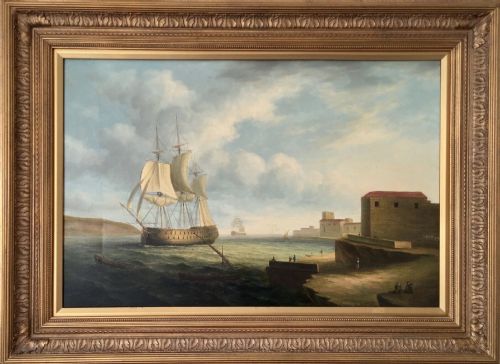
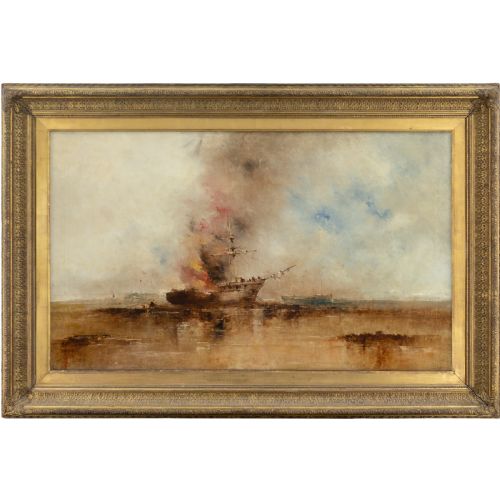
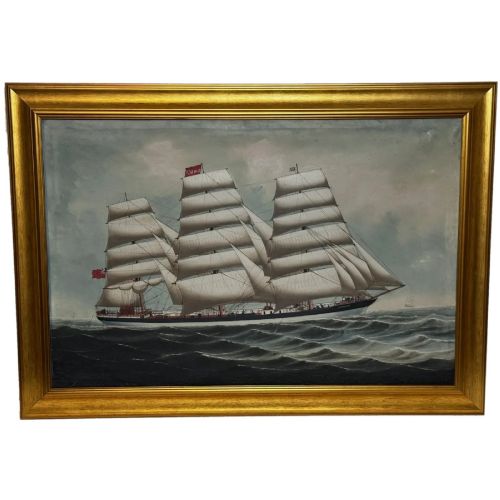
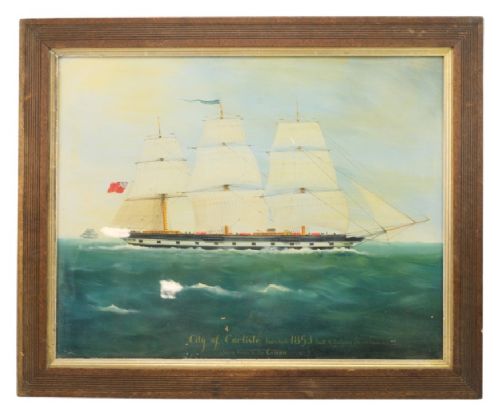
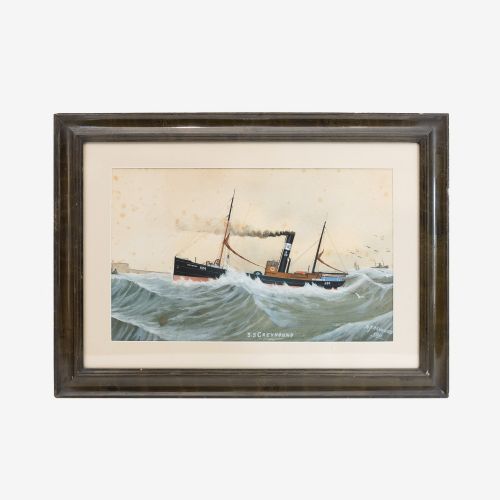
A ship portrait painting focuses entirely on a specific vessel, whether a three-masted schooner, an ironclad battleship or a steamship, rather than a broad seascape. These works document maritime history through named subjects such as the barque Vick or the steamship SS Bregonian.
The pieces on this page span from the Victorian and Edwardian eras into the twentieth century, taking the form of oil paintings, watercolours and gouache works. Many originate from specific ports or artistic traditions, including Anglo-Chinese and pierhead paintings.
Collectors encounter works attributed to known marine artists or produced by skilled English, French and Chinese school painters. Each canvas or panel serves as a historical document of naval and merchant fleets.
How They Were Made
Artists painted primarily in oil on canvas or panel, while others utilised watercolour and gouache on paper to capture fine rigging and coastal details. These media allowed painters to render the translucent quality of water and the heavy blacks of steamship hulls.
Framing played an integral role in presentation, with period works often housed in oak, giltwood or gold leaf frames that complemented the maritime subject matter. Support materials range from traditional wood panels to stretched canvas and heavy paper.
Materials represented across the collection include traditional wood panels, stretched canvas, heavy paper, giltwood frames and gold leaf.
What Varies in Quality
The standard of a ship portrait painting rests upon the accuracy of the vessel's architecture, sail plan and rigging details. Master painters understood naval engineering, rendering hull lines and perspective with absolute precision.
Atmospheric command distinguishes superior works, where the artist captures turbulent seas, coastal light or smoke from steamship funnels with conviction. Surface preservation and the original relationship between the painting and its frame also influence the standing of a piece.
Reginald Arthur Borstel·Lai Fong·Richard B. Spencer·Alexander Harwood·Vincenzo D’Esposito·Marie-Edouard Adam·Joseph Heard·Samuel John Milton Brown·Johan Jens Neumann
The Ship Portrait Painting Glossary
- Pierhead painting
- A genre of ship portrait created near major ports, usually commissioned by sea captains or shipowners to record a specific vessel. These works prioritise accurate rendering of the ship over romantic seascape conventions.
- Barque
- A sailing vessel with three or more masts, having the foremast and mainmast square-rigged and the mizzenmast fore-and-aft rigged. This configuration was common in the merchant fleets depicted in nineteenth-century art.
- Gouache
- An opaque water-based medium that dries to a matte finish, frequently utilised for crisp maritime watercolours. It allows artists to build sharp highlights on sails and foaming sea spray.
- Panel
- A rigid support surface for oil painting, commonly made of wood, which provides a stable ground for detailed brushwork. Panels were favoured by artists working on smaller format marine portraits.
- Anglo-Chinese
- A term describing artworks produced in China, particularly in treaty ports like Canton or Hong Kong, for Western patrons and maritime clients. These paintings combine European ship portrait conventions with traditional Chinese handling of water and sky.
Ship Portrait Painting: Frequently Asked Questions
What is a ship portrait painting?
A ship portrait painting is a distinct genre of maritime art where a named vessel is the primary subject, shown under sail or steam. These works were often commissioned to celebrate a newly launched ship or commemorate a specific voyage.
Unlike general seascapes, the accuracy of the vessel's hull, rigging and flags is paramount. Captains and owners valued these paintings as precise records of their ships.
Who painted these maritime works?
Makers range from formally trained naval artists to port-side painters working in hubs like Hong Kong or Mediterranean ports. Many practitioners were specialists who understood maritime architecture intimately.
Some pieces are signed by documented artists, while others are attributed to specific regional schools such as the Anglo-Chinese or English school traditions.
How do I identify the period?
The vessel type often provides the clearest dating evidence, distinguishing wooden sailing barques from Victorian ironclads and Edwardian steamships. Rigging styles, funnel designs and naval uniforms evolve across the decades represented.
Framing materials and media also offer clues, with nineteenth-century giltwood frames and Edwardian watercolour techniques aligning with specific eras of production.
Where were these paintings displayed?
Historically, ship portraits hung in the offices of shipping lines, the homes of maritime captains and the parlours of shipowners. They served as proud displays of commercial success or naval service.
Today, collectors place them in studies, libraries and living spaces where traditional marine art complements period interiors.