


Sheraton Revival Stand
A sheraton revival stand brings refined neoclassical elegance into a room through lighter timbers and delicate inlay.
Sheraton Revival Stand
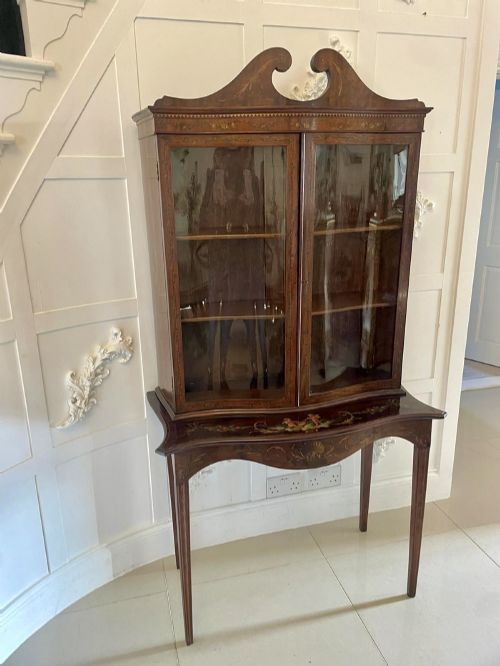
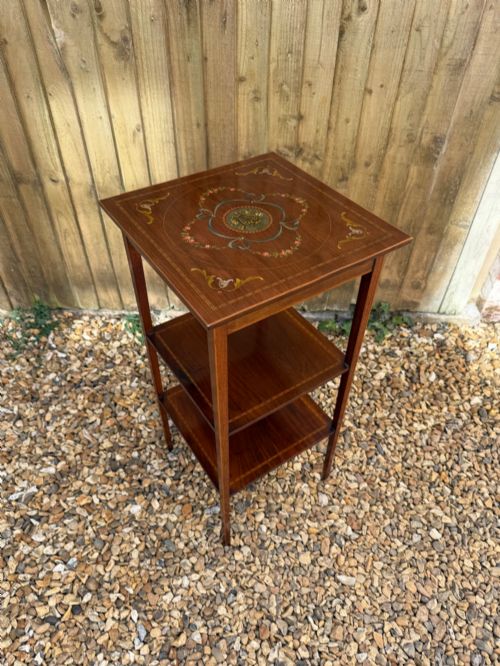
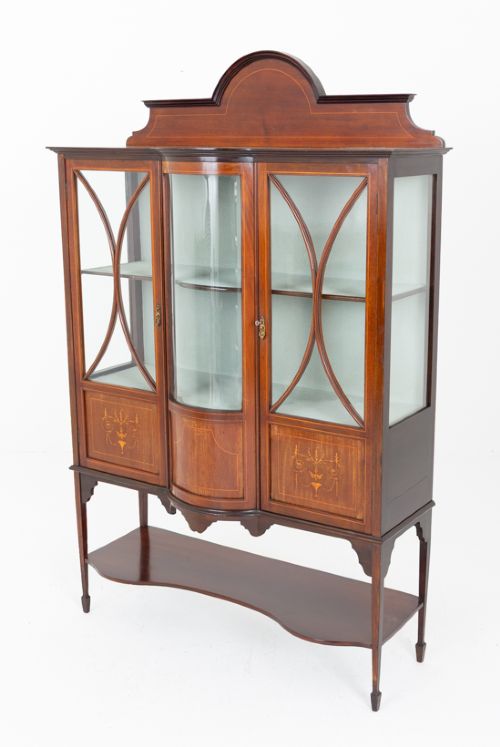
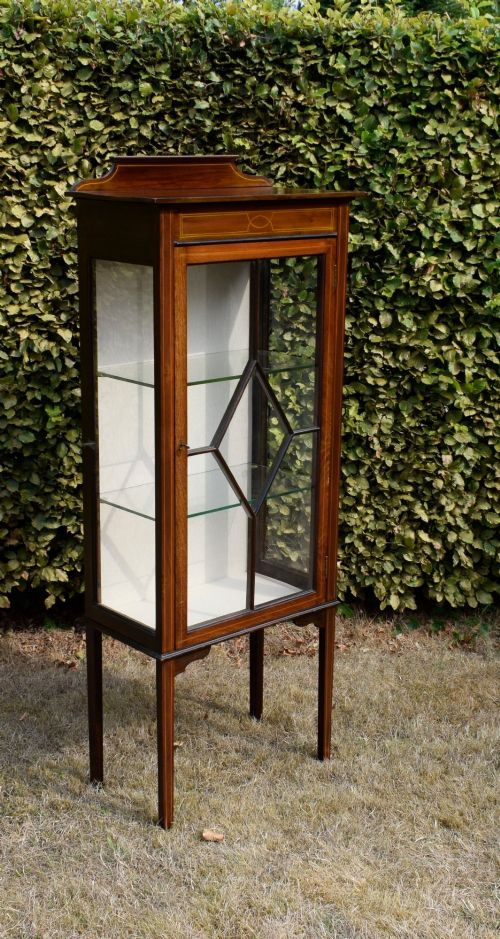
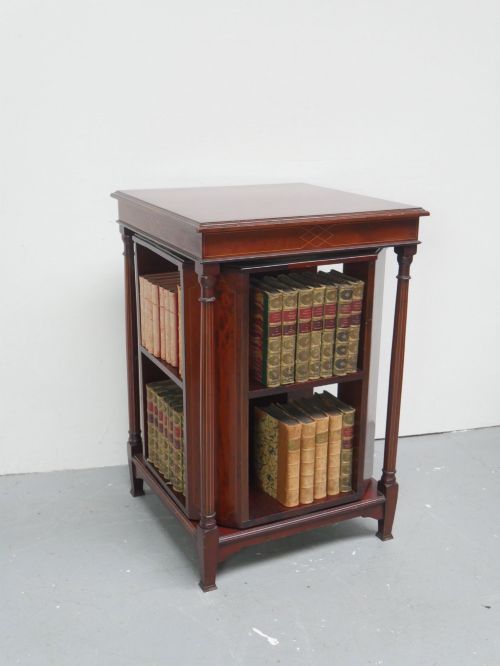
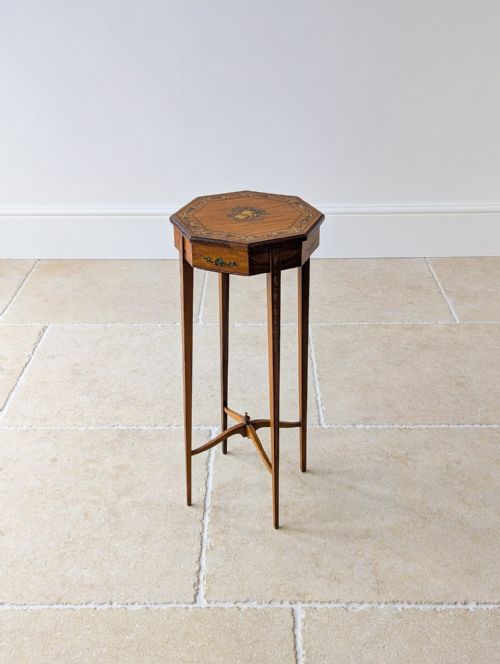
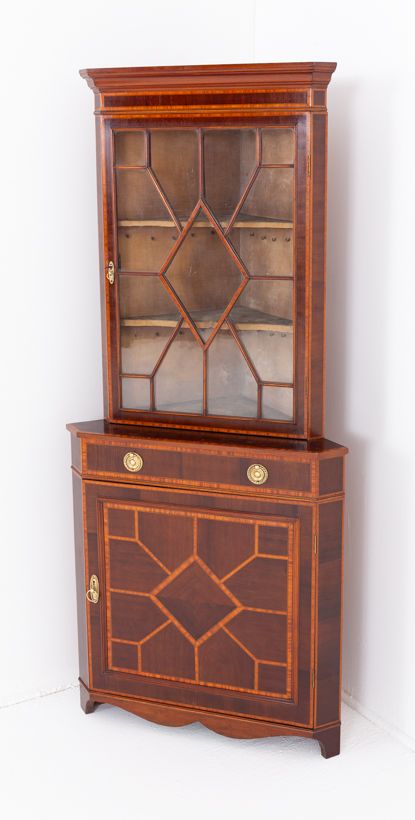
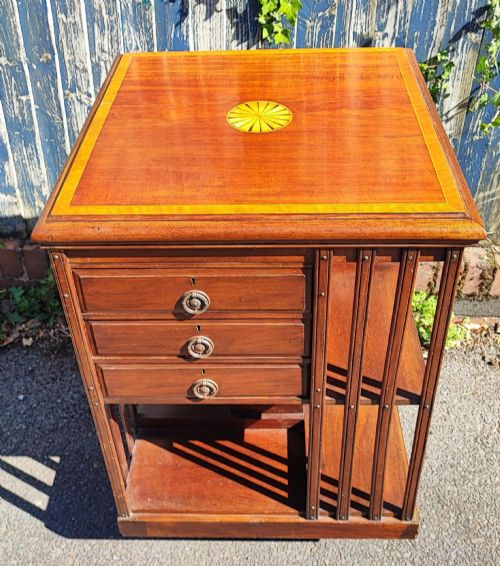
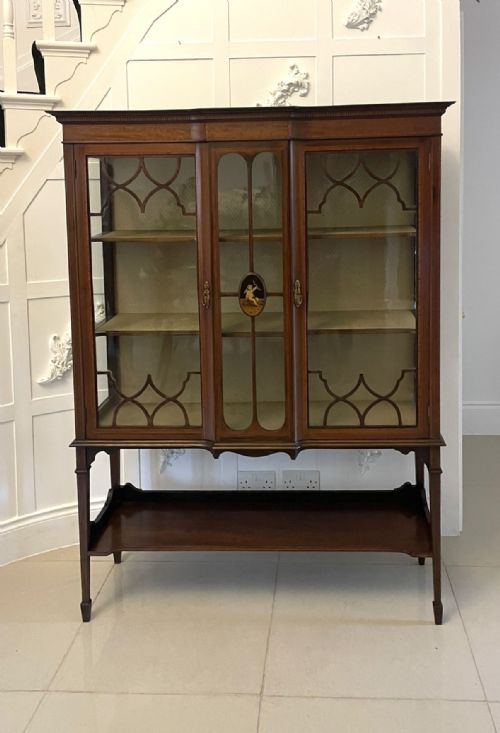
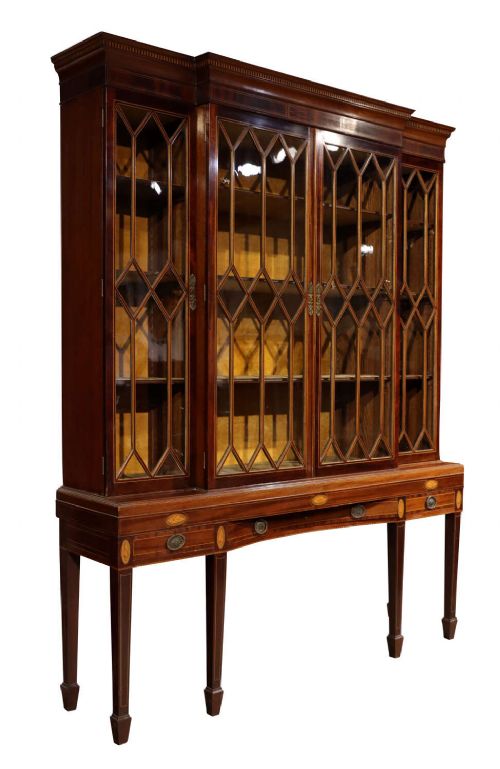
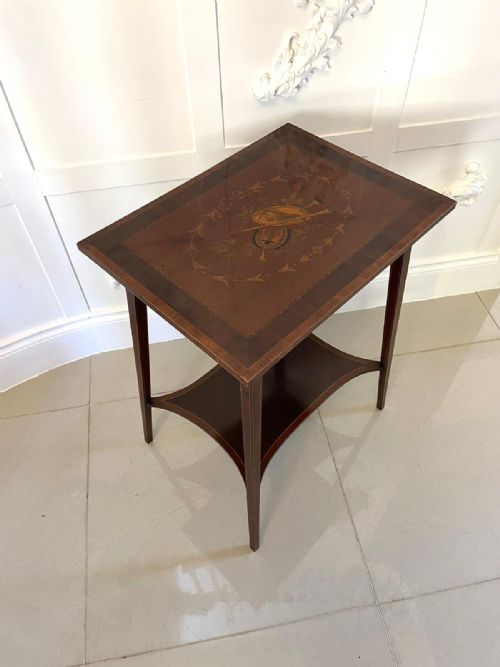
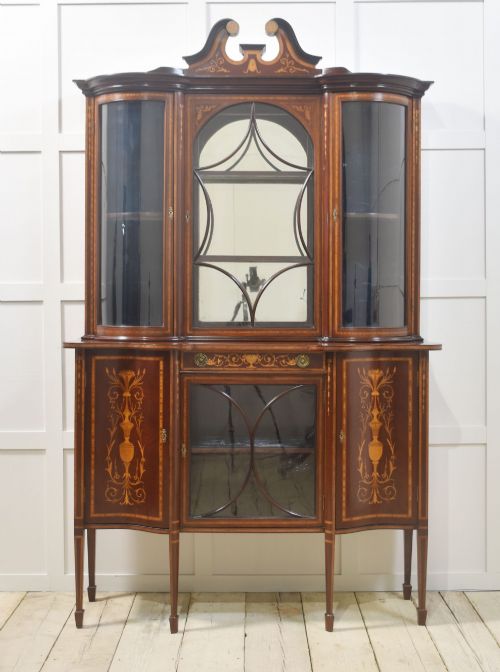
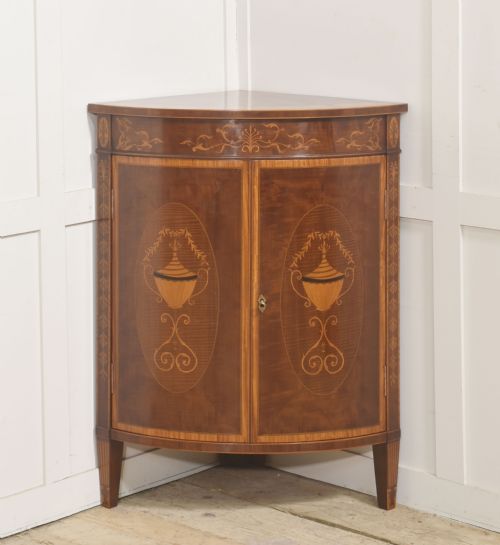
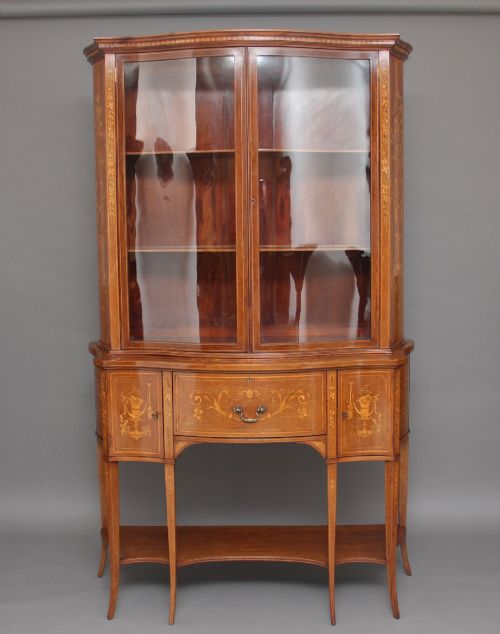
A sheraton revival stand encompasses various elevated display and utility furniture pieces produced primarily around the late nineteenth and early twentieth centuries, drawing heavily on eighteenth-century design motifs. The selection includes plant stands, urn stands, lamp tables, and corner cabinets that reflect the revival of lighter proportions and classical symmetry.
The version most commonly encountered on this page is the Edwardian mahogany stand, frequently embellished with satinwood inlay and boxwood stringing. These items span from simpler occasional pieces to more elaborate display cabinets and jardiniere stands originating from the late Victorian period up to the nineteen-twenties.
What varies in quality
The precision of the cabinetwork and the crispness of the inlaid details distinguish standard production from superior examples. Finely cut stringing and balanced proportions reflect the skill of the workshop behind the piece.
Material selection dictates the overall finish, where well-chosen mahogany veneers and carefully matched satinwood banding elevate a stand visually. Original painted details and surviving brass mounts further separate finer examples from simpler utilitarian items.
Materials recorded across the inventory include mahogany, satinwood, rosewood, kingswood, brass, and glass.
Edwards and Roberts
The Sheraton Revival Stand Glossary
- Satinwood
- A lustrous tropical timber with a golden yellow sheen, frequently used for banding and inlay in revival furniture. It provides strong visual contrast against darker woods like mahogany.
- Inlay
- A technique where pieces of contrasting wood or other materials are inserted into depressions in the base wood to form a design. This method defines much of the ornamentation on these stands.
- Jardiniere
- A decorative stand or container designed to hold plants or flowers. These items often feature lined interiors or raised galleries.
- Astragal
- Moulding used to hold panes of glass within a glazed door or bookcase. These thin wooden bars create geometric grid patterns across the cabinet front.
- Stringing
- Narrow strips of contrasting timber embedded into the surface of furniture to create thin linear borders. Boxwood is frequently utilised for this purpose.
Sheraton Revival Stand: Frequently Asked Questions
What periods do these stands date from?
The pieces span from the late nineteenth century into the early decades of the twentieth century. Most examples belong to the Edwardian era and the Victorian period.
Makers of this time deliberately copied the lighter eighteenth-century aesthetics associated with Thomas Sheraton. This revival movement flourished around nineteen hundred.
How were plant and urn stands used?
Plant stands and urn stands served as raised display surfaces for decorative indoor foliage, decorative vessels, or lighting. Their elevated design brought greenery and ornamental objects closer to eye level in Victorian and Edwardian reception rooms.
Many featured specialised tops or small platforms to securely hold heavy ceramic pots or metal urns.
How do I distinguish Edwardian from Victorian pieces?
Victorian examples tend to display heavier proportions and deeper mahogany tones. Edwardian pieces often favor lighter satinwood highlights and more restrained neoclassical lines.
Both periods overlap heavily in the revival style, making timber selection and inlay patterns key indicators of age.
How should I care for satinwood and mahogany surfaces?
Protect the polished wood by keeping stands away from direct sunlight and sudden temperature shifts. Regular dusting with a soft, dry cloth helps preserve the finish.
Avoid using silicone-based polishes that can degrade historical wood finishes over time.