




Sheraton Revival Painted Cabinet
These sheraton revival painted cabinet pieces bring neoclassical lightness and hand-painted grace to a room, offering refined storage with an air of Georgian elegance.
Sheraton Revival Painted Cabinet
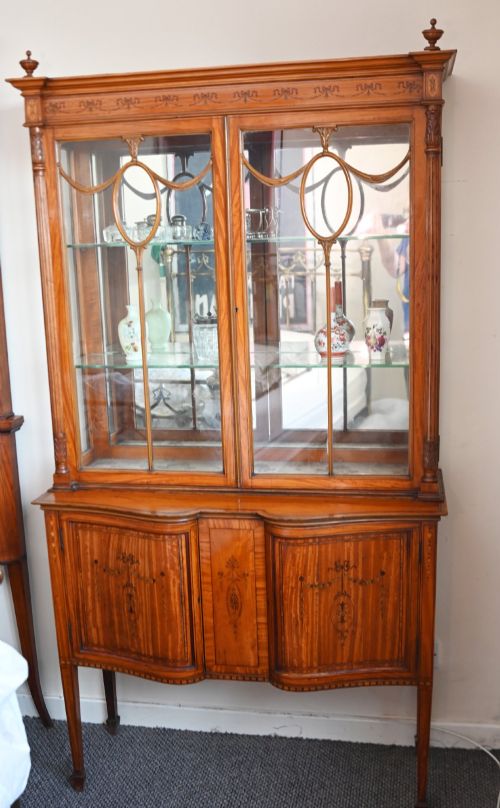
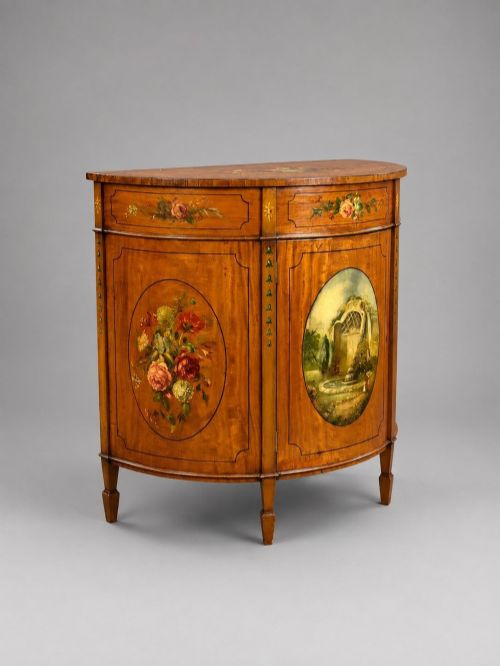
A sheraton revival painted cabinet draws on late eighteenth-century neoclassical designs, surfacing primarily across the Victorian and Edwardian periods up to the nineteen-thirties. Buyers seek these pieces for their luminous timbers and delicate surface decoration, which introduce brightness to domestic spaces without bulk.
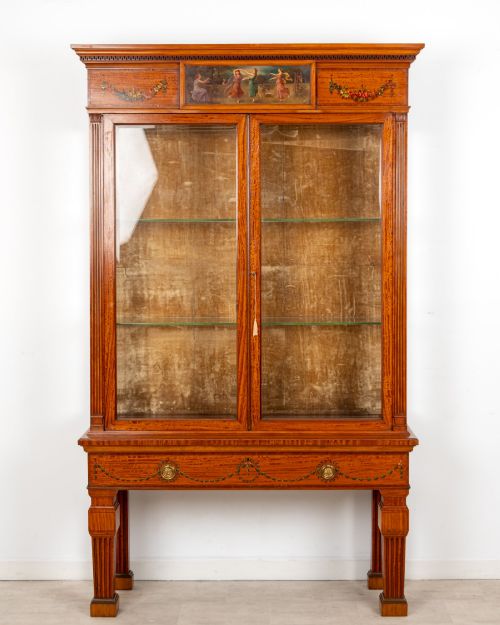
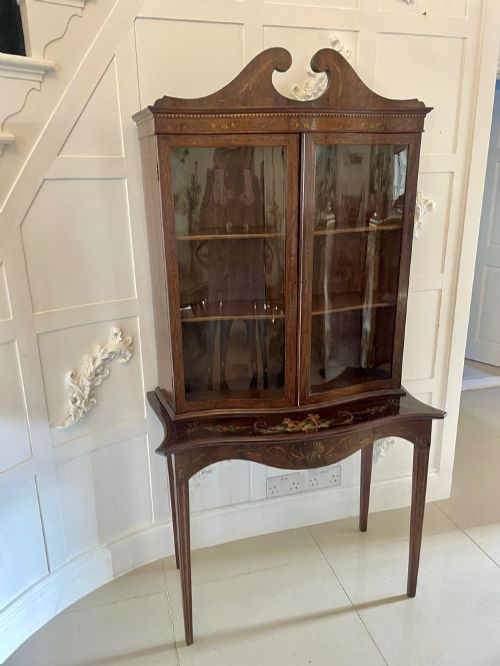
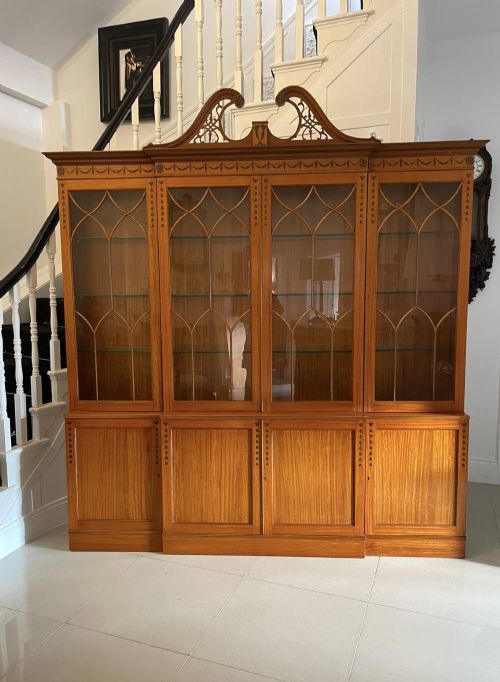
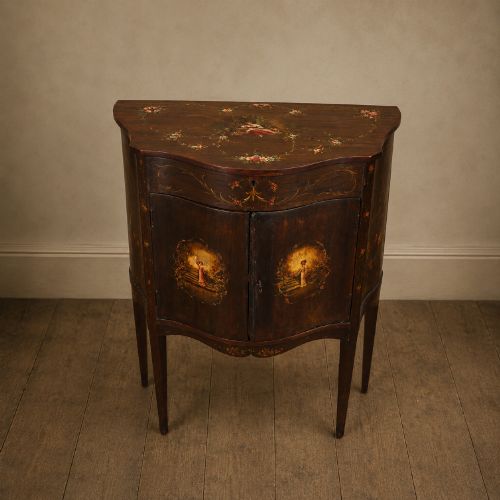
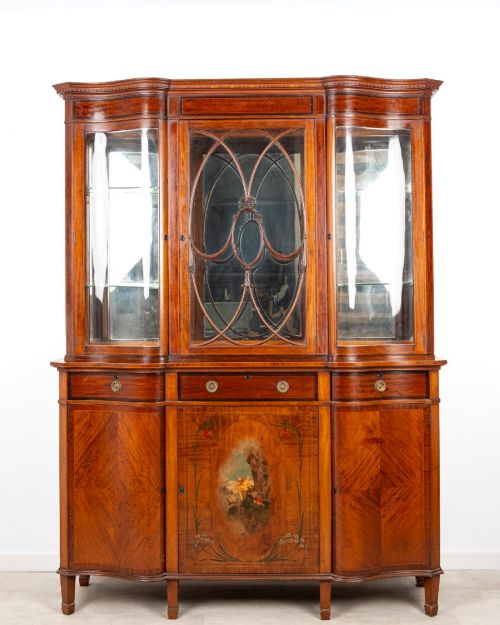
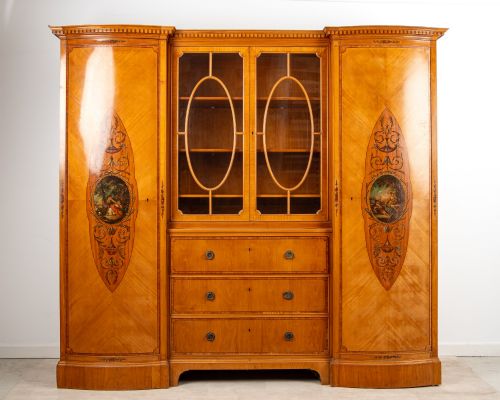
The selections on this page span display cabinets, demi-lune commodes, bedside cupboards, and larger wardrobes, with satinwood display cabinets and serpentine side cabinets appearing most frequently. These forms utilise slender proportions, often featuring curved fronts and glazed doors suited to displaying china or books.
Origins cluster around the turn of the twentieth century, bridging Victorian craftsmanship and Edwardian elegance. Makers adapted classic shapes into versatile household furniture, pairing practical storage with ornamental painted panels.
Materials and construction
Satinwood and mahogany form the primary timber foundation for these cabinets, frequently accented with boxwood stringing and contrasting inlay. Cabinetmakers selected these fine-grained woods for their smooth surfaces, which provided an ideal base for detailed ornamentation.
Hand-painted decoration and floral panels define the visual character of the style, applied directly to the timber or onto inserted medallions. Glazing bars in glass doors, brass hardware, and shaped timber such as demi-lune and serpentine fronts complete the construction.
Sheraton Revival Painted Cabinet Retail Price Guide 2026
Typical asking prices for sheraton revival painted cabinet among the pieces listed under this phrase on Sellingantiques today, from the lower quarter to the upper quarter. They describe what is for sale here now, not the wider market.
Listings feature items spanning the Victorian, Edwardian, and nineteen-thirties periods, constructed primarily from satinwood, mahogany, and painted timber.
Distinctions in quality
Quality rests on the crispness of the hand-painted detailing and the precision of the timber inlays. Finer examples display fluid brushwork and balanced floral or neoclassical motifs rather than flat, mechanical stencilling.
The choice of timbers and the integrity of structural curves, such as bowed or serpentine fronts, separate standard items from superior pieces. Well-executed glazing bars and original brass hardware further distinguish the better workshops.
Hampton & Sons, London
The Sheraton Revival Painted Cabinet Glossary
- Satinwood
- A lustrous, yellow-toned hardwood native to the tropics, prized for its reflective grain and smooth finish. It served as the principal canvas for painted neoclassical decoration during the revival periods.
- Demi-Lune
- A half-moon shape used for the plans of commodes and side cabinets. This curved profile allows the furniture to sit flush against a wall while softening room angles.
- Serpentine
- A gently undulating front line curving outward in the centre and inward at the sides. This contour requires precise carpentry and adds visual movement to storage pieces.
- Astral Glazing
- Wooden framework dividing glass door panels into smaller geometric panes. It lightens the appearance of heavy display cabinets and reflects period proportions.
- Boxwood
- A dense, pale yellow timber used for delicate stringing and linear inlay work. Craftsmen deployed it to create sharp borders around cabinet doors and tabletops.
Sheraton Revival Painted Cabinet: Frequently Asked Questions
What is a sheraton revival painted cabinet?
These pieces are decorative storage items inspired by late eighteenth-century neoclassical furniture, created primarily during the Victorian and Edwardian eras. They combine fine timbers like satinwood with hand-painted floral or classical motifs.
Buyers choose them to introduce light, colour, and refined storage into drawing rooms, hallways, and bedrooms without overwhelming the space.
How do I date these cabinets?
Dating relies on combining timber choice, construction methods, and stylistic cues recorded in pieces from the late nineteenth and early twentieth centuries. Edwardian examples often display lighter satinwood and delicate painted panels, while Victorian pieces can feature denser mahogany foundations.
Examining drawer linings, backboards, and hardware helps confirm whether a piece originates from the nineteenth century or the subsequent revival decades.
How should I care for satinwood?
Satinwood requires protection from direct sunlight to preserve its warm yellow tone and prevent the painted decoration from fading. Routine dusting with a soft, dry cloth maintains the polished surface without moisture damage.
Avoid placing these cabinets near heat sources, as fluctuating temperatures can affect delicate veneers and hand-painted panels.
Where do I place a demi-lune cabinet?
A demi-lune or half-moon cabinet suits entrance halls, alcoves, and living room walls where a standard rectangular piece would protrude too far. Its curved front profile softens room layouts while offering convenient surface space and enclosed storage.
Pairing the cabinet with a wall mirror or placing small lamps on top highlights the painted details and timber grain.