



Sheraton Revival Desk Chair
A sheraton revival desk chair brings the elegant geometry of the late eighteenth century into nineteenth and twentieth-century rooms with lighter timbers and refined painted details.
Sheraton Revival Desk Chair
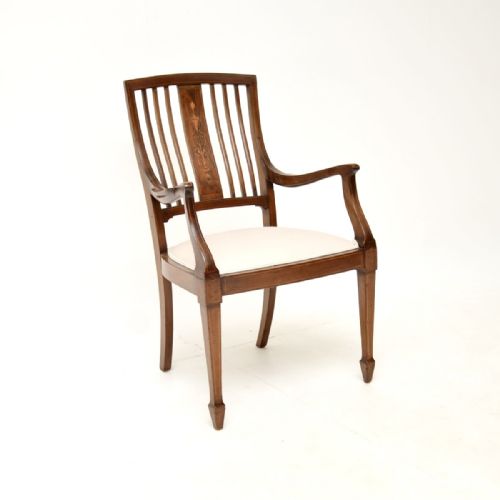
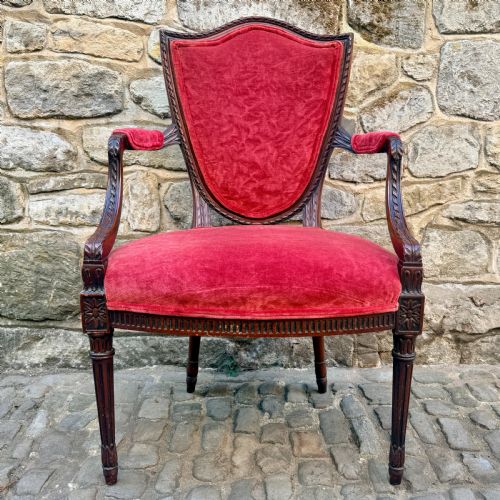
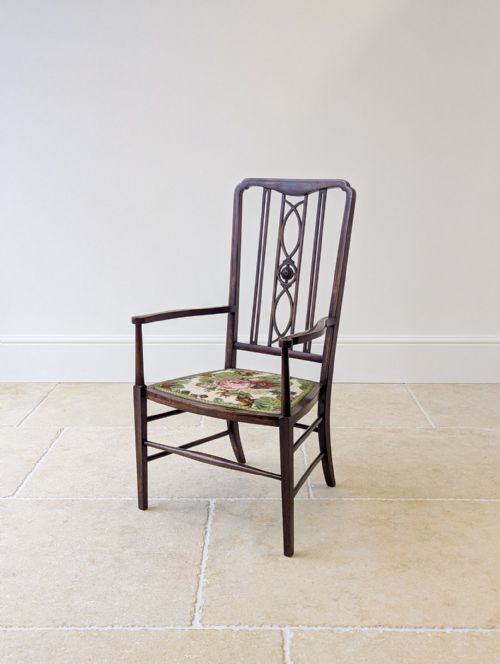
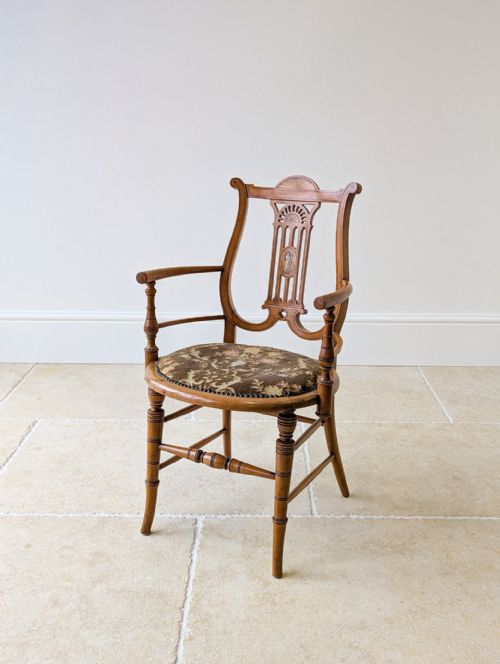
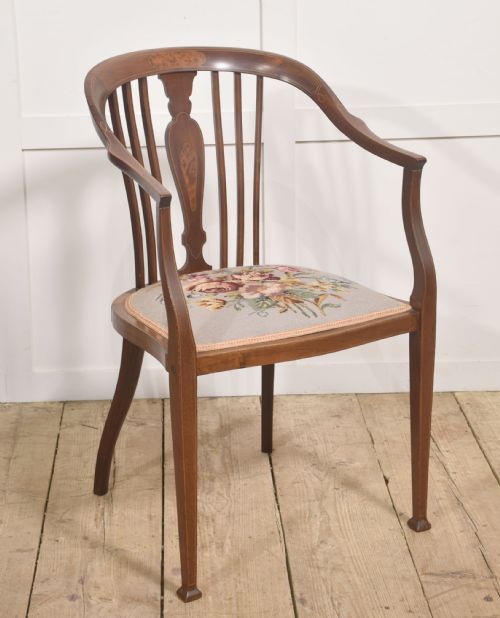
A sheraton revival desk chair combines classical proportions with the lighter forms favoured by late nineteenth and early twentieth-century makers. Most examples encountered here date from the Edwardian era and the late Victorian period, reflecting a sustained demand for refined seating.
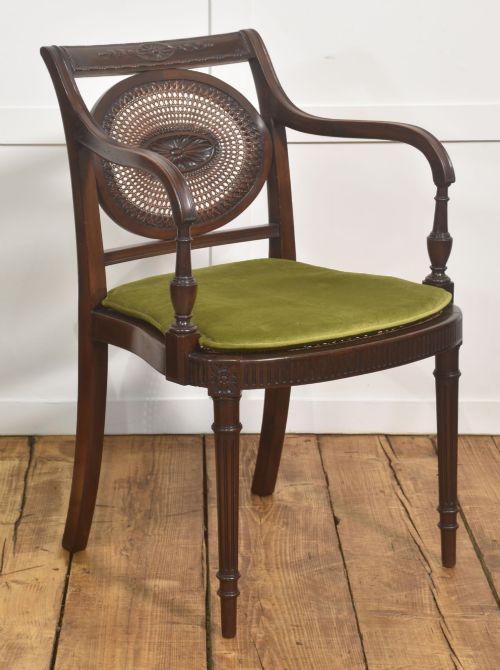
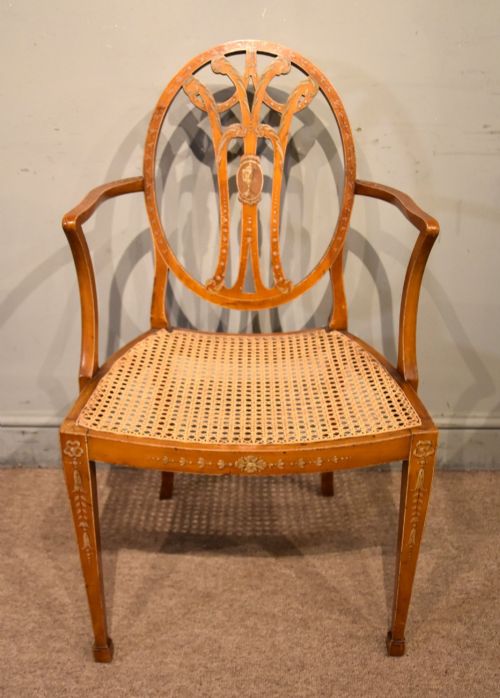
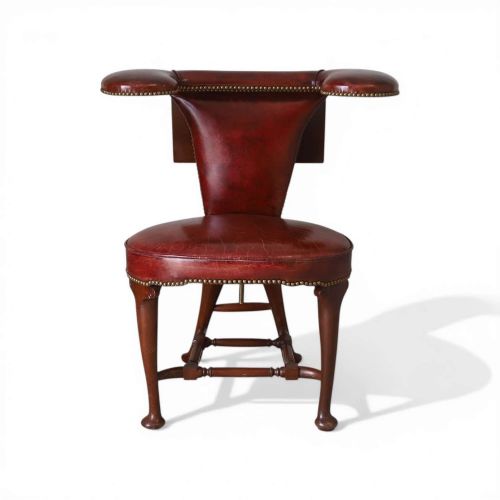
These pieces appear across various structural formats including library armchairs, tub chairs, and elbow chairs designed for writing tables. The construction often employs open arms and curved backs to provide both comfort and visual lightness in a study or library.
The aesthetic draws heavily on the neoclassical repertoire, using restrained lines rather than heavy carving. Makers working within this idiom focused on creating functional work seats that retained a decorative presence within domestic interiors.
Materials and Construction
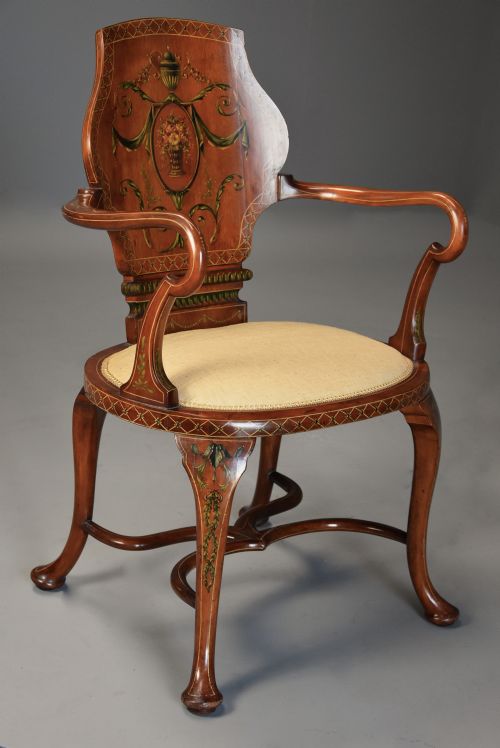
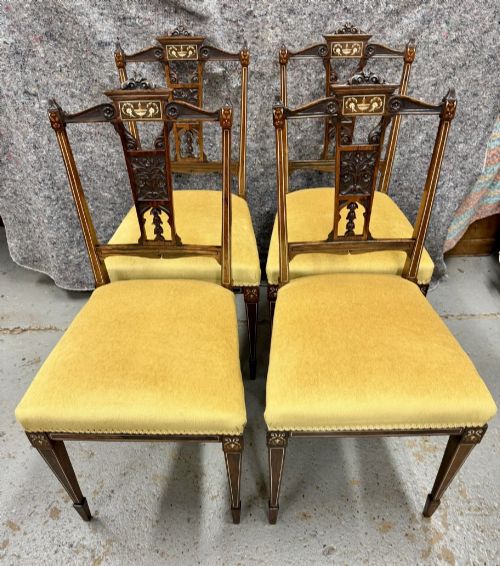
Mahogany and satinwood form the primary structural timbers, often selected for their fine grain and suitability for delicate turning and joinery. Boxwood stringing and contrasting inlay add linear definition to the frame.
Surface decoration frequently incorporates hand painting alongside traditional polish finishes. Upholstery materials range from leather inserts on reading chairs to fabric, velvet, and cane panels set into the backrests.
Sheraton Revival Desk Chair Retail Price Guide 2026
Typical asking prices for sheraton revival desk chair among the pieces listed under this phrase on Sellingantiques today, from the lower quarter to the upper quarter. They describe what is for sale here now, not the wider market.
Listings span the Victorian and Edwardian periods, featuring mahogany, satinwood, and painted finishes across multiple chair forms.
Judging Quality and Execution
The refinement of the timber inlay separates standard production from superior examples. Crisp boxwood stringing and well-executed painted details indicate a higher standard of workshop craftsmanship.
Structural integrity relies on the tightness of the joints in the curved arms and back rails. Pieces that retain their original decorative surfaces without excessive re-working command greater interest from collectors.
The Sheraton Revival Desk Chair Glossary
- Sheraton Revival
- A design movement spanning the late nineteenth and early twentieth centuries that reinterprets the neoclassical furniture forms associated with Thomas Sheraton. It relies on satinwood, mahogany, and subtle inlay rather than heavy proportions.
- Tub Chair
- A seated form featuring a continuous curved back and armrest rail enclosing the sitter. This shape provides enclosed support and appears frequently in mahogany and inlaid variants.
- Inlay
- A technique where pieces of contrasting wood, such as boxwood, are inserted into recesses within the primary timber surface to create decorative patterns. It defines the edges and panels of many refined chairs.
- Elbow Chair
- An armchair with a low back and short arms designed to fit neatly beneath a desk or table. These chairs offer side support while allowing freedom of movement for writing.
Sheraton Revival Desk Chair: Frequently Asked Questions
How do I use a sheraton revival desk chair today?
These chairs function well at traditional writing tables or as occasional seating in a study. Their lighter scale allows them to fit comfortably into rooms where heavier furniture might overwhelm the floor space.
Care should be taken with antique upholstery and leather surfaces when placing them in daily use. A simple desk setup ensures the wooden arms avoid excessive knocks from modern table edges.
What is the difference between an Edwardian and a Victorian piece?
Victorian examples tend to display slightly heavier proportions and deeper colour tones in the mahogany. Edwardian pieces often embrace brighter satinwood surfaces and more delicate painted decoration.
Both periods share a fascination with neoclassical revivalism, though the later Edwardian work leans towards airier, lighter forms.
Can I identify the exact date of a desk chair?
Dating relies on timber selection, construction methods, and stylistic cues recorded across the late nineteenth and early twentieth centuries. Exact years are often approximated through design registration or characteristic workshop practices.
Makers working in these decades frequently blended historical styles, making precise chronological placement a matter of comparative detail.
What timber was used for these chairs?
Mahogany and satinwood dominate the construction, providing both strength and a pale canvas for decorative work. Boxwood often appears alongside darker woods for fine stringing lines.
Secondary materials like cane, leather, and velvet are integrated into the seats and backs to complete the design.