

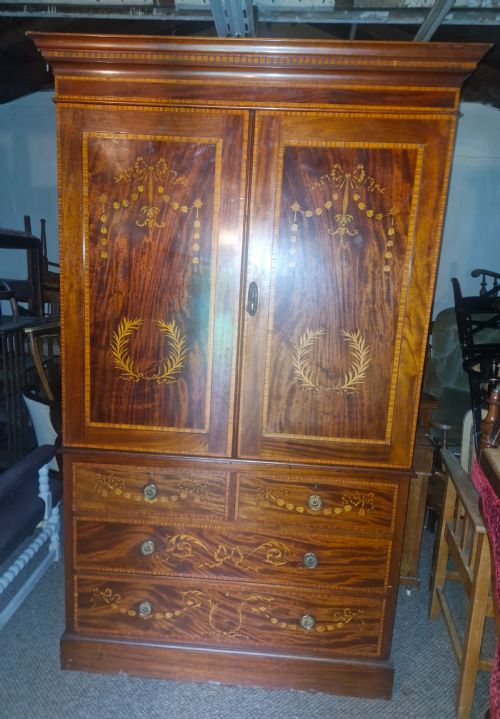


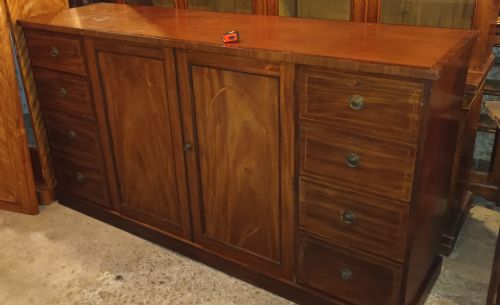


Sheraton Mahogany Press
These pieces known as a sheraton mahogany press are formal storage furniture built to hold linens and clothes with classic Georgian and revival lines.
Sheraton Mahogany Press
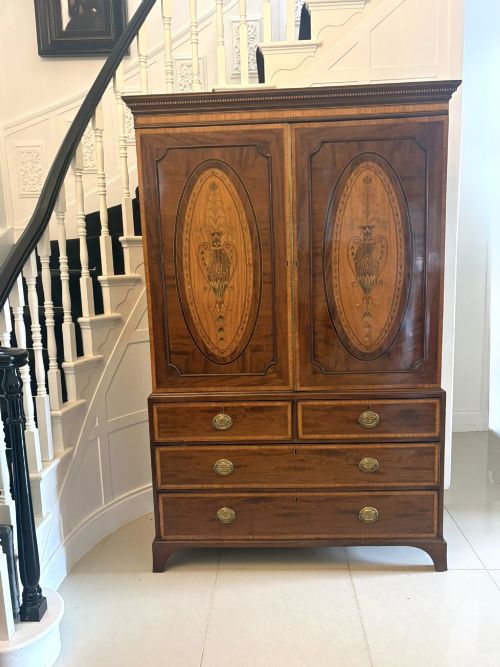
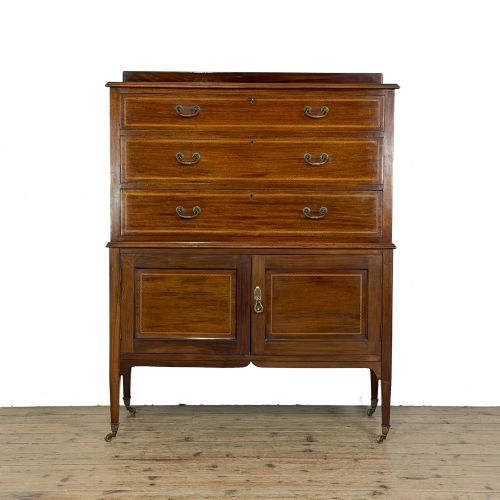
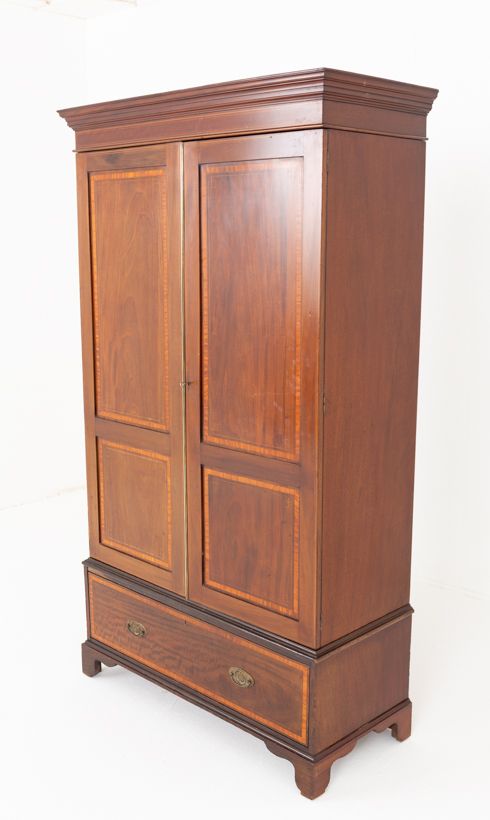
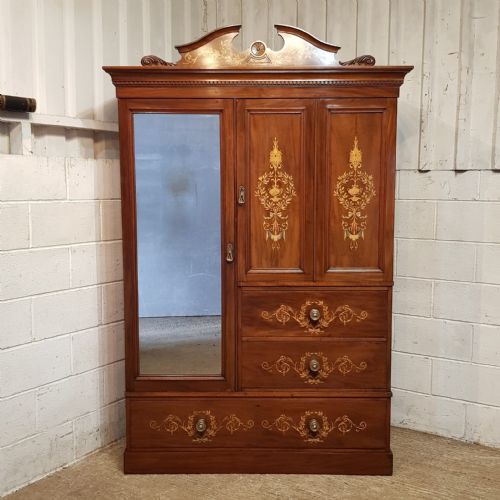
When you search for a sheraton mahogany press, you look at large storage furniture designed for bedrooms and housekeepers to store linen and garments. The selection on this page brings together Georgian originals alongside Edwardian and Victorian Sheraton Revival interpretations.
The primary forms appearing in the evidence include tall linen presses, housekeepers wardrobes, combination wardrobes, and compactum wardrobes. These pieces combine upper cupboard sections with lower banks of drawers.
You will encounter pieces originating from the eighteenth century through to the early twentieth century. The George III period and the Edwardian Sheraton Revival era dominate the offerings.
How they were made
Cabinet makers utilised solid mahogany and flame mahogany veneer applied to carcases, paired with secondary timbers. These surfaces often feature contrasting satinwood, boxwood inlay, and marquetry details.
Hardware consists of brass fittings and handles that accent the rectilinear or breakfront forms. Glass components appear in select wardrobe doors, while interior sliding trays organise the linen storage.
Sheraton Mahogany Press Retail Price Guide 2026
Typical asking prices for sheraton mahogany press among the pieces listed under this phrase on Sellingantiques today, from the lower quarter to the upper quarter. They describe what is for sale here now, not the wider market.
The object forms span linen presses, wardrobes, compactum cabinets, and chests of drawers.
What varies in quality
The degree of refinement in the inlay work separates standard items from superior examples. Finely cut boxwood and satinwood stringing demonstrates higher craftsmanship than simpler surface decoration.
The choice of timber grain, particularly the use of figured flame mahogany veneer, defines the visual impact of the piece. Proportion and the handling of breakfront cornices also distinguish more ambitious workshop productions.
Druce & Co.·Maples & Co
The Sheraton Mahogany Press Glossary
- Linen Press
- A tall piece of furniture featuring upper doors enclosing sliding trays for storing folded textiles above a base of drawers. This form evolved to protect household linens from dust.
- Compactum Wardrobe
- A large fitted wardrobe combining hanging space, shelves, and internal drawer modules within a single cabinet. Such pieces offered comprehensive clothing storage for period bedrooms.
- Satinwood Inlay
- Decorative contrasting wood veneer cut into geometric or floral patterns and set flush into the mahogany surface. This technique characterises the lighter aesthetic of the Sheraton style.
- Breakfront
- A cabinet front where the central section projects forward from the flanking wings. This architectural arrangement creates depth and shadow on large case furniture.
- George III
- The historical period spanning from seventeen sixty to eighteen twenty encompassing key classical furniture designs. Pieces from this era establish the proportions imitated by later revival makers.
Sheraton Mahogany Press: Frequently Asked Questions
What is a sheraton mahogany press?
A sheraton mahogany press is a tall storage cabinet designed with upper doors for linen and lower drawers for apparel. These pieces often incorporate classical inlay and geometric proportions.
Originating in the eighteenth century and revived in Edwardian times, they served as principal bedroom furniture for storing household textiles.
How do I date a sheraton mahogany press?
Dating relies on examining construction methods, timber choice, and inlay styles. Georgian pieces display hand-cut dovetails and solid timber carcases, while revival pieces from the Victorian and Edwardian eras show distinct machine-sawn elements.
Stylistic cues like satinwood banding and breakfront cornices help distinguish original eighteenth-century cabinet work from later nineteenth-century revivals.
How were these presses used?
Households utilised these cabinets to store freshly laundered linen, table cloths, and garments on internal sliding trays or shelves. The deep lower drawers accommodated bulkier items.
They functioned primarily in large country houses and urban townhouses where dedicated storage furniture was essential for domestic management.
Where should I place a press in my home?
These large cabinets require substantial wall space and high ceilings due to their commanding vertical presence. Bedrooms and dressing rooms provide the most logical placement for functional clothing storage.
Positioning them away from direct sunlight and heat sources protects the mahogany finish and prevents the veneers from drying out over time.