

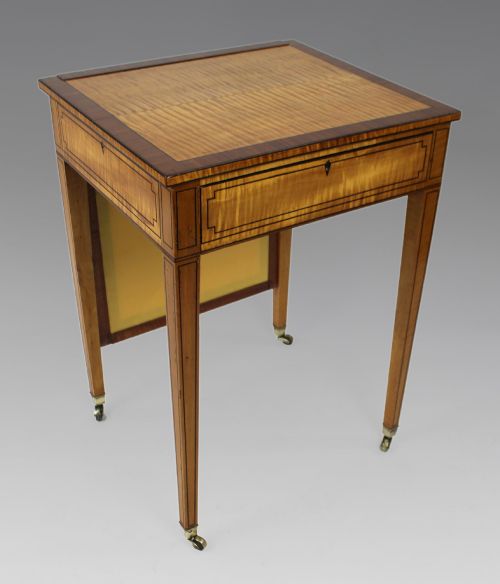
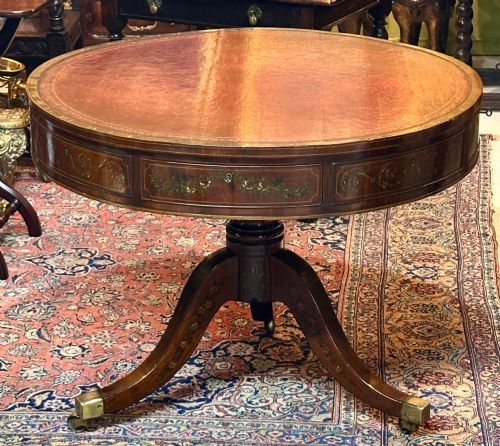
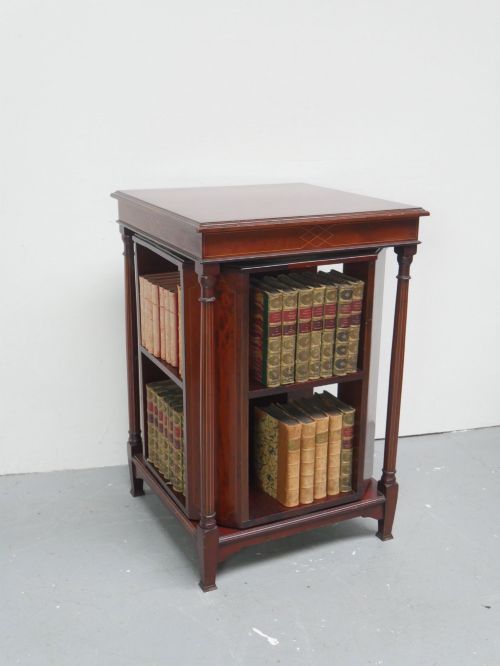


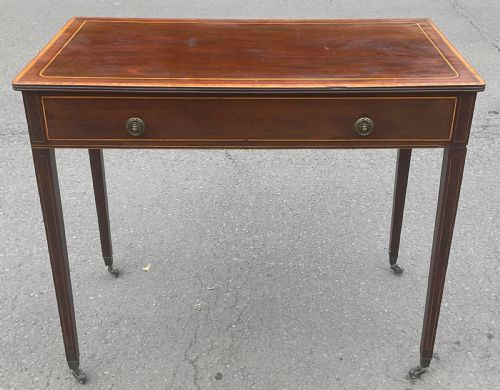


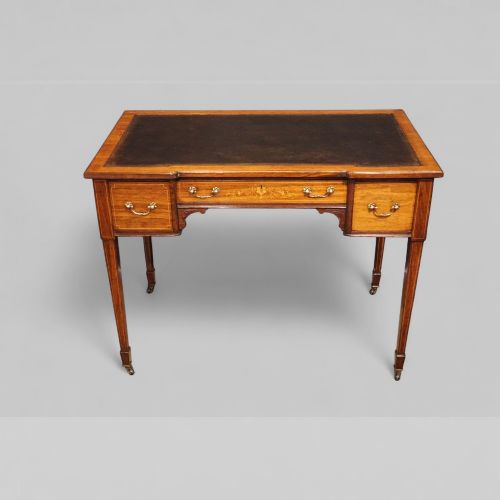

Sheraton Library Table
These sheraton library table pieces offer refined proportions and classical stringing, bringing disciplined geometry and rich timbers to a study.
Sheraton Library Table
A sheraton library table brings classical Georgian geometry and lighter proportions into the study, often built with slender tapered legs and delicate stringing. These tables serve primarily as writing desks or freestanding centre tables, designed to sit away from the wall rather than tuck into a corner.
The versions most commonly met on this page span the late eighteenth century through to Edwardian Sheraton Revival revivals. Makers of both periods favoured clean rectangular or oval top forms supported by mahogany or satinwood timbers.
Formations vary from simple three-drawer writing desks to revolving bookcases and drum tables carrying leather inserts. Each piece reflects the enduring appeal of straight-lined neoclassical design within domestic and professional interiors.
How they were made
Cabinet makers constructed these tables using solid mahogany or rosewood framing overlaid with finely figured veneers, often incorporating contrasting satinwood and boxwood inlay to trace the borders and drawer fronts. These decorative stringing lines define the visual vocabulary of the style.
Working surfaces frequently incorporate inset panels of tooled leather, providing a durable and tactile writing area framed by crossbanded timber borders. Brass handles and castors complete the construction on many examples, allowing the furniture to move easily across wooden floors.
Sheraton Library Table Retail Price Guide 2026
Typical asking prices for sheraton library table among the pieces listed under this phrase on Sellingantiques today, from the lower quarter to the upper quarter. They describe what is for sale here now, not the wider market.
Listings feature mahogany, rosewood, and satinwood constructions spanning the eighteenth century through the Edwardian Sheraton Revival period.
What varies in quality
Quality rests in the precision of the timber selection and the crispness of the boxwood and satinwood inlay. Superior examples display perfectly matched veneer grains across the top and drawers without lifting or shrinkage.
Structural integrity through the drawer joints and the smoothness of the sliding action distinguish finer workshops from later commercial production. The refinement of the leg taper and the delicacy of the brass mounts also separate simpler tables from ambitious cabinet work.
James Shoolbred of London
The Sheraton Library Table Glossary
- Stringing
- A narrow inlay of contrasting wood used to outline drawers, legs and tabletops. This technique creates linear contrast on mahogany surfaces.
- Crossbanding
- A border of veneer laid around the perimeter of a tabletop with the grain running perpendicular to the centre panel. It frames the central timber.
- Satinwood
- A pale, lustrous hardwood prized for its yellow-gold tone and reflective grain. It frequently appears as inlay or full veneer on late eighteenth-century pieces.
- Drum table
- A circular library table containing a deep frieze fitted with drawers around the circumference. It usually stands on a central pillar and four splayed legs.
- Sofa table
- A rectangular occasional table with drop leaves on either end, originally designed to stand in front of a sofa. Pairs of drawers often feature on the frieze.
Sheraton Library Table: Frequently Asked Questions
How do I spot a true eighteenth-century sheraton library table?
Examine the timber density, the hand-cut dovetails within the drawer construction, and the subtle oxidation of the secondary woods underneath. Eighteenth-century pieces display organic wear patterns and patination that modern reproductions cannot replicate.
Look closely at the inlay work and the handling of the satinwood or mahogany veneers. Hand-applied finishes and traditional cabinet-making methods confirm the period origin.
Where should I place a library table in a modern room?
These tables function best as freestanding centrepieces where all four sides remain visible. Position one in the middle of a home office or behind a sofa to showcase the inlaid top and finished back.
Ensure the writing height matches your seating and keep the leather surface protected from direct, harsh sunlight to prevent fading of the mahogany and rosewood tones.
What is the difference between a writing desk and a library table?
A library table is traditionally built to be viewed from all sides, often serving as a freestanding centre table with drawers accessible from the front or revolving around a central axis. Writing desks frequently feature a finished back designed to stand against a wall.
Both forms utilise similar Sheraton proportions, but the placement within a room historically dictated the functional layout of the drawers.
How do I care for the leather top on these tables?
Maintain the leather insert by dusting gently with a dry cloth and applying specialist leather balm occasionally to keep the hide supple. Avoid using household cleaning sprays or excessive moisture which can stain the surrounding wood.
Keep the timber surrounds nourished with traditional beeswax to preserve the satin sheen of the mahogany and protect the delicate satinwood stringing.