



Sheraton Inlaid Tea Table
A sheraton inlaid tea table brings disciplined geometry and warm woods into a room, offering a surface designed for hospitality.
Sheraton Inlaid Tea Table
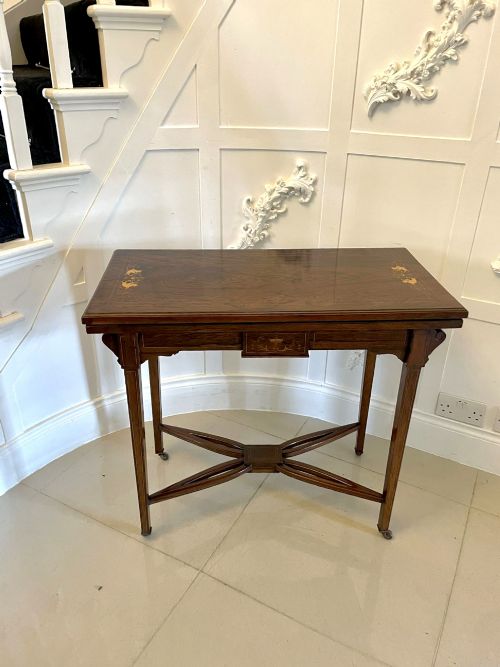
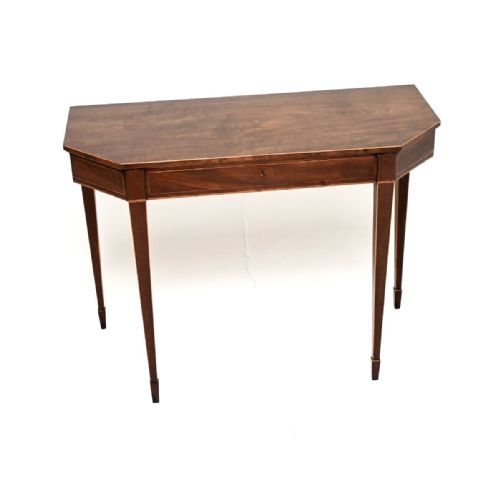
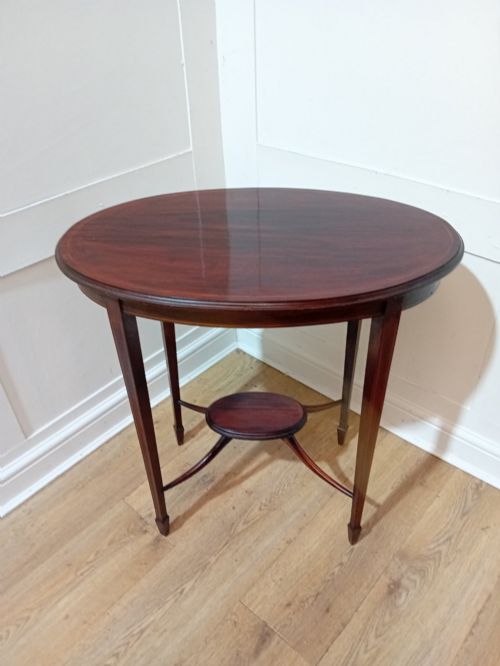
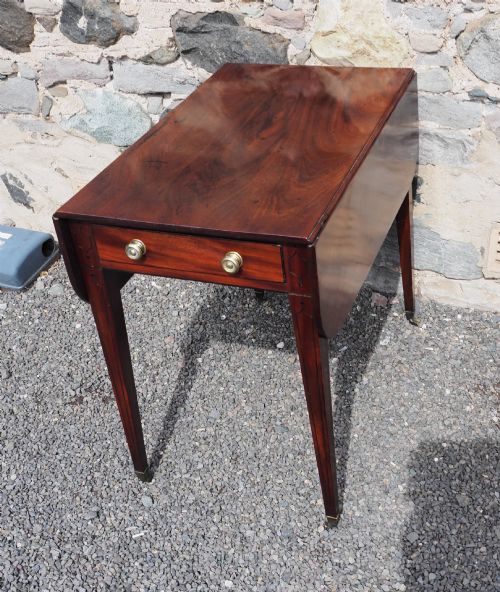
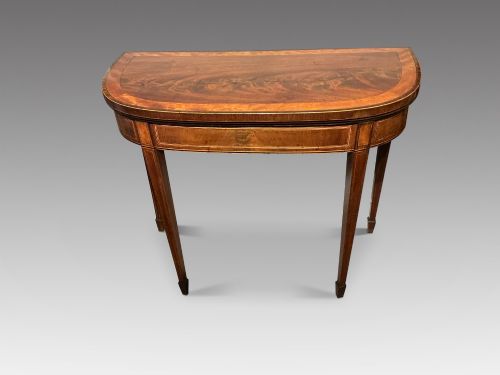
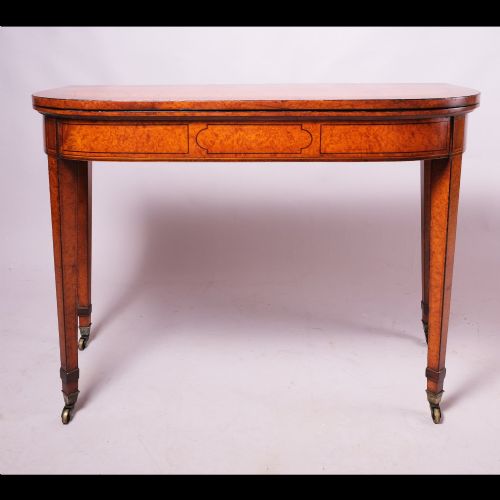
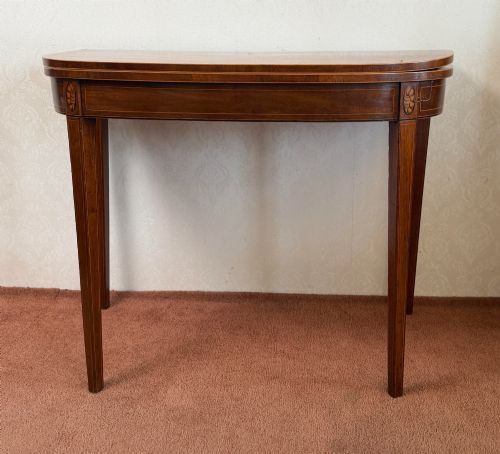
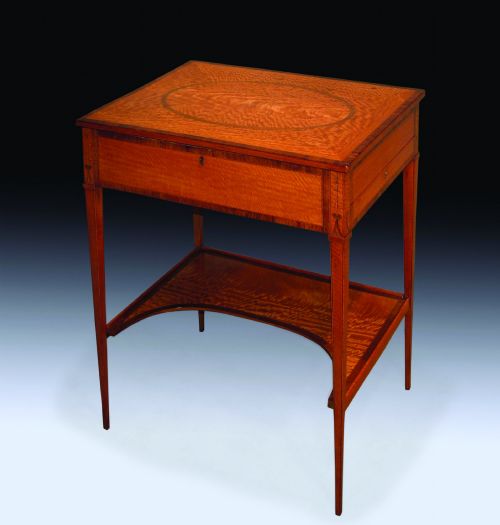
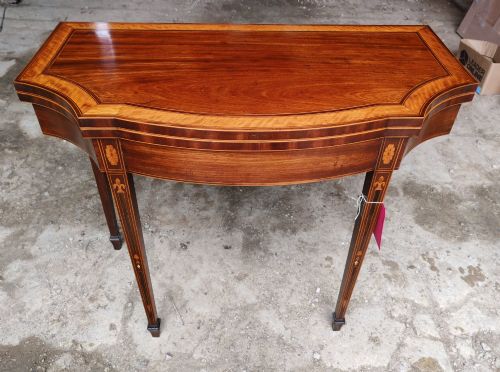
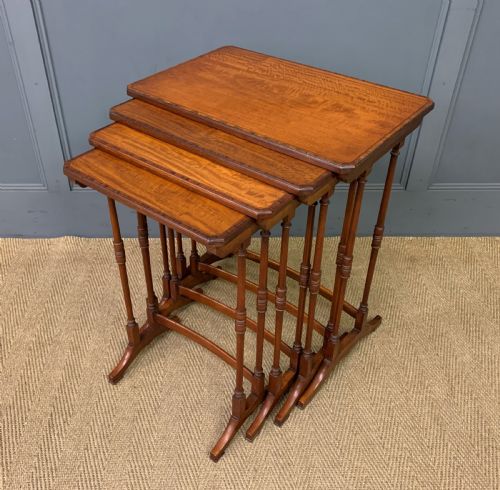
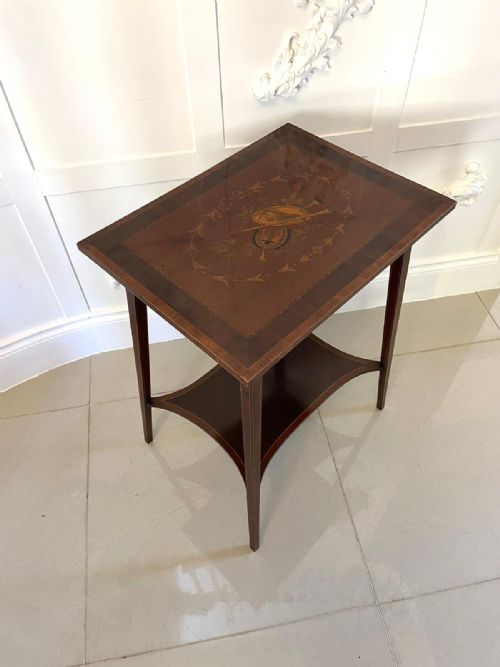
A sheraton inlaid tea table is typically encountered as a folding or drop-leaf surface dating from the Georgian, Edwardian, or Victorian periods, reflecting the neoclassical taste for light proportions and straight or tapered legs. The selections on this page span form variations such as card tables, pembroke tables, and occasional tables alongside dedicated tea tables.
Makers and cabinetmakers working in these styles utilised native and exotic timbers to build pieces that served polite society during the eighteenth and nineteenth centuries, with later revivals appearing around nineteen hundred. Buyers searching for a sheraton inlaid tea table will find both original period examples and subsequent Edwardian and Victorian Sheraton Revival interpretations.
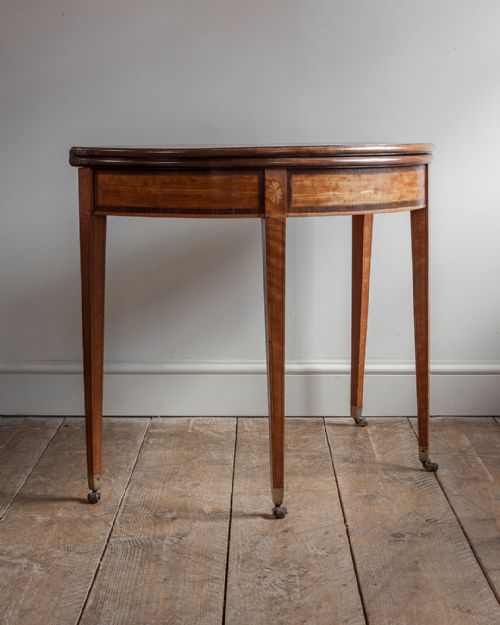
The silhouettes vary from demilune and oval tops to rectangular forms with hinged leaves designed to expand when hospitality required it. Construction often incorporates delicate boxwood and satinwood inlay to frame the grain of mahogany, satinwood, or amboyna surfaces.
What Varies in Quality
The distinction between ordinary and superior pieces rests on the crispness of the inlay work and the selection of the primary timber. Finer tables display tightly fitted boxwood stringing with no visible gaps, alongside richly figured Honduras mahogany or carefully matched satinwood veneers.
Proportion and structural integrity also separate tiers of quality, where slender tapered legs support the frame without wobble and folding leaves align evenly when opened. The depth of hand-carved detailing and the subtlety of marquetry panels indicate the level of craftsmanship invested in the workshop.
Listings feature pieces spanning from the eighteenth century through the Georgian and Victorian eras up to Edwardian Sheraton Revival revivals.
The Sheraton Inlaid Tea Table Glossary
- Pembroke table
- A small rectangular table with hinged drop leaves on either side, often fitted with a single drawer.
- Demilune
- A half-moon shape frequently utilised for the tops and frames of card and tea tables designed to stand flat against a wall.
- Stringing
- Thin lines of contrasting wood inlay used to outline the borders, drawers, and legs of neoclassical furniture.
- Marquetry
- Elaborate decorative patterns formed by fitting together pieces of veneer into wooden panels.
- Paterae
- Oval or circular classical decorative motifs carved or inlaid into furniture friezes and tabletops.
Sheraton Inlaid Tea Table: Frequently Asked Questions
How were tea tables used?
These tables served as mobile surfaces for hosting tea ceremonies in eighteenth and nineteenth-century parlours. Fold-out leaves allowed the furniture to expand when guests arrived and close compactly against the wall afterwards.
They also functioned as general work tables or places to display small decorative objects when tea was finished. Their versatile design made them central pieces in the polite social rituals of the period.
How do I tell original Georgian from Sheraton Revival?
Original Georgian pieces date from the late eighteenth century and exhibit the authentic tool marks, timber ageing, and construction methods of that era. Wood shrinkage and dry patina provide physical clues to their age.
Sheraton Revival pieces typically date from the Edwardian period or late nineteenth century. They often show machine-sawn timber elements and brighter, more uniform factory finishes despite mimicking the earlier style.
Where should I place a tea table at home?
A tea table sits well as an occasional surface beside a sofa or beneath a window where light falls across the inlaid top. Their modest proportions allow them to fit into tighter corners than a standard dining table.
Keeping them away from direct heat sources protects the fragile veneers and boxwood stringing from drying out and lifting. Placing them where the grain can be appreciated from above maximises their visual impact.
What is the difference between a tea table and a card table?
Tea tables generally feature fixed or folding tops designed primarily for serving beverages and displaying porcelain. They prioritize surface stability and light portability around the parlour.
Card tables almost universally feature folding or swivel tops that reveal a baize or leather-lined playing surface for games. Their internal wells often provided storage for counters and playing cards.