


Sheraton Dressing Mirror
A sheraton dressing mirror balances light and proportion, offering a pivoting glass set within fine mahogany or satinwood frames for the morning toilette.
Sheraton Dressing Mirror
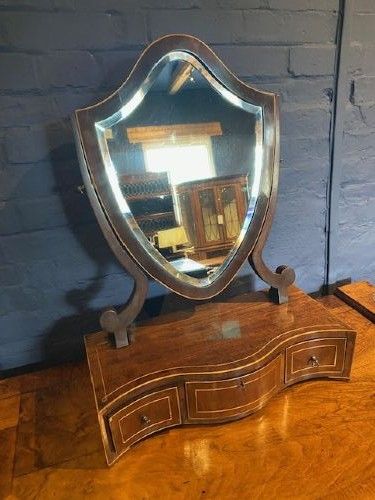
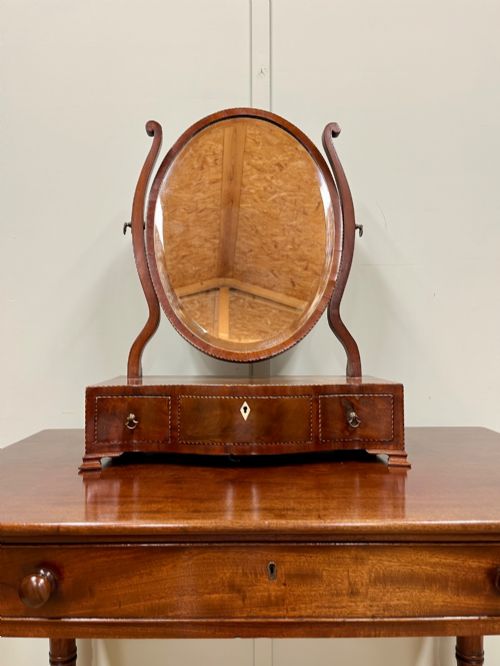
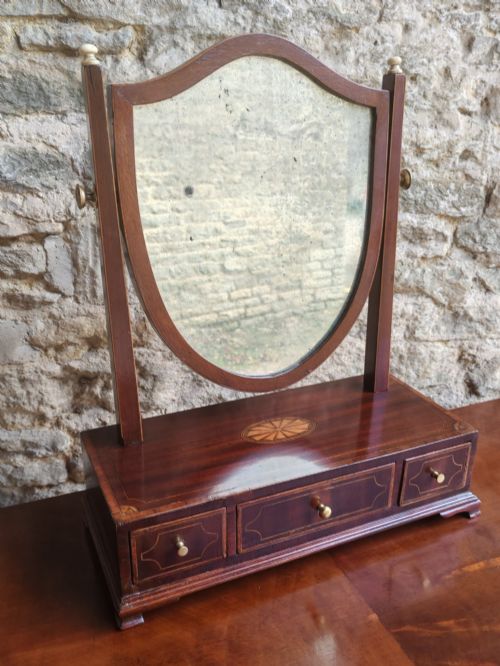
A sheraton dressing mirror sits upon a small box base fitted with drawers or rests on a larger dressing table, designed to tilt on vertical pivots for adjustment. The pieces found here span the Georgian and George III periods through to the Edwardian Sheraton Revival, taking forms such as shield-shaped glasses, oval plates, and larger cheval mirrors.
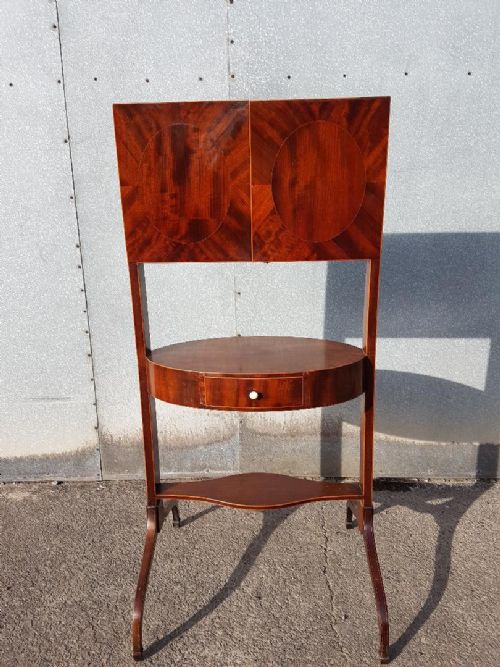
Most examples meet you as mahogany or satinwood toilet mirrors featuring boxwood inlay, serpentine fronts, or bow-fronted drawer sections beneath the glass. Alongside these smaller tabletop mirrors, the selection includes related larger furniture pieces such as dressing tables, ladies writing tables, and cheval mirrors with mirrored superstructures.
What varies in quality
The distinction between standard and finer examples rests upon the crispness of the cabinetwork, the choice of figured timbers such as flame mahogany, and the precision of the boxwood inlay. Superior pieces display harmonious proportions between the pivoting frame and the supporting base drawers.
Consideration also extends to the integrity of the original mirror glass and the subtlety of the decorative marquetry or hand-painted details found on later Edwardian revival pieces. Subtle refinements in the serpentine curves and the execution of secret compartments elevate certain examples above standard production.
Listings span multiple eras from the eighteenth century Georgian period through to Edwardian Sheraton Revival pieces.
Gillows
The Sheraton Dressing Mirror Glossary
- Cheval mirror
- A full-length plate glass mirror supported in a freestanding frame that tilts vertically on side pivots. These tall mirrors allow a complete view of attire.
- Toilet mirror
- A smaller tabletop mirror designed to stand on a dressing chest or table. It typically incorporates a small box base with one or more small drawers.
- Shield-shaped mirror
- A glass plate cut into the outline of a heraldic shield, popular during the eighteenth century. This silhouette softens the linear geometry of the dressing table.
- Crossbanding
- A narrow strip of veneer laid across the grain of the primary wood surface around the border of a drawer front or tabletop. It creates a neat framing effect.
- Serpentine
- A curved line that undulates with a convex centre flanked by two concave curves. This contour appears frequently on the drawer fronts of finer mirrors.
Sheraton Dressing Mirror: Frequently Asked Questions
What is the difference between a toilet mirror and a cheval mirror?
A toilet mirror is a compact tabletop piece designed to sit upon a chest of drawers or a dressing table, usually featuring a small drawer base.
In contrast, a cheval mirror is a tall, freestanding floor-length glass mounted on a vertical frame that allows the entire reflection to be seen.
How do I distinguish Georgian pieces from Edwardian Sheraton Revival?
Original Georgian pieces date from the eighteenth and early nineteenth centuries, displaying the straightforward construction and native timber choices of the period.
Edwardian Sheraton Revival pieces date around nineteen hundred, often featuring lighter satinwood, delicate hand-painted motifs, and marquetry reflecting a later interpretation of earlier designs.
Where should I place a dressing mirror in a room?
These mirrors function best on top of a sturdy chest, desk, or dedicated dressing table where the height aligns comfortably for daily use.
Placing them near a natural light source helps illuminate the glass while highlighting the figured mahogany or satinwood frame against the wall.
What timbers were commonly used for these mirrors?
Mahogany serves as the primary timber across the majority of Georgian and later pieces, frequently selected for its rich grain and durability.
Satinwood becomes more prominent in Edwardian revival items, often complemented by boxwood inlay, harewood, and rosewood details.