
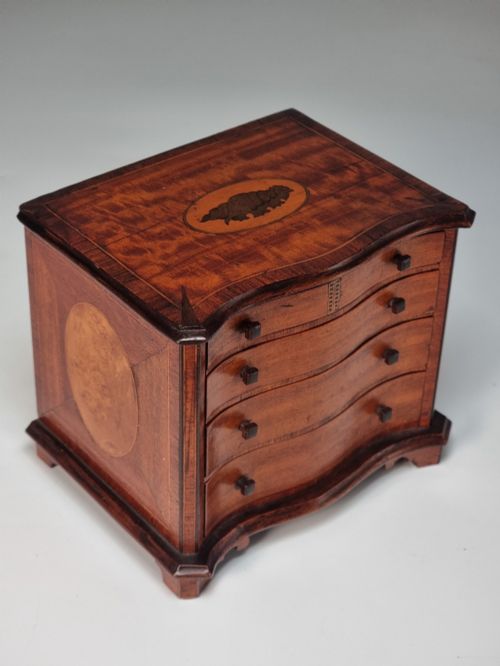
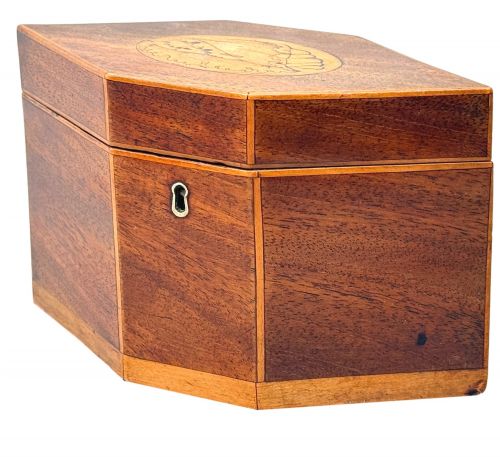


Shell Inlaid Box
A shell inlaid box brings together fine timbers and marine motifs, offering a tactile receptacle for letters, tea, or keepsakes.
Shell Inlaid Box
A shell inlaid box takes several domestic forms across the Georgian, Regency, and Victorian periods, with tea caddies, writing slopes, and jewellery cases appearing most frequently. These pieces served practical household functions while displaying decorative craftsmanship through contrasting veneers and inlaid shell motifs.
The materials span native and exotic timbers such as mahogany, satinwood, and rosewood, paired with tortoiseshell, mother-of-pearl, and conch shell. Makers used these substances to construct receptacles ranging from miniature chests of drawers to knife boxes and table trinket cases.
How they were made
Craftsmen built carcass structures in hardwoods like mahogany and satinwood, then applied delicate veneers and stringing. Shell fragments, including abalone, pearl, and conch, were shaped by hand and set flush into prepared recesses within the timber or tortoiseshell surface.
Pique work frequently appears on tortoiseshell examples, involving tiny gold and silver pins or strips pressed into the shell alongside pearl inlays. Interior fittings such as canisters, compartments, and velvet linings were constructed to fit snugly inside each specific box form.
Object forms span tea caddies, miniature furniture, knife boxes, writing slopes, and snuff boxes.
What varies in quality
The precision of the inlay work marks the distinction between standard items and superior pieces, particularly in how tightly the shell pieces fit their wooden or tortoiseshell beds. Fine examples show crisp engraving on metal pique details and meticulous matching of timber grain around the central motifs.
Survival of original interior elements, such as crystal canisters, glass mixing bowls, or fitted trays, elevates a piece. The quality is further judged by the richness of the timber selection, such as fiddleback mahogany or figured satinwood.
A. F. Lloyd, Bideford
The Shell Inlaid Box Glossary
- Tea caddy
- A box designed to store loose tea leaves, often featuring internal compartments or canisters with lids. These containers were kept locked in the dining or drawing room.
- Pique
- A method of decorating tortoiseshell with tiny points, pins, or strips of gold and silver. This technique creates intricate geometric or floral patterns across the surface.
- Writing slope
- A portable desk that opens to reveal a slanted writing surface and pigeonholes for stationery and inkwells. They were placed on tables for correspondence.
- Stringing
- Thin lines of contrasting wood inlay used to outline panels, drawers, or box lids. This linear detail defines the edges of geometric designs.
- Sheraton
- A neoclassical furniture style popular in the late eighteenth and early nineteenth centuries. It is characterised by straight tapered legs, satinwood veneers, and classical inlay motifs.
Shell Inlaid Box: Frequently Asked Questions
What were tea caddies used for?
Tea caddies served to store expensive black and green teas safely under lock and key in the Georgian household. Servants or homeowners dispensed the leaves for each pot to control consumption.
Many examples contain two internal compartments for different tea varieties, sometimes accompanied by a central glass bowl for blending.
How do I date a box?
Dating relies on timber choice, construction methods, and the style of the inlay. Georgian pieces often employ satinwood and mahogany, while Victorian boxes frequently incorporate tortoiseshell and mother-of-pearl.
Examining secondary woods inside, such as pine or oak drawer linings, provides further clues regarding the decade of manufacture.
What is pique work?
Pique work is a decorative technique where gold or silver pins and strips are embedded directly into tortoiseshell. Artisans heated the metal to press it securely into the organic material.
This method produced delicate starry patterns and borders on luxury trinket boxes and small writing cases.
Are interiors usually original?
Interiors vary in their degree of survival, with many tea caddies missing their original glass mixing bowls or inner canister lids. Finding a complete set of matching internal components is uncommon.
Original velvet or silk linings in jewellery and sewing boxes also show wear consistent with their age and use.