



Sheffield Silver Coasters
Sheffield silver coasters are classic tabletop accessories designed to protect surfaces from decanters and wine bottles, combining practical utility with period elegance.
Sheffield Silver Coasters
When you search for sheffield silver coasters, you encounter items designed to hold wine bottles and decanters on the dining table. These pieces primarily date from the Georgian, Regency, and Victorian periods, alongside later twentieth-century examples.
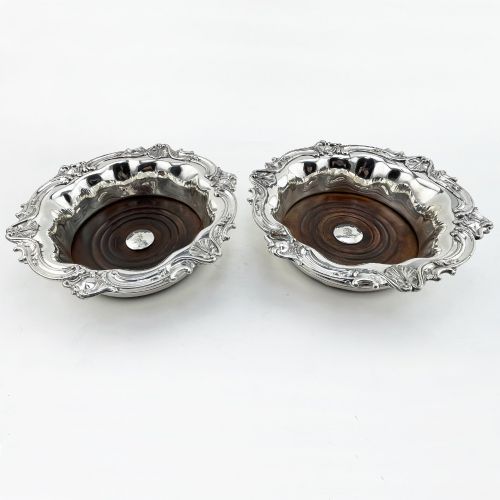
The selection you meet most frequently on this page consists of pairs and sets in Old Sheffield Plate or silver plate. Forms range from single bottle stands to larger table stands, wine trolleys, and decorated decanter coasters.
Originating largely from English workshops, these accessories reflect the changing styles of the nineteenth century. You will see George III, William IV, and Victorian designs, often featuring turned wood bases or pierced edges.
Materials and construction methods
The construction of these items relies heavily on Old Sheffield Plate, silver plate, and sterling silver. Many examples incorporate turned wood or mahogany bases to support the bottles and provide a stable foundation.
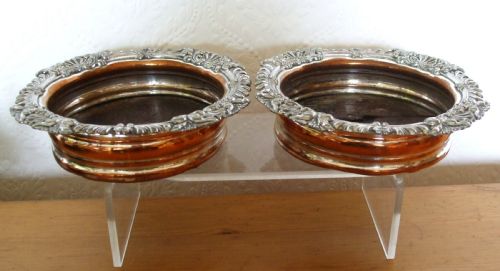
Copper forms the underlying core of Old Sheffield Plate pieces, fused with a layer of silver. Workshops also utilised silver and gilt, alongside pierced metal techniques for decorative borders.
Sheffield Silver Coasters Retail Price Guide 2026
Typical asking prices for sheffield silver coasters among the pieces listed under this phrase on Sellingantiques today, from the lower quarter to the upper quarter. They describe what is for sale here now, not the wider market.
Materials documented across the inventory include copper, mahogany, silver, and Old Sheffield Plate.
Distinguishing quality in the range
Quality depends upon the crispness of the chased or pierced decoration and the integrity of the silver layer over the copper base. Finer examples display sharp detailing in armorial engravings and borders.
The integration of the turned wood base with the metal gallery distinguishes the standard production from superior pieces. Workshops known for high-grade output produced heavier gauge plates and more robust framing.
Matthew Boulton·John and Thomas Settle·Hawksworth Eyre and Co·James Dixon and Son
The Sheffield Silver Coasters Glossary
- Old Sheffield Plate
- A composite material made by fusing a sheet of silver to a copper ingot before rolling it into thin sheets. This technique predates modern electroplating.
- Wine Trolley
- A wheeled stand designed to transport decanters across the table during dinner. They often hold single or paired coasters.
- Decanter Coaster
- A small ring-shaped dish designed to hold a bottle or decanter, protecting table linens and polished wood from rings and spills.
- Turned Wood
- Wood shaped on a lathe to form the flat or slightly concave base fitted inside the metal gallery of the coaster. Mahogany is frequently utilised for this purpose.
Sheffield Silver Coasters: Frequently Asked Questions
What are Sheffield silver coasters?
These are small circular stands created to hold wine bottles and decanters. They prevent moisture and ring marks from reaching the dining table.
Most examples use Old Sheffield Plate or silver plate, frequently paired with a turned wooden base.
How do I date an old coaster?
Dating relies on stylistic clues such as the Georgian or Victorian design motifs, alongside manufacturing methods like Old Sheffield Plate.
Makers' marks and assay office details on later sterling silver pieces also provide precise production years.
Were these made in sets?
Yes, many survive as matched pairs or larger sets of three and four. Single stands also appear frequently.
Sets often accompanied larger dining arrangements where multiple wine bottles circulated the table.
How do I care for silver plated coasters?
Clean them gently using a soft cloth and appropriate silver cleaner to preserve the thin plate over the copper base. Avoid harsh abrasives that remove the metal layer.
Keep the turned wood bases dry and polish the metal surfaces sparingly.