





Sheffield Silver Candle Stands
Sheffield silver candle stands bring genuine Georgian and Victorian candlelight into a room, offering the warmth of old silver and copper.
Sheffield Silver Candle Stands
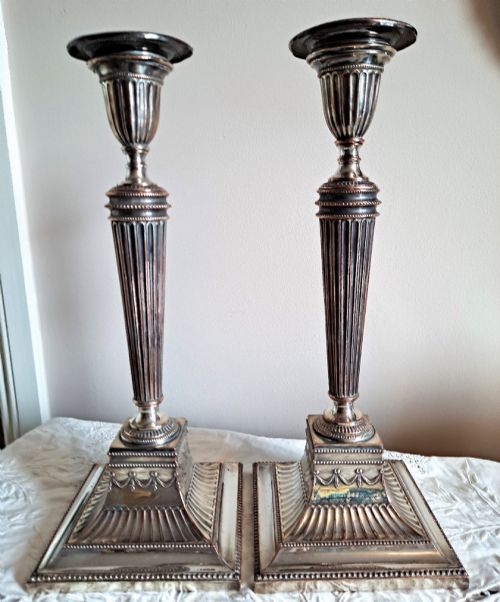
When you search for sheffield silver candle stands, you are looking at sturdy lighting pieces produced across the eighteenth and nineteenth centuries. The examples met on this page span Georgian, Regency, and Victorian periods, taking the form of candlesticks rather than fixed stands.
Most items on this page are pairs, with occasional sets of four appearing. They range from small heights to tall proportions, and several examples feature extending or telescopic mechanisms designed to alter the height of the light.
How they were made
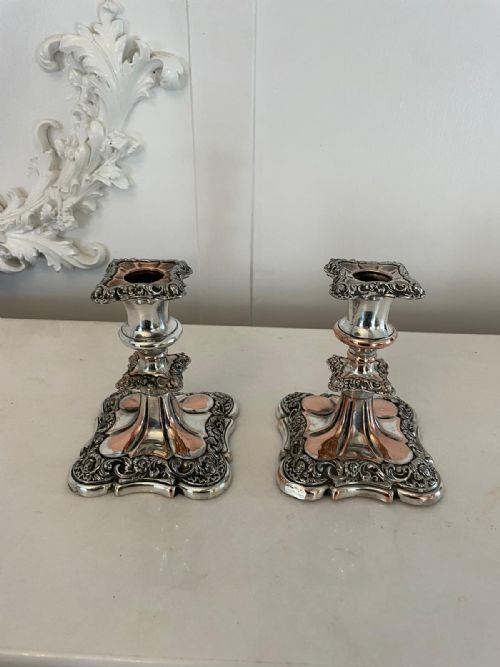
The construction of these pieces relies heavily on Old Sheffield plate and silver plate over a copper base, alongside solid silver examples. Makers fused layers of silver to copper, creating durable metal bodies that often reveal the underlying red copper where the plating thins with age.
Stylistic details draw upon Neoclassical and Rococo Revival traditions, shaping the metal into slender columns or flared bases. Telescopic mechanisms within the columns allowed the upper section to rise smoothly on internal slides.
Sheffield Silver Candle Stands Retail Price Guide 2026
Typical asking prices for sheffield silver candle stands among the pieces listed under this phrase on Sellingantiques today, from the lower quarter to the upper quarter. They describe what is for sale here now, not the wider market.
Some telescopic pairs let you raise the flame higher when the wax burned low, keeping the light clear of the table.
What varies in quality
Quality in these pieces rests on the crispness of the casting and the preservation of the silver layer over the copper. Finer examples retain sharp Neoclassical or Rococo details without excessive wear smoothing the edges of the motifs.
The integrity of the extending mechanism also separates standard items from better ones. Telescopic pairs that move securely without looseness demonstrate superior original engineering.
The Sheffield Silver Candle Stands Glossary
- Old Sheffield plate
- An early form of plated metal created by fusing a sheet of silver to a thicker bar of copper. This technique predates modern electroplating and produces a distinct layered edge.
- Telescopic
- A design feature allowing the candlestick stem to extend upwards to various heights. This mechanical adjustment was popular during the Georgian and Regency eras.
- Neoclassical
- A style drawing inspiration from classical antiquity, featuring symmetrical lines, urn motifs, and fluted columns. It dominates many eighteenth-century lighting designs.
- Rococo revival
- A nineteenth-century decorative style marked by ornate, asymmetrical scrolls and naturalistic floral patterns. It adds heavy ornamentation to Victorian metalwork.
Sheffield Silver Candle Stands: Frequently Asked Questions
What are sheffield silver candle stands?
These pieces are candlesticks made from plated silver or solid silver, originating from the Georgian and Victorian eras. They served to hold wax candles for interior lighting before the widespread adoption of gas and electricity.
Today, they function primarily as decorative table pieces that bring period character to dining rooms and mantelpieces.
How do telescopic candlesticks work?
Telescopic candlesticks feature an inner sliding sleeve concealed within the main column of the stem. By pulling the upper section gently upwards, the candlestick extends to a taller height for different lighting needs.
This mechanism requires careful handling to ensure the inner slide remains aligned and stable during adjustment.
How can I tell old sheffield plate from modern plating?
Old Sheffield plate was made by mechanically fusing silver and copper together under heat, rather than using an electrical current. Close inspection often reveals the reddish copper showing through slightly at the high points or cut edges.
Modern electroplated items typically show a uniform silver layer without the distinct layered sandwich effect visible in eighteenth and nineteenth-century pieces.
How do I care for silver plated candlesticks?
Silver plated surfaces require gentle cleaning with a soft cloth and mild silver polish formulated for antiques. Avoiding harsh abrasive pastes protects the thin outer layer of silver from wearing away to the copper underneath.
Keeping them away from direct moisture and damp environments also prevents tarnish and preserves the metal finish.