



Sheffield Plate Wine Urn
A sheffield plate wine urn brings stately elegance to the dining table, offering a clever fusion of copper and silver that collectors prize.

Sheffield Plate Wine Urn
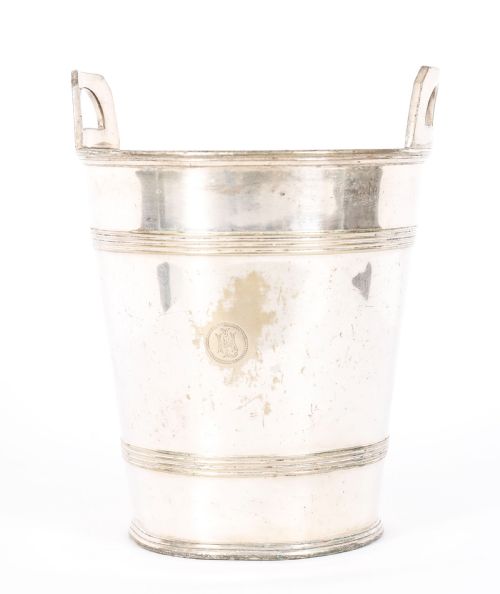
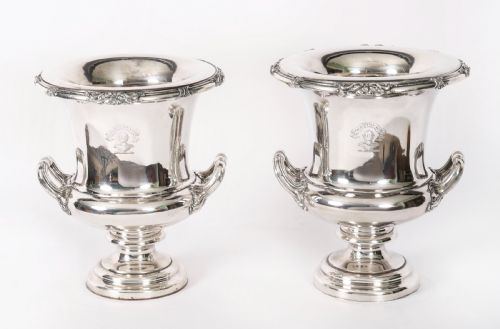
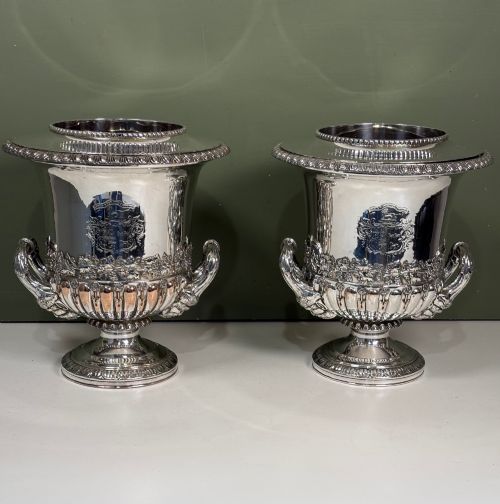
A sheffield plate wine urn is a substantial vessel designed to chill and present wine at the table, drawing on forms from the eighteenth and nineteenth centuries. The examples met on this page range from campana-shaped coolers to classic champagne coolers produced during the Georgian and Regency periods.
Makers shaped these items in copper fused with silver, often creating pairs suitable for formal dining rooms. Styles span from restrained Georgian designs to elaborate Regency and Rococo Revival interpretations, alongside occasional Art Deco pieces.
How they were made
Craftsmen utilised the fusion process of old sheffield plate, bonding a thin sheet of silver to a thicker base metal of copper. This technique required precise heat control to prevent the metals from separating during shaping.
Workers hammered and turned the fused metal sheets into hollowware vessels, applying applied silver wire borders and cast handles to finish the pieces.
Sheffield Plate Wine Urn Retail Price Guide 2026
Typical asking prices for sheffield plate wine urn among the pieces listed under this phrase on Sellingantiques today, from the lower quarter to the upper quarter. They describe what is for sale here now, not the wider market.
Some wine coolers retain their original turned wooden bases, designed to catch condensation before it ruined polished mahogany dining tables.
What varies in quality
The distinction between tiers rests upon the crispness of the chased or engraved detail, such as armorial crests and botanical motifs. Heavier gauge copper bases with generous silver layers retain their integrity and plate over centuries of use.
Proportion and casting quality define the finer items, particularly in the handling of classical campana curves and robust handles. Pieces bearing maker marks from notable workshops command attention for superior fabrication.
Matthew Boulton and Co·Hutton Sheffield·James Dixon and Son
The Sheffield Plate Wine Urn Glossary
- Old Sheffield Plate
- A composite material made by fusing a sheet of silver to a copper ingot before rolling them into sheets. This method predates electroplating.
- Campana
- A bell-shaped vessel profile popular in classical urns and wine coolers during the Regency period. It provides a stable base and a wide opening.
- Crest
- A heraldic device engraved or applied onto the body of the silver plate. It often denotes the original noble or gentry family who commissioned the piece.
- Base metal
- The underlying metal beneath the silver layer, typically copper in old sheffield plate pieces. It shows through where centuries of polishing have worn the silver away.
Sheffield Plate Wine Urn: Frequently Asked Questions
How do I clean a sheffield plate wine urn?
Wash the vessel gently with warm soapy water and a soft cloth to remove dust and residue. Avoid harsh chemical dips that strip the remaining silver from the copper substrate.
Use a mild silver cream only when necessary, applying it lightly to preserve the thin layer of plate. Excessive rubbing exposes the base metal underneath.
How can I tell old sheffield plate from electroplate?
Look closely at the rims and seams for a thin line of copper where the fused metal edges meet. Old sheffield plate often reveals this subtle copper seam upon careful inspection.
Electroplated items usually show an even, bright silver coating over the entire object without the characteristic sandwich structure of fused plate.
Were these urns used for wine or champagne?
These vessels served both functions depending on the era, holding iced water to chill wine bottles during long banquets. Georgian households utilised them primarily for claret and white wine.
Later Victorian and Art Deco iterations accommodated larger champagne bottles as dining habits evolved towards sparkling wines.