


Sheet Music Side Table
These sheet music side table pieces combine storage and display, offering a practical surface paired with dedicated compartments for papers.
Sheet Music Side Table
Buyers searching for a sheet music side table encounter multiple Victorian, Regency, and Edwardian forms designed to hold scores, magazines, and newspapers near a piano or seating area. These items frequently appear as canterburys, music cabinets, and whatnot stands rather than simple occasional tables.
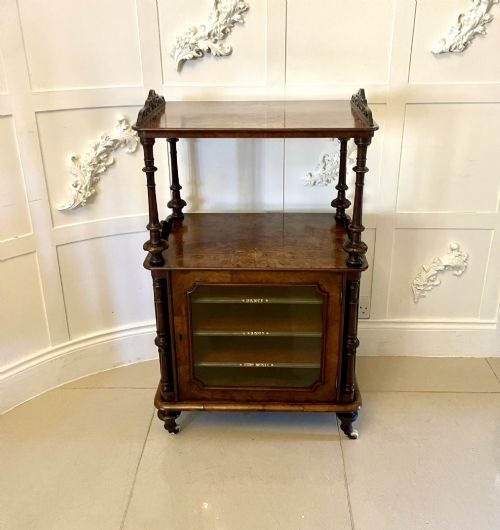
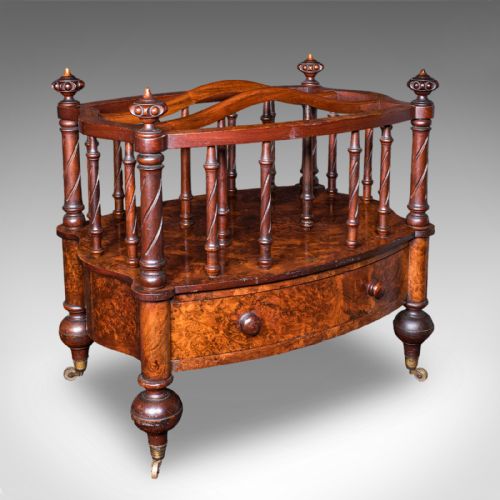
The primary forms utilise partitioned lower sections for vertical paper storage, often topped by a small surface suitable for a lamp or decorative object. Examples range from freestanding burr walnut canterburys to rosewood multi-functional cabinets with fitted drawers.
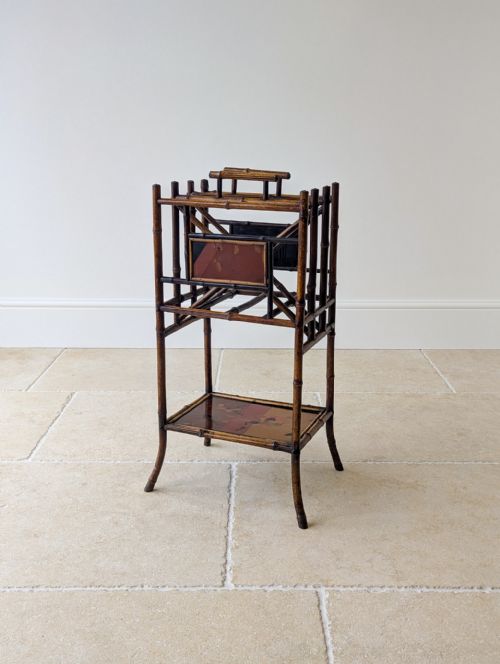
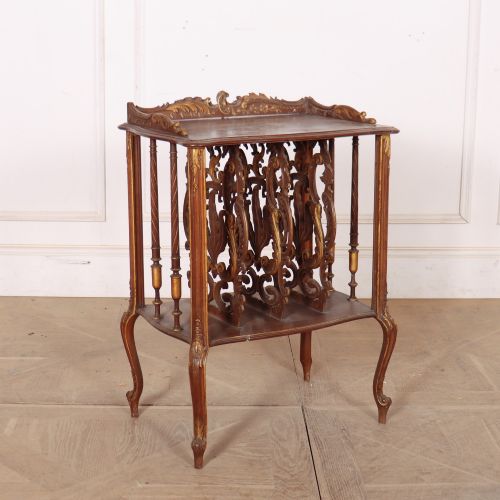
Origins span English workshops and French ateliers, encompassing aesthetic movement bamboo designs alongside classic mahogany and inlaid walnut pieces. The selection reflects varied domestic requirements from the early nineteenth century through to the Edwardian era.
Materials and construction
Cabinetmakers selected dense hardwoods such as mahogany, rosewood, and burr walnut, frequently enhancing surfaces with contrasting boxwood stringing and intricate marquetry. These timbers provided both the structural strength needed for partition uprights and a decorative grain suitable for prominent parlour display.
Specialised construction methods involved slatted or partitioned wooden dividers joined to solid bases, sometimes supported by turned legs, brass castors, or bamboo framework. Secondary elements incorporated ceramic details and brass hardware to complete the multi-functional stands.
Listings feature items from the Victorian, Regency, and Edwardian periods, constructed in burr walnut, rosewood, mahogany, and bamboo.
Factors determining quality
The distinction between standard items and superior examples lies in the choice of timber veneer, the precision of the boxwood inlay, and the refinement of carved details. Richly figured burr walnut and finely grained rosewood command greater attention than plainer utility timbers.
Structural integrity and the retention of original functional elements, such as fitted drawers and smooth-running castors, separate well-preserved pieces from heavily altered alternatives. The sophistication of the overall silhouette, whether incorporating a whatnot superstructure or a shaped work top, influences the piece's character.
The Sheet Music Side Table Glossary
- Canterbury
- A low stand featuring vertical partitions designed to hold sheet music, newspapers, or periodicals. It typically includes a small rectangular surface and sometimes incorporates a drawer below.
- Whatnot
- A set of open shelves supported by pillars or columns, used for displaying ornaments and books. In these listings, it frequently combines with a canterbury base.
- Stringing
- A narrow strip of contrasting wood inlaid into the surface of a piece to form geometric borders or decorative lines. Boxwood is frequently utilised for this purpose against dark walnut or mahogany.
- Marquetry
- The art of applying pieces of veneer to a structure to form decorative patterns and pictorial designs. Cabinetmakers used various tinted woods to create floral or abstract motifs on cabinet doors and table tops.
Sheet Music Side Table: Frequently Asked Questions
What is a sheet music side table?
A sheet music side table is a multi-functional item designed to provide a small surface area alongside dedicated upright partitions for storing folios and papers. They merge the utility of a music stand with the convenience of an occasional table.
These pieces typically date from the nineteenth and early twentieth centuries, appearing in forms such as canterburys and music cabinets. They were positioned near pianos and seating areas to keep scores organised.
How were canterburys used historically?
Historically, canterburys served to store unbound sheet music, songbooks, and daily newspapers within reach of parlour instruments and reading chairs. The upright partitions kept papers separated and upright rather than stacked flat.
Upper surfaces accommodated small lamps, writing equipment, or decorative ornaments. Some variations included enclosed cupboards or drawers for smaller musical accessories.
How do I date a Victorian piece?
Dating a Victorian piece involves examining the secondary timbers, construction joints, and decorative styles characteristic of the period between eighteen thirty and nineteen hundred. Aesthetic movement and rococo revival influences help narrow the manufacturing decade.
Makers often integrated specific wood choices like burr walnut or ebonised mahogany alongside brass castors typical of mid-nineteenth-century British cabinetmaking.
Where should I place one?
These items fit well beside a sofa, armchair, or piano where their surface and storage compartments can be utilised daily. Their compact footprint suits both traditional reception rooms and contemporary living spaces.
Care should be taken to keep them away from direct heat sources and strong sunlight to protect the aged wood veneer and delicate inlay.