






Sheet Music Shelf
A sheet music shelf provides a dedicated place for scores, often combining open display with compartments for daily practice.
Sheet Music Shelf
A sheet music shelf encompasses multi-tiered whatnots, music cabinets, and specialised canterburys designed to hold bound volumes and loose scores. These pieces range from Georgian and Regency forms to late Victorian and Edwardian examples.
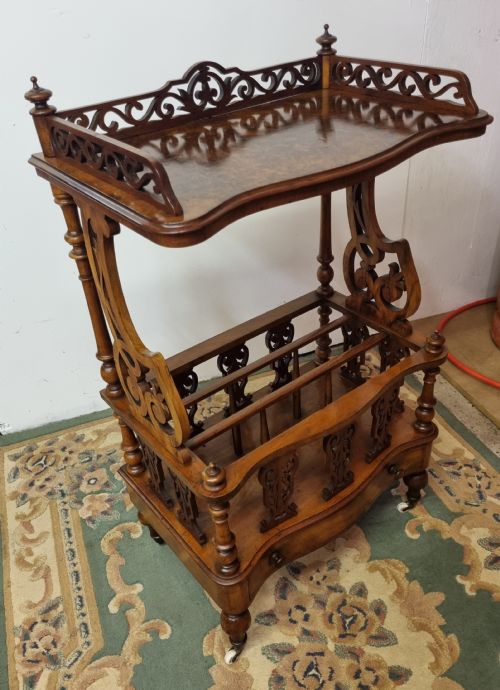
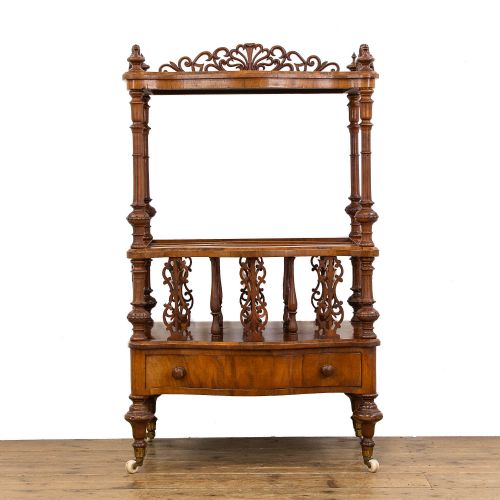
The most common version met on this page is the Victorian burr walnut canterbury whatnot, which typically pairs open tiers for display with partitioned lower sections for music storage. Mahogany and rosewood variants also appear frequently across the nineteenth-century selections.
Makers adapted these tiered shelves for domestic parlours and music rooms, utilising glass, ceramic, and gilt bronze details alongside traditional timbers. Whether freestanding or fitted with a drawer, each piece reflects the domestic musical habits of its period.
How they were made
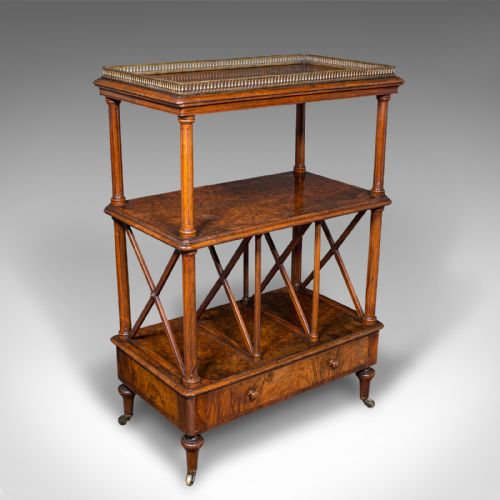
Cabinet makers constructed these pieces primarily using dense hardwoods such as mahogany, walnut, and rosewood, often selecting burr veneers to create figured surfaces on panels and tabletops. Ebony inlay and turned feet add structural detail without compromising the upright utility of the tiers.
Metalwork played a functional and decorative role, with brass accents and original castors appearing on freestanding stands. Gilt bronze and ceramic elements occasionally supplement the primary timber framework in later nineteenth-century pieces.
Form variations include multi-functional side cabinets, open etageres, serpentine canterburys, and music stands on turned feet.
What varies in quality
The sophistication of the timber selection and the precision of the joinery distinguish finer examples from standard workshop production. Burr walnut veneers with lively grain patterns and crisp ebony inlay demonstrate a higher level of cabinet work.
Structural integration, such as the inclusion of a functional drawer or well-fitted internal partitions for music, separates utilitarian items from more ambitious multifunctional side cabinets and etageres.
Gabriel Viardot
The Sheet Music Shelf Glossary
- Whatnot
- An open set of multi-tiered shelves used for displaying ornaments, books, or small objects. These pieces often incorporate music storage in the lower sections.
- Etagere
- A piece of furniture consisting of a series of open shelves for displaying small articles. They share similarities in tiered construction with standard whatnots.
- Burr Walnut
- Walnut timber taken from a growth deformation on the tree, yielding highly figured grain patterns. Cabinet makers prized this material for decorative veneering.
Sheet Music Shelf: Frequently Asked Questions
What is a music cabinet?
A music cabinet is a specialised piece of furniture designed to store sheet music and scores securely behind closed doors or within dedicated internal drawers and slots.
These pieces emerged in various periods to keep paper collections organised and protected from dust in domestic music rooms.
How do I tell a canterbury from a whatnot?
A canterbury specifically incorporates upright slats or divisions in its lower section for holding music folios or books upright. A whatnot is defined primarily by stacked open shelves intended for general display.
Many nineteenth-century examples combine both forms by placing partitioned music slots beneath open display tiers.
What woods were used for these shelves?
Cabinet makers predominantly used mahogany, walnut, and rosewood for these music stands and display units. Burr walnut was frequently chosen for decorative veneering on Victorian pieces.
Secondary woods and occasional ebony stringing or inlay complement the primary timbers across different stylistic periods.
Where were these pieces placed in a home?
These shelves and cabinets stood in parlours, drawing rooms, and music rooms alongside pianos and seating areas. They kept working scores close at hand while providing surface space for decorative objects.
Freestanding designs with castors allowed owners to reposition the stands easily within domestic interiors.