




Shaped Silver Picture Frame
A shaped silver picture frame brings genuine character to a desk or mantelpiece, holding cherished portraits within distinctive outlines.
Shaped Silver Picture Frame
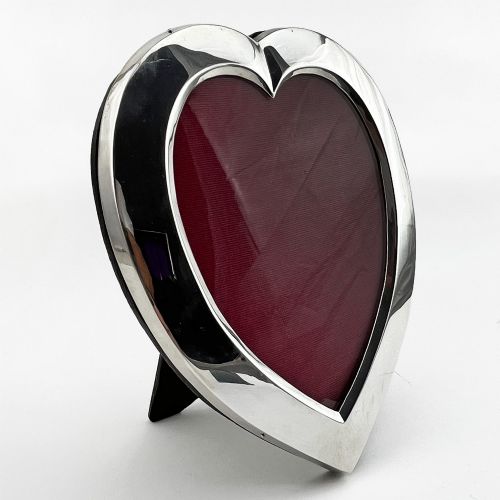
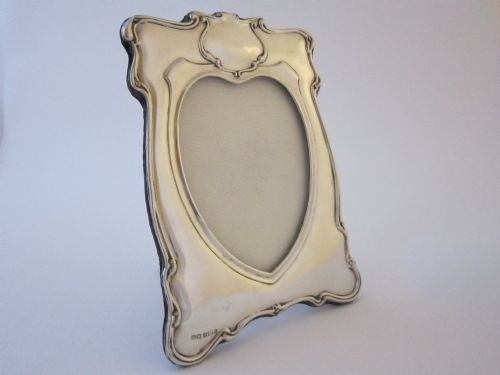
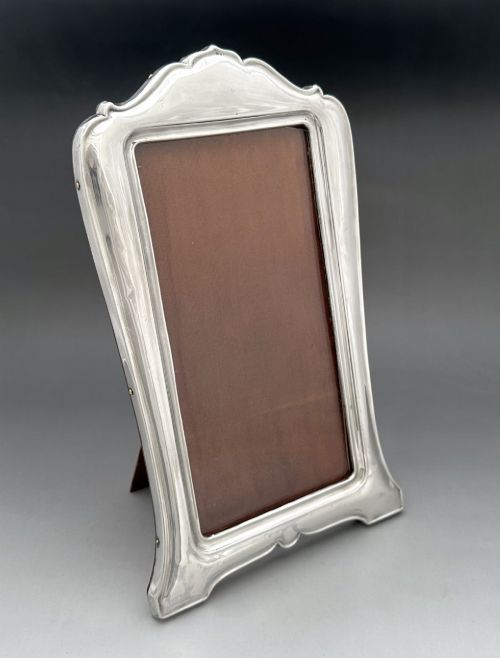
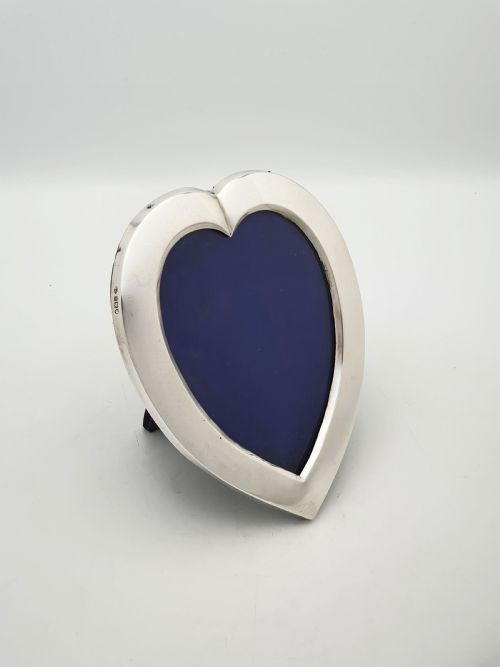
When a buyer searches for a shaped silver picture frame, they are looking at decorative display pieces that depart from standard rectangles. The examples found here span the Victorian, Edwardian, and George V periods, originating from English workshops.
Heart-shaped designs appear frequently alongside rectangular, serpentine, and oval formats. These items combine functional portrait display with the decorative sensibilities of the late nineteenth and early twentieth centuries.
Most pieces accommodate photographs behind protective glass panels. They rely on wooden or velvet-backed structures to support the silver frontages.
How they were made
The primary material is sterling silver, shaped through pressing and embossing techniques to create raised borders, reeded edges, and flowing Art Nouveau motifs. Makers utilised wooden or cardboard foundations covered in velvet or fabric to support the delicate metal fronts and provide a backing for the easel stands.
Glass protects the photographic aperture, held securely within the silver bezel or mount. Backings often retain original textiles such as red velvet, secured with brass hinges and rotating catches.
Many heart-shaped frames still contain faded Victorian portraits of stern gentlemen with magnificent moustaches.
What varies in quality
Quality depends upon the crispness of the embossed decoration and the weight of the silver used in the bezel. Finer examples retain deep, legible hallmarks and intricate detailing that remains sharp across the curves and corners.
The integrity of the structural backing and the presence of original velvet or wood supports also distinguish superior pieces. A well-preserved hinge and a stable easel stand elevate the practicality and desirability of an antique frame.
William Comyns·Syner & Beddoes
The Shaped Silver Picture Frame Glossary
- Sterling silver
- A silver alloy containing 92.5 percent pure silver by mass, standard for quality British plate and frame construction.
- Hallmark
- An official stamp applied to precious metals indicating the assay office, maker, and year of manufacture.
- Embossing
- A metalworking technique where the design is raised from the reverse side to create a three-dimensional surface pattern.
- Easel back
- A hinged leg attached to the rear of the frame allowing it to stand upright on a flat surface.
- Bezel
- The rim that holds the glass and photograph securely within the shaped frame aperture.
Shaped Silver Picture Frame: Frequently Asked Questions
How do I clean a silver frame?
Use a soft microfibre cloth and a mild silver polish designed for antiques, applying it gently around embossed details. Avoid harsh liquid dips that strip the natural darkened patina from recessed areas.
Take care to keep moisture away from the fabric backing and old wood components during the cleaning process.
Are these frames meant for wall hanging?
Most antique silver frames are designed with an easel back for standing on tables, desks, or mantelpieces. Some may feature small rings, but the majority rely on the rear strut for display.
Placing them on stable surfaces protects the hinged mechanism from undue strain.
How can I date my frame?
Look for the assay office marks and date letters stamped into the silver border. These small punches reveal the exact year the piece was tested and hallmarked.
Stylistic cues such as Art Nouveau curves or Victorian embossing also point to specific manufacturing decades.
Can I replace the glass easily?
Original glass is often thin and slightly irregular, which adds to the period charm of the piece. Replacing it requires careful removal of the securing pins or backing tabs.
Consult a professional framer if the original bezel pins are fragile or stiff.