


Shaped Front Drawers
Shaped front drawers unite the sculptural curves of bombes, serpentines, and bows with the practical storage of period cabinets.
Shaped Front Drawers
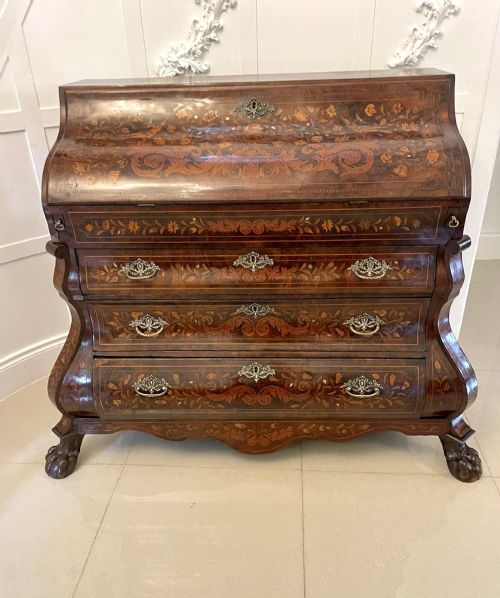
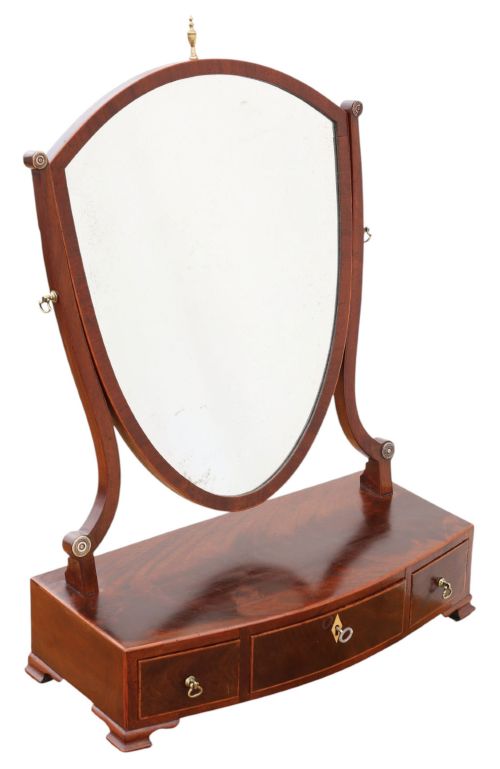
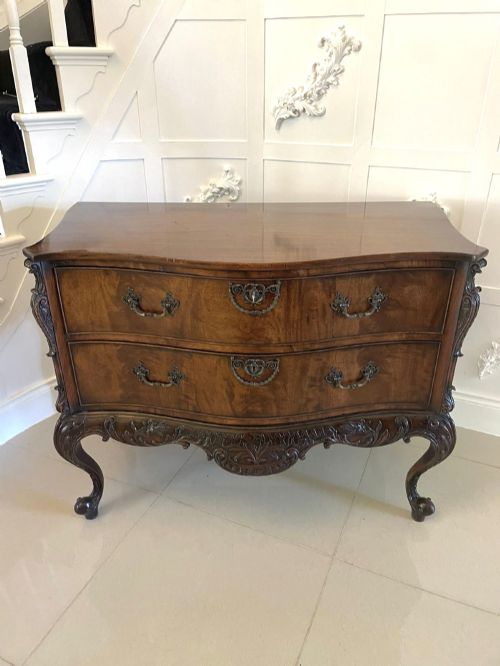
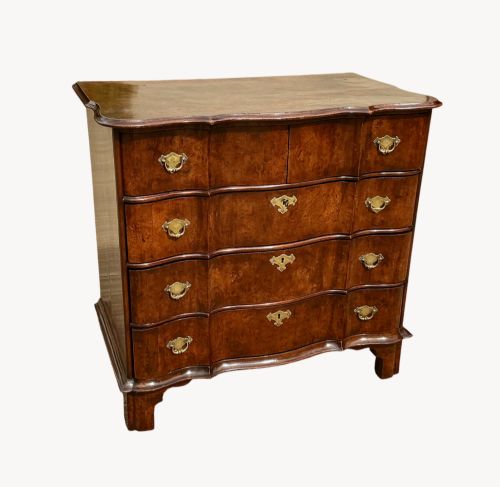
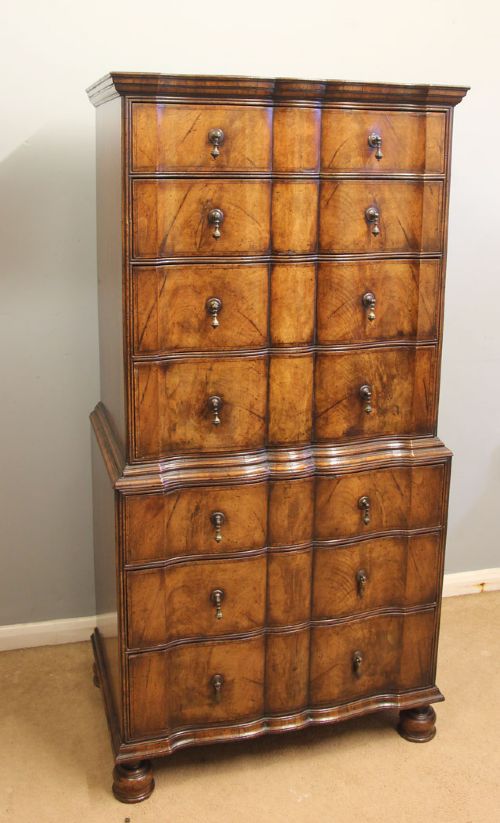
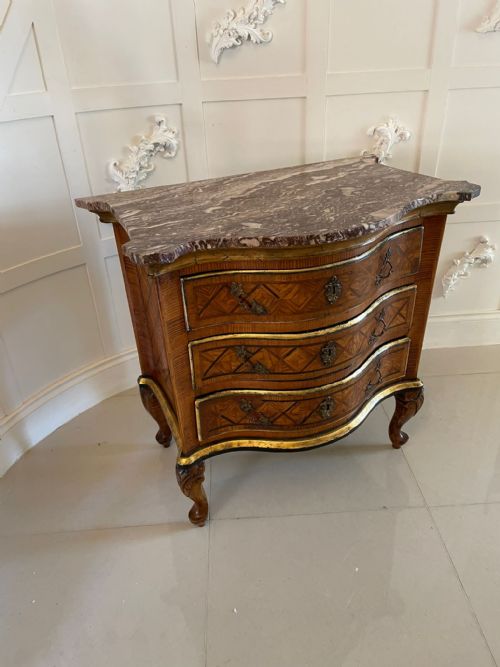
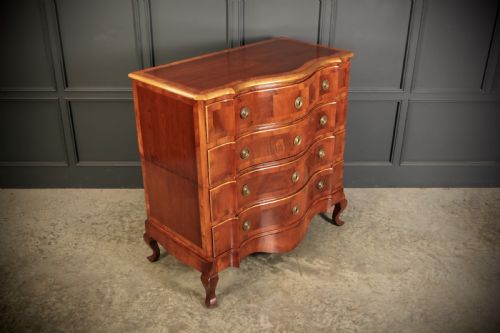
When you search for shaped front drawers, you encounter timber case furniture where the drawer faces curve outward or inward rather than sitting flat. The selection spans chests of drawers, commodes, tallboys, and desks across eighteenth and nineteenth century periods.
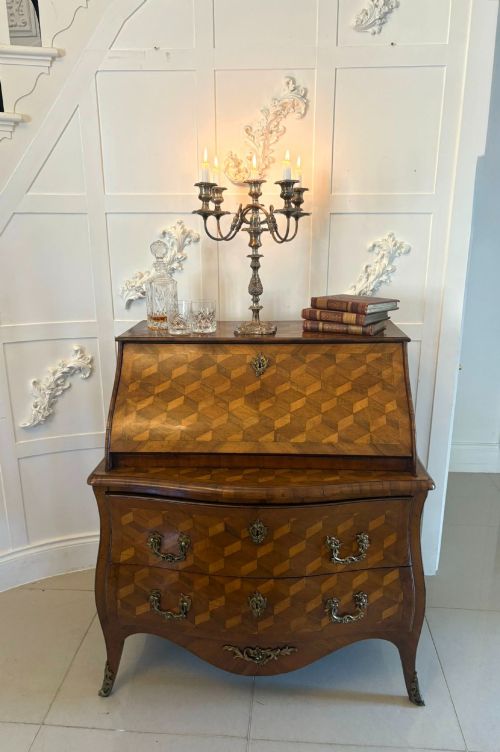
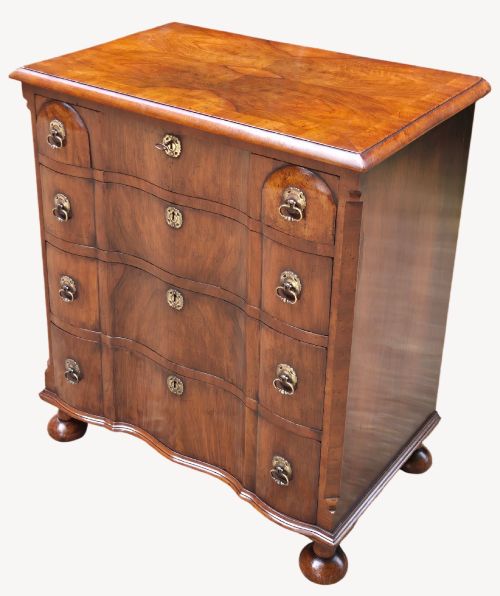
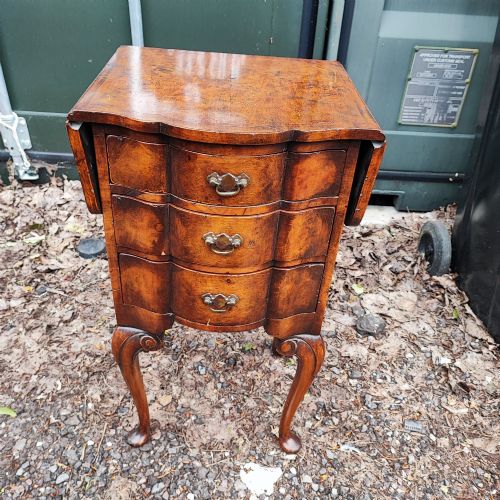
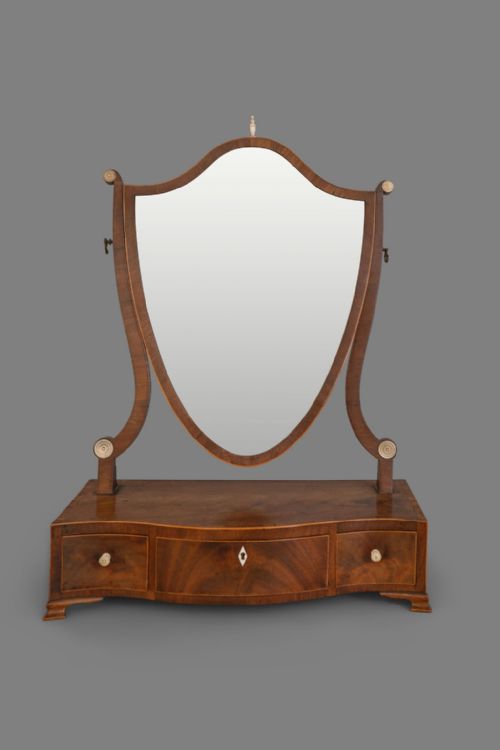
You meet serpentine profiles with gentle undulating centres, bombe forms swelling outward in dramatic contours, and bow fronts following a smooth curve. Dutch, English, and Italian origins dominate, incorporating regional timber choices.
The objects serve primarily as bedroom storage or reception room display surfaces. Chests of drawers and commodes form the bulk of the available pieces, supported by matching dressing mirrors and writing bureaux.
Materials and Construction
Cabinetmakers constructed these carcases using dense hardwoods including mahogany, walnut, oak, and fruitwood. Burr walnut and figured mahogany veneers provided rich surface grain patterns across curved drawer fronts.
Makers applied intricate floral marquetry and parquetry inlays using contrasting timbers, alongside brass handles and escutcheons. Marble tops appear on selected commodes, fitted directly onto shaped wooden frames.
Bureau desks hide secret compartments behind curved fronts, designed to keep correspondence safe from wandering eyes.
Judging Quality and Execution
Quality rests in the harmony of the timber grain across compound curves and the precision of the joinery where drawer fronts meet the carcase. Finer pieces maintain continuous veneer patterns that flow smoothly across undulating surfaces.
The ambition of the silhouette dictates distinction, moving from simple bowed fronts to complex double-curved serpentine shapes and swelling bombe profiles. Decoration ranges from restrained figuring in the wood to elaborate floral marquetry.
Druce & Co
The Shaped Front Drawers Glossary
- Bombe
- A bulging, outward-curving profile found on continental European commodes and bureaux. This swollen shape requires advanced timber bending and shaping techniques.
- Serpentine
- A furniture front featuring a convex centre flanked by concave curves, creating an undulating silhouette. Cabinetmakers used this line extensively during the Georgian and Victorian eras.
- Marquetry
- Decorative patterns formed by fitting contrasting pieces of wood veneer into a background design. Floral motifs appear frequently on eighteenth-century bureau desks.
- Commode
- A low chest of drawers or cabinet originating in France, often featuring a marble top and shaped front. These pieces served functional storage roles in formal rooms.
- Parquetry
- Geometric wood mosaic work used for floors and cabinet surfaces. Makers arranged small blocks of timber to create repeating patterns on drawer fronts.
Shaped Front Drawers: Frequently Asked Questions
Where do I put a shaped front chest?
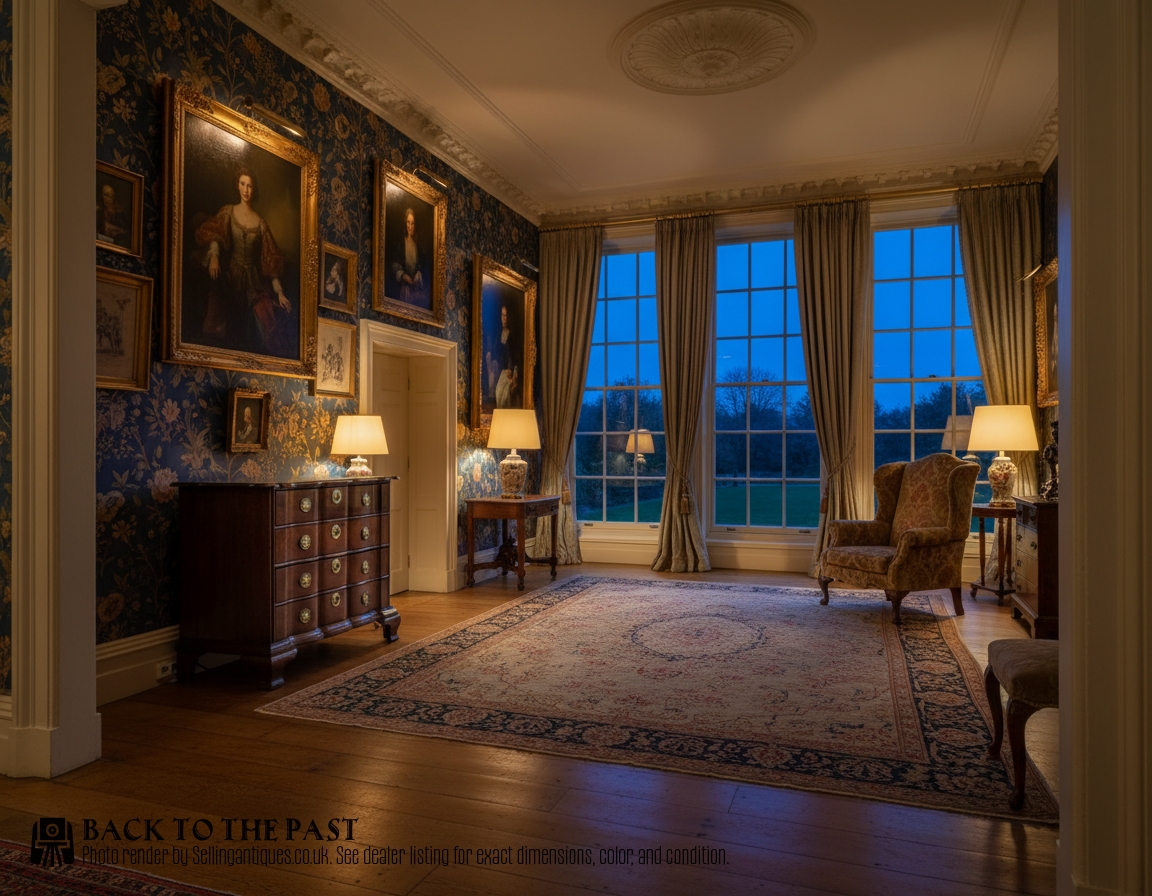
These pieces suit living rooms, hallways, and bedrooms where their curved profiles catch the eye from multiple angles. They function well against flat walls, providing a strong focal point.
Ensure adequate floor clearance so the projecting curves do not obstruct foot traffic in narrow spaces. The top surface accommodates lamps, mirrors, and decorative objects comfortably.
How do I clean walnut veneer?
Dust surfaces regularly with a soft, dry cloth to prevent particle buildup. Avoid harsh chemical polishes that can degrade historical finishes.
Apply a traditional beeswax sparingly to maintain the moisture and lustre of the timber. Buff gently with a clean cloth after application.
What is a bombe commode?
A bombe commode is a low storage chest characterised by outward-bulging sides and front. Originating largely from Dutch and Italian workshops, these pieces showcase dramatic wooden curves.
The exaggerated shape demands skilled cabinetmaking to ensure the drawers operate smoothly within a non-linear carcase.
Are these drawers suitable for daily use?
Period drawers provide practical storage for clothing, linens, or household items. The internal wooden runners require occasional waxing to maintain smooth operation.
Distribute weight evenly inside the drawers to protect historical joints and timber runners from excessive strain over time.