



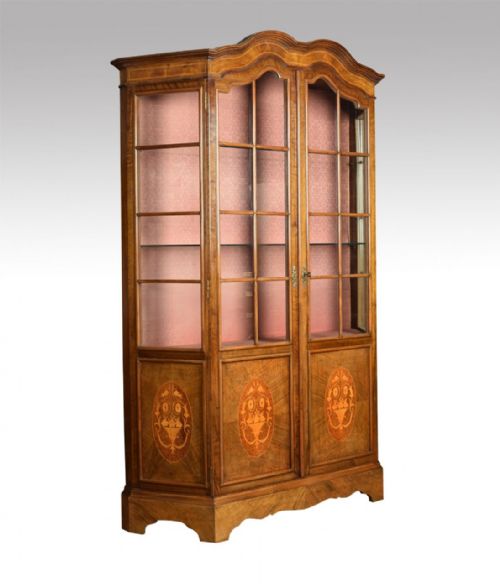


Shaped Front Cabinet
A shaped front cabinet brings movement and presence to a room, offering curving lines and rich timber grains across eras from the eighteenth century onwards.
Shaped Front Cabinet
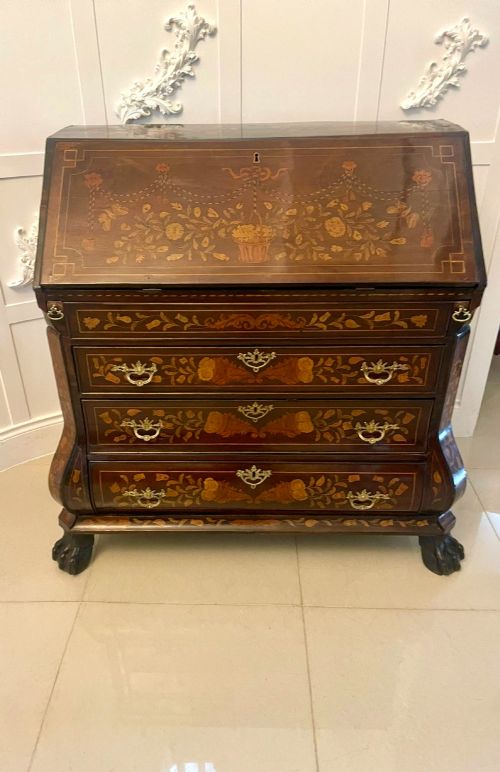
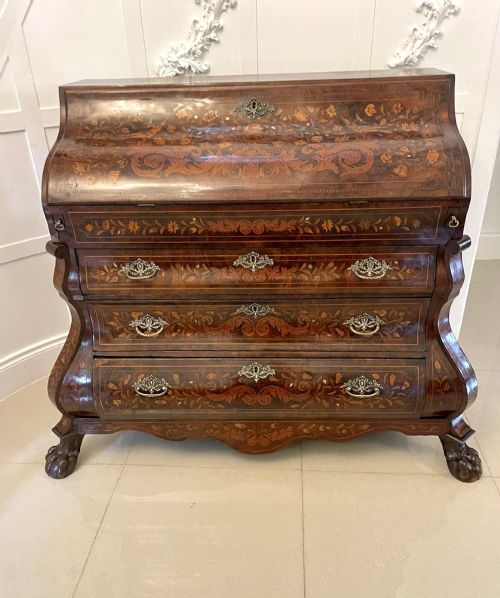
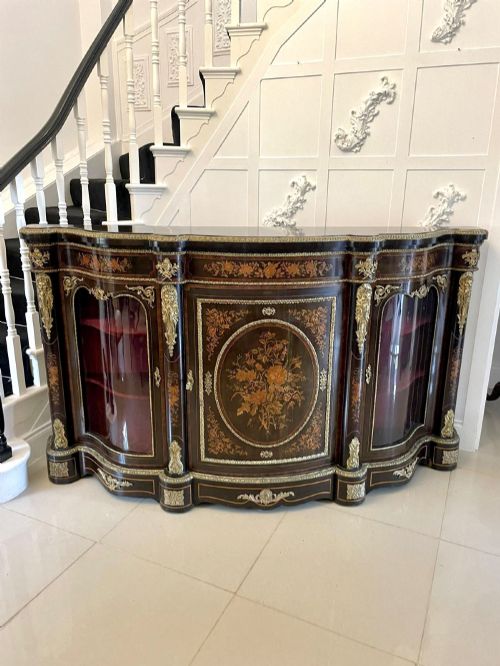
A shaped front cabinet encompasses a wide range of forms designed with curved, serpentine, bombe, or demi-lune profiles rather than flat planes. When searching for a shaped front cabinet, buyers encounter diverse pieces spanning centuries, from Georgian and Victorian marquetry-inlaid credenzas to Edwardian display cabinets and continental vitrines.
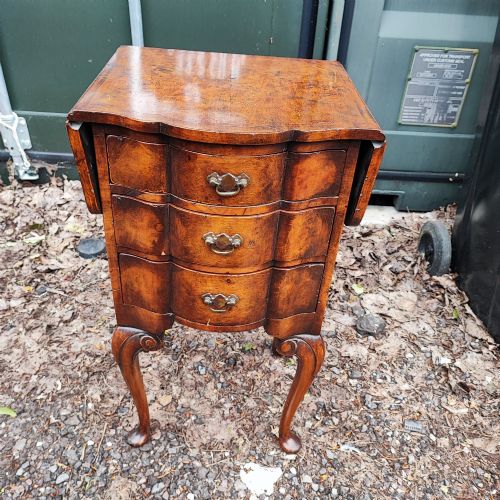
The selection on this page demonstrates the rich variety of forms available within this category, including bureau bookcases, sideboards, corner cabinets, and bedside tables. Walnut and mahogany dominate the offerings, often enriched with floral marquetry, burr veneers, or ormolu mounts that accentuate the fluid outlines of the timber.
Period pieces range from eighteenth-century Dutch Rococo and walnut designs to nineteenth-century Victorian and Edwardian interpretations, alongside early twentieth-century variations up to nineteen-thirty. Whether searching for a tall bureau bookcase or a low bedside cabinet, buyers meet pieces where the curved silhouette defines the entire character of the furniture.
How they were made
Cabinetmakers constructed these curving forms using solid timbers and complex veneering techniques on supportive carcases. Burr walnut and mahogany served as primary surfaces, often cut to display symmetrical grain patterns across undulating drawer fronts and cabinet doors.
Marquetry inlay added intricate floral motifs in contrasting woods such as satinwood, while ormolu mounts and brass hardware provided structural accents and decorative borders. Turned elements like barley twist columns appeared on specific Victorian examples, adding vertical texture to complement the swelling contours of the base.
Shaped Front Cabinet Retail Price Guide 2026
Typical asking prices for shaped front cabinet among the pieces listed under this phrase on Sellingantiques today, from the lower quarter to the upper quarter. They describe what is for sale here now, not the wider market.
One exceptional nineteenth century sideboard arrives complete with barley twist columns, proving that Victorian furniture makers loved a good spiral.
What varies in quality
Quality in these pieces rests upon the precision of the joinery where curved timbers meet and the harmony of the veneer matching across swelling surfaces. Superior examples display seamless marquetry work that flows naturally around complex serpentine or bombe angles without distortion.
The distinction between standard production and exceptional work lies in the depth of the timber selection, the crispness of brass mounts, and the integrity of the internal construction. Maker attribution, such as pieces originating from established firms, often signals a higher standard of craftsmanship in the carving and finishing details.
Druce And Co·Edwards And Roberts·Liberty Of London
The Shaped Front Cabinet Glossary
- Serpentine
- A furniture front characterised by a gentle S-shape curve, typically convex at the centre and concave at the ends. This contour requires advanced woodworking skill to shape accurately from solid wood or thick veneers.
- Bombe
- A swollen or bulging profile found on commodes, bureaus, and sideboards, particularly associated with continental and eighteenth-century design. The outward curve demands meticulous construction to maintain structural stability.
- Marquetry
- The art of applying decorative veneer pieces of different woods, metals, or shells to form pictorial or floral patterns on a carcase. It requires precise cutting and fitting to achieve a smooth, flush surface.
- Demi-lune
- A half-moon or semicircular shape often seen on side cabinets and console tables from the Sheraton Revival and later periods. This form allows the piece to sit flush against a wall while presenting a curved exterior.
- Vitrine
- A glass-fronted display cabinet designed for showing porcelain, books, or curiosities. These pieces often feature glazed side panels to maximise light penetration.
Shaped Front Cabinet: Frequently Asked Questions
How do I identify an eighteenth century cabinet?
Eighteenth century cabinets typically display traditional construction methods, hand-cut dovetails, and period timber choices such as richly figured walnut or mahogany. Stylistic markers include Dutch Rococo influences and hand-cut marquetry.
Examining the interior timbers and secondary woods often provides further clues to the manufacturing date and regional origin.
Where should I place a corner cabinet?
A corner cabinet fits into unused room junctions, making efficient use of space while displaying decorative objects or books. Standing double-height versions anchor a room vertically, while hanging models release floor space.
These pieces work well in dining rooms, studies, or hallways where wall angles allow the curved or canted front to stand out.
What is burr walnut veneer?
Burr walnut veneer comes from growths on walnut trees that produce swirling, complex grain patterns rather than straight lines. Cabinetmakers prized this material for its decorative impact on drawer fronts and cabinet doors.
Pieces utilising burr walnut often date from the eighteenth century or the revival periods of the late nineteenth and early twentieth centuries.
What is the difference between a credenza and a sideboard?
A credenza is traditionally a low cabinet, often associated with Victorian designs featuring doors and sometimes central display space or flanking columns. Sideboards generally serve dining spaces and may include greater storage capacity for tableware.
Both forms frequently incorporate shaped fronts, marquetry inlay, and ormolu mounts depending on the period and style.