

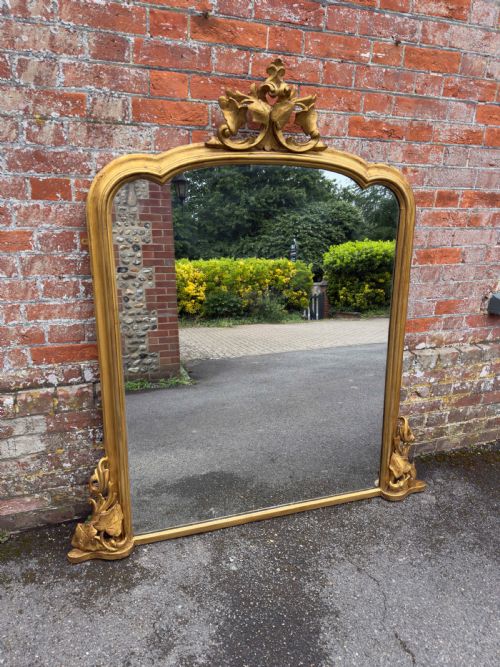
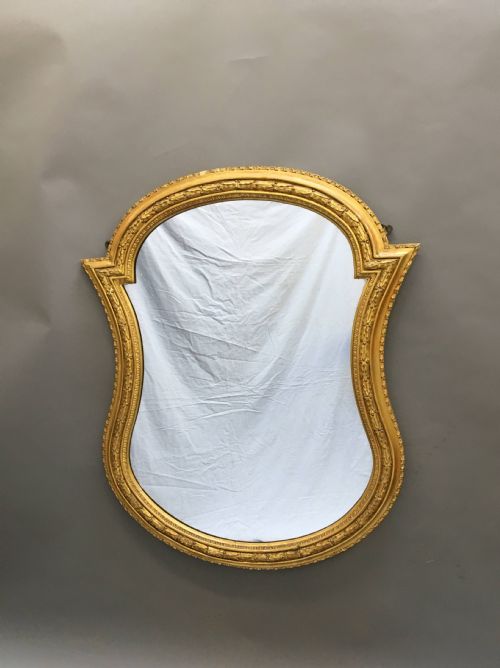


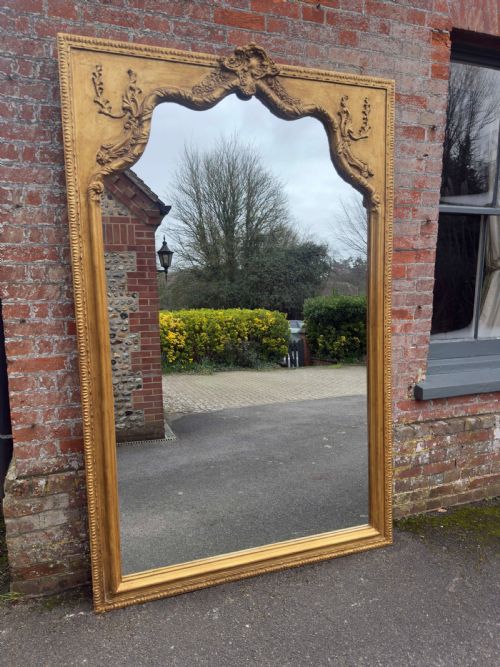


Shaped Frame Wall Mirror
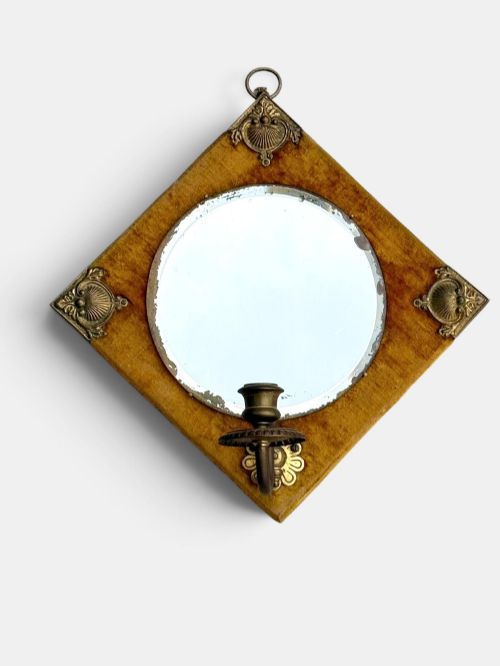
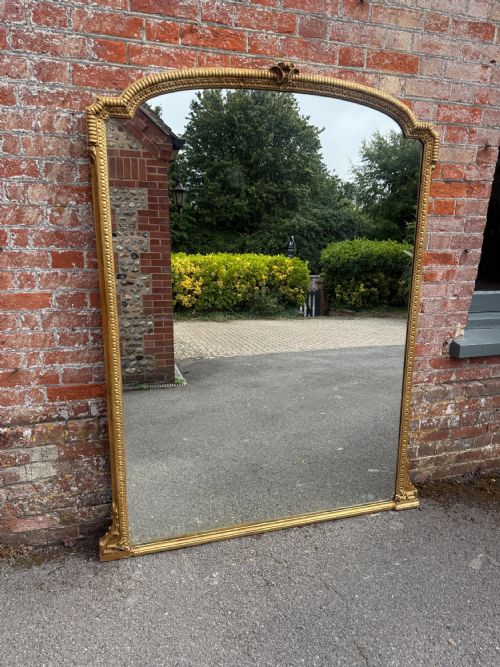
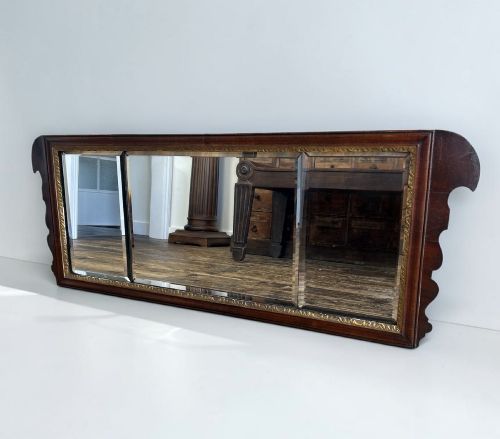
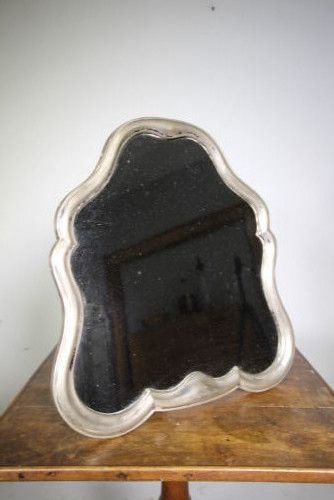
When you search for a shaped frame wall mirror, you enter a world of decorative wall hanging furniture spanning the Victorian, Edwardian, and later periods.
Shaped Frame Wall Mirror
A shaped frame wall mirror is a decorative looking glass designed to hang on a wall, defined by its curved, arched, or otherwise irregular perimeter rather than a simple square or rectangle. These pieces appear in numerous forms across the nineteenth century and twentieth century, including grand overmantle mirrors, tall pier glasses, and smaller domestic wall hangings.
The selections available range from large English and French overmantle mirrors with elaborate carved wood and gesso frames to more restrained Edwardian and Arts and Crafts examples utilising walnut, mahogany, oak, copper, or brass mounts. Many pieces lean into historical revivals, displaying styles such as Rococo Revival, French Chateau, Queen Anne, and George I.
Buyers most frequently encounter nineteenth-century giltwood and gesso pieces alongside walnut and oak frames from the Edwardian era and the nineteen-twenties. These mirrors served both utilitarian purposes and decorative functions in period homes, often positioned above mantelpieces or along hallways to reflect light.
How they were made
Carved wood and gesso construction forms the foundation of many nineteenth-century gilt mirrors on this page. Artisans shaped timber substrates, applied layers of plaster-like gesso, and meticulously carved intricate details such as laurel leaves and ribbed columns before applying gold leaf or paint.
Cabinetmakers utilised timber framing techniques for walnut, mahogany, and oak pieces, sometimes incorporating burr veneers, parcel gilt accents, or inlay work. Metal elements such as brass mounts, copper frames, and leaded joints also appear across Arts and Crafts and Edwardian iterations.
Glass production evolved to provide various plate configurations, from single large sheets to triple plate designs and bevel-edged panels. Silvering techniques and hand-painting further distinguished the finished surfaces.
Some Edwardian makers incorporated heart-shaped mirror plates into black lacquer frames for romantic domestic settings.
What varies in quality
The depth and crispness of the hand-carved wood and gesso ornamentation separate standard production from superior craftsmanship. Heavy, well-defined moulding and original gilding indicate skilled workshop output.
Material selection dictates much of the inherent value, particularly the choice of dense timbers such as walnut and mahogany over softer woods, alongside the clarity and preservation of the mirror glass itself.
The Shaped Frame Wall Mirror Glossary
- Gesso
- A plaster-like mixture applied to wood frames to create a smooth surface for carving and gilding. Artisans built up layers of this substance before impressing or cutting intricate decorative motifs.
- Giltwood
- Timber that has been coated with gold leaf or gold paint. This finish gave mirrors a luminous quality suited to formal reception rooms.
- Overmantel Mirror
- A large looking glass designed specifically to hang on the wall directly above a fireplace mantel. These pieces frequently feature extended horizontal proportions and ornate crests.
- Pier Glass
- A tall, narrow mirror traditionally hung on the narrow pier of wall space between two windows. They often sat above matching console tables.
- Parcel Gilt
- Woodwork or ornamentation that is partially gilded rather than covered entirely in gold leaf. This technique highlighted specific carved details against a contrasting wood grain or painted background.
- Quatrefoil
- A decorative shape composed of four partially overlapping circles of equal radius. This geometric form occasionally dictated the perimeter of the mirror frame.
Shaped Frame Wall Mirror: Frequently Asked Questions
How do I hang a heavy overmantel mirror?
Heavy overmantel mirrors require secure wall fixings distributed evenly across the timber backing or sturdy original hanging loops. Professional installation into masonry or reinforced studwork is standard practice for safety.
Ensuring the weight rests properly prevents strain on the antique frame and the wall structure.
Are these mirrors original antique glass?
Many nineteenth-century pieces retain their original mirror glass, which often exhibits characteristic foxing, light speckling, or minor age-related distortion. These natural signs of ageing distinguish period glass from modern replacements.
Replacements do occur when original plates suffered breakage, so inspecting the silver backing provides clarity.
What rooms suit a shaped frame wall mirror?
These mirrors function effectively in living rooms above mantelpieces, in dining spaces to amplify candle or natural light, and in hallways as focal points. Their decorative frames allow them to act as standalone wall art.
Matching the scale of the mirror to the available wall space ensures correct visual proportion.
How do I identify a Rococo Revival mirror?
Rococo Revival pieces typically display asymmetrical curves, C-scrolls, floral motifs, and shell-like cartouches inspired by eighteenth-century French design. The frames are often heavily carved in gessoed wood and finished in bright gold leaf.
Nineteenth-century makers adopted these exuberant styles to create dramatic visual impact.