

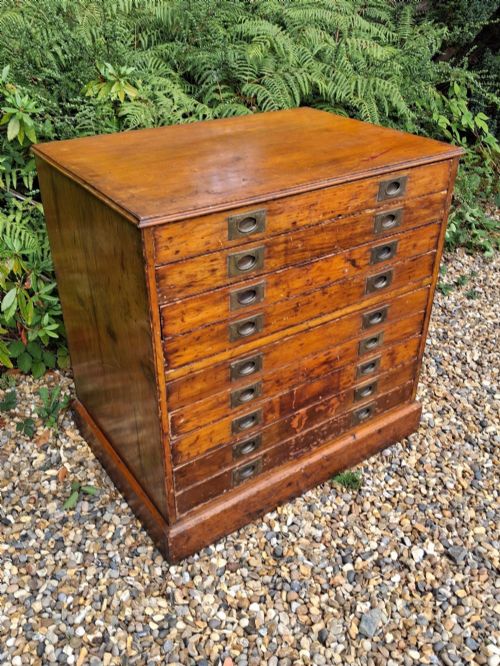
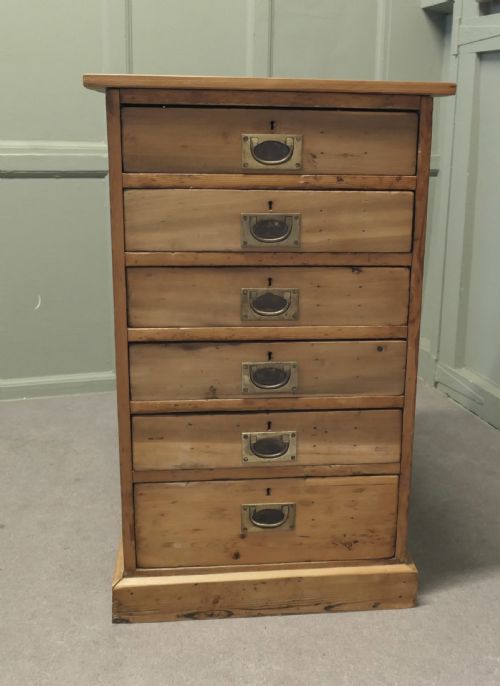
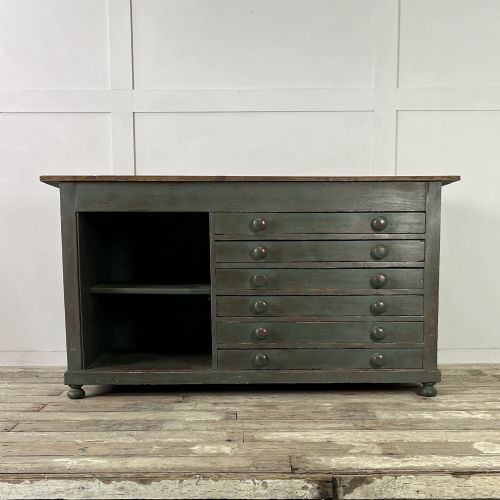
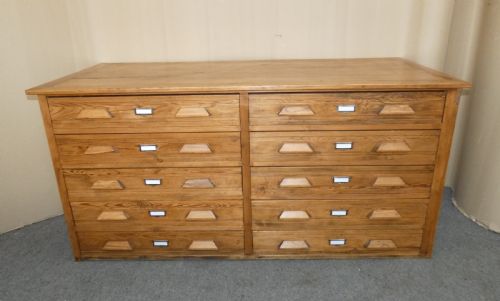
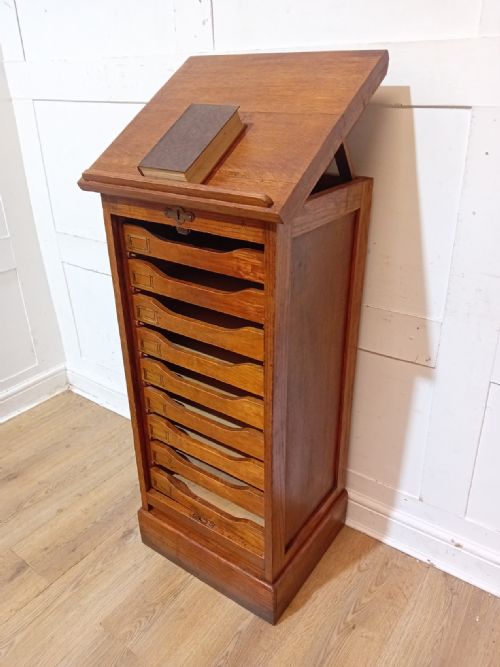


Shallow Drawer Plan Chest
A shallow drawer plan chest provides expansive storage with low-profile drawers suited to large sheets, specimens, and collections.
Shallow Drawer Plan Chest
A shallow drawer plan chest functions as a wide, low piece of furniture designed originally for architectural drawings, maps, and artists' work. The versions encountered on this page encompass various utilitarian and decorative forms from the eighteenth century to the mid-twentieth century.
The category spans diverse functional iterations including oak lecturn top filing cabinets, pine artists chests of drawers, haberdashers drawers, and large Victorian specimen chests. These objects serve modern interiors as substantial storage units with distinctive historical character.
Makers of these pieces utilised robust timbers suited to heavy daily use in offices, studios, and workshops. The physical evidence shows construction spanning the Georgian, Victorian, Arts and Crafts, and industrial utility eras.
Materials and construction methods
Carpenters built these chests primarily using solid regional timbers such as pine, oak, and mahogany, frequently pairing them with brass drawer pulls and handles. Certain examples incorporate boxwood inlay or red walnut and fruitwood combinations to elevate the appearance of the piece.
Construction techniques prioritized durability, utilising substantial paneling and multi-drawer banks to withstand heavy loads of paper or specimens. Joinery methods reflect the working practices of periods ranging from the eighteenth century through the industrial utility era.
Shallow Drawer Plan Chest Retail Price Guide 2026
Typical asking prices for shallow drawer plan chest among the pieces listed under this phrase on Sellingantiques today, from the lower quarter to the upper quarter. They describe what is for sale here now, not the wider market.
One exceptional egg collector cabinet includes twenty-four drawers plus two bonus compartments for meticulous sorting.
Distinguishing quality across examples
The presence of original brass hardware and the smoothness of the drawer action differentiate standard utilitarian workshop furniture from superior domestic or studio commissions. Proportion and overall architectural presence also dictate the standing of an individual piece.
The Shallow Drawer Plan Chest Glossary
- Plan chest
- A large piece of furniture featuring many wide, shallow drawers originally designed for storing architectural plans and maps. These are prized in modern interiors for their surface area and generous storage capacity.
- Specimen cabinet
- A specialised storage chest containing numerous small drawers intended for housing natural history collections such as eggs, insects, or botanical samples. These often feature tightly fitted internal divisions.
- Folio cabinet
- A tall or floor-standing cabinet designed to store large loose sheets of paper, prints, or folios flat. Such pieces frequently date to the eighteenth and nineteenth centuries.
- Haberdashers drawers
- Multi-drawer units originally utilised in retail settings for organising ribbons, trimmings, or small garments. They share the shallow drawer format common in architectural storage.
- Pitch pine
- A durable resinous pine variety utilised extensively in nineteenth-century and early twentieth-century utilitarian furniture. It offers distinct grain patterns and robust structural strength.
Shallow Drawer Plan Chest: Frequently Asked Questions
What fits in a shallow drawer plan chest?
These drawers suit large flat items such as art prints, maps, blueprints, and textiles. Collectors also utilise them for organising smaller objects.
The wide and shallow dimensions prevent items from stacking too deeply, ensuring contents remain visible and protected.
How do I date a plan chest?
Dating relies on examining the timber species, construction joints, backboards, and hardware handles. Georgian pieces display distinct cabinet-making methods compared to Victorian or mid-century industrial items.
Matching the style and materials to known historical periods helps narrow down the decade of manufacture.
Are these chests heavy?
Solid timber construction makes these pieces exceptionally heavy and robust. Multiple drawers add significant weight to the overall carcass.
Moving them usually requires two people and careful removal of the drawers to lighten the load.
Can I use one as a coffee table?
Their low profile and large top surface make them suitable for use as central room tables or kitchen islands. The numerous drawers provide practical concealed storage in living spaces.
Ensuring the height matches existing seating or room proportions is the main consideration for this use.