

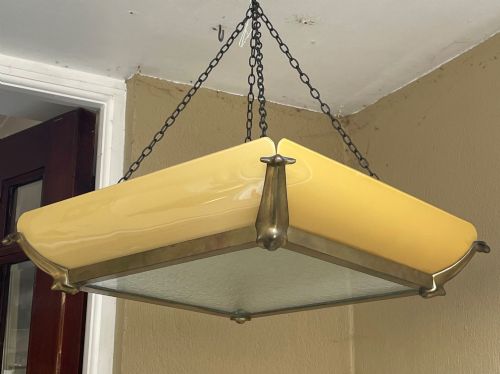
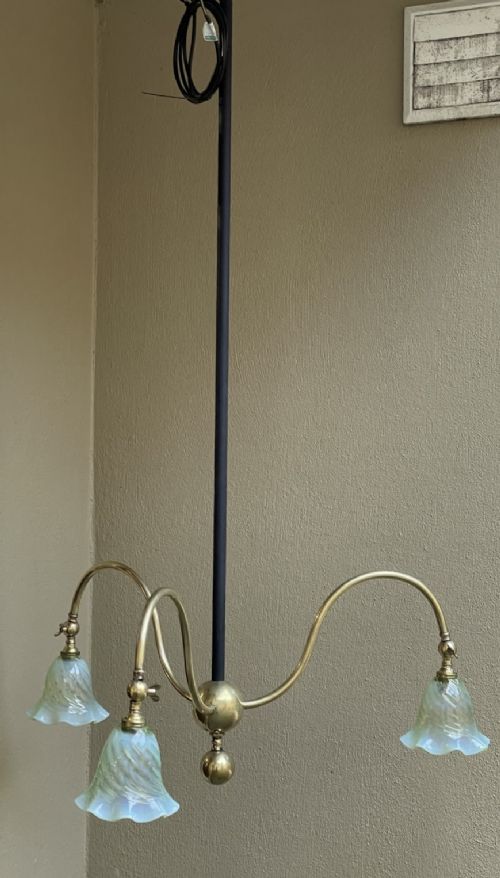
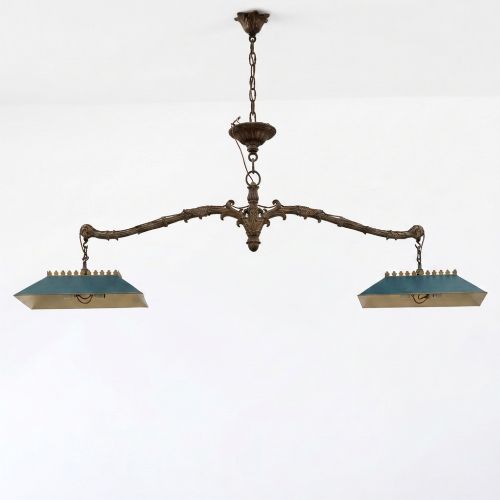
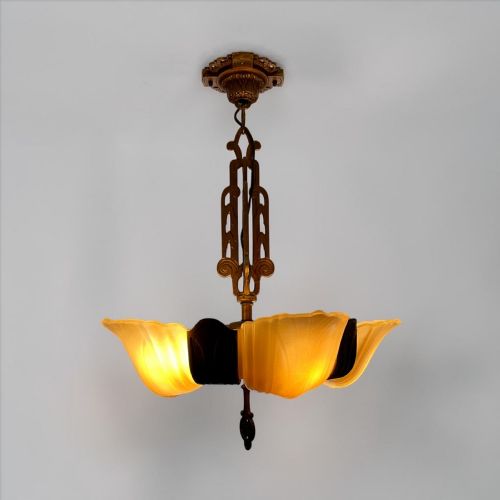
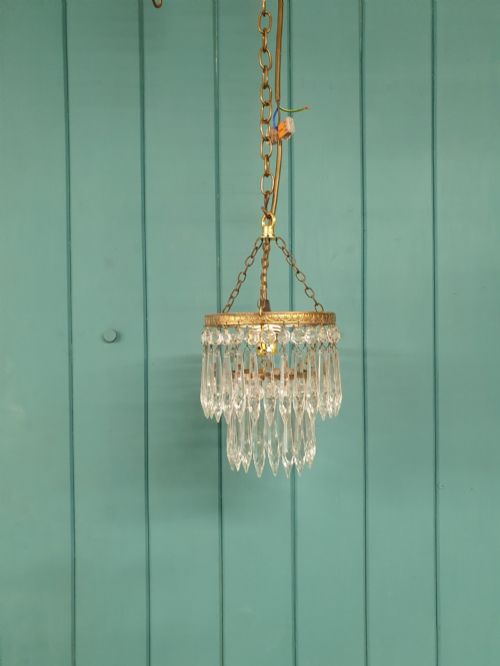
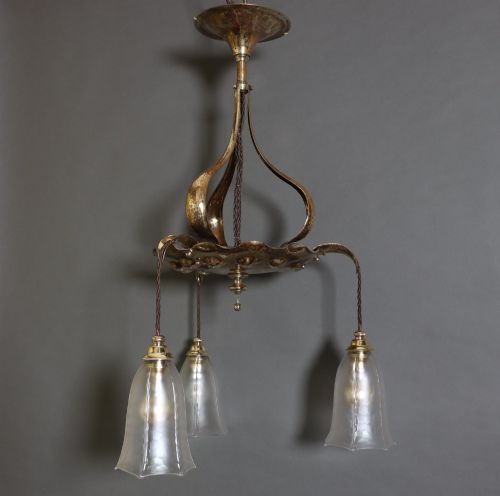
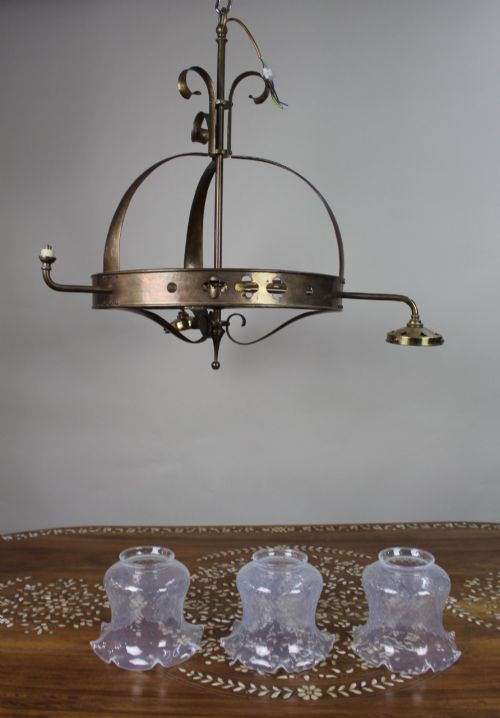
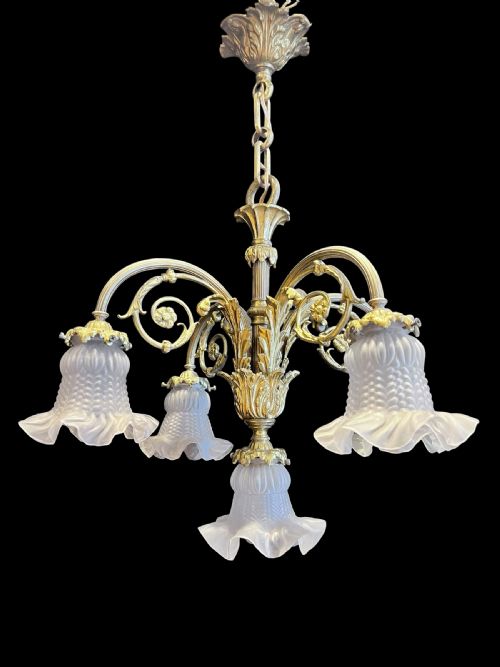
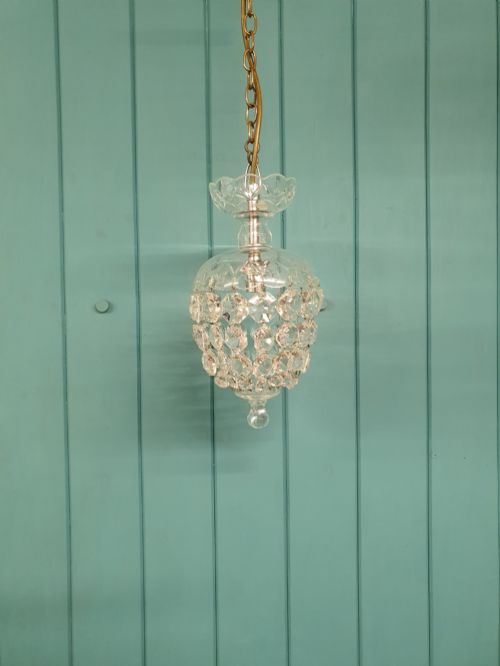
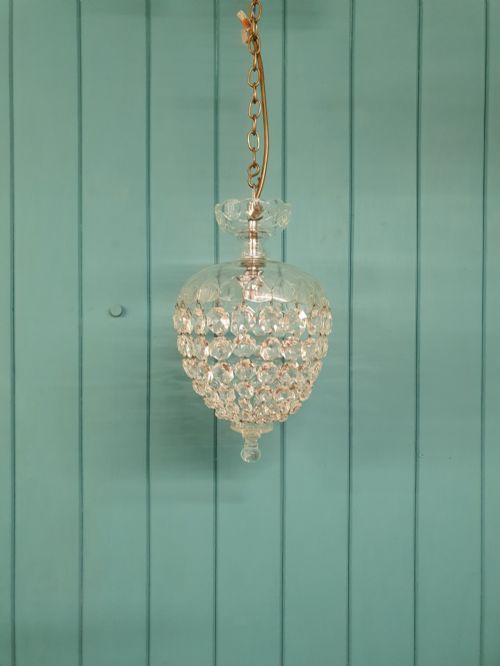
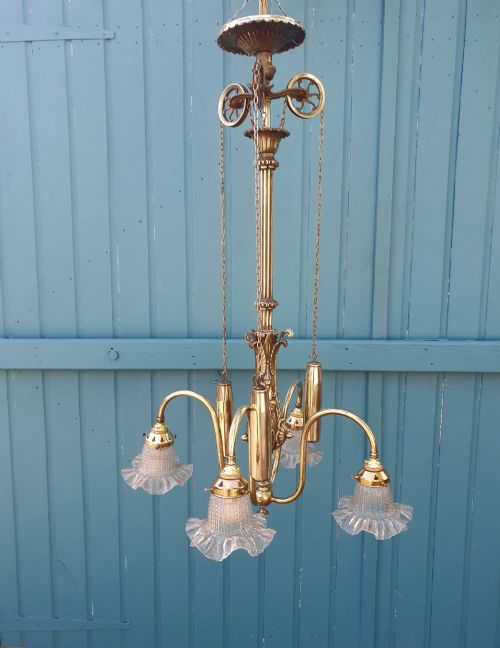
Shaded Brass Chandelier
When you want a shaded brass chandelier, you are looking for period ceiling lighting that combines metalwork with glass or fabric.
Shaded Brass Chandelier
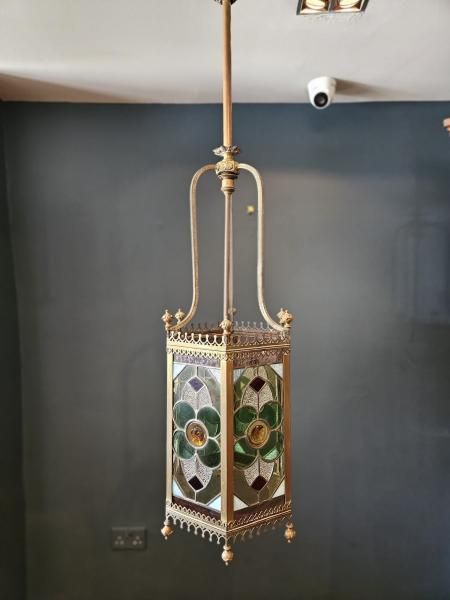
A shaded brass chandelier brings together metal frames and distinct light diffusers, spanning periods from the nineteenth century through the Edwardian era and into the nineteen-thirties. You meet styles ranging from Gothic Revival and Victorian designs to Arts and Crafts, Art Nouveau, and Art Deco pieces. Forms include multi-arm ceiling lights, pendant lanterns, and bowl chandeliers.
The most common examples on this page date from the early twentieth century and the nineteen-thirties, often featuring brass frames paired with glass shades, slip shades, or crystal drops. English and French origins predominate, alongside specific civic or domestic forms like billiard lights and plafonniers.
How they were made
Makers constructed the primary framework using cast, spun, or sheet brass and bronze, sometimes incorporating rise and fall mechanisms or multi-arm branches. These metal structures hold structural and decorative elements together.
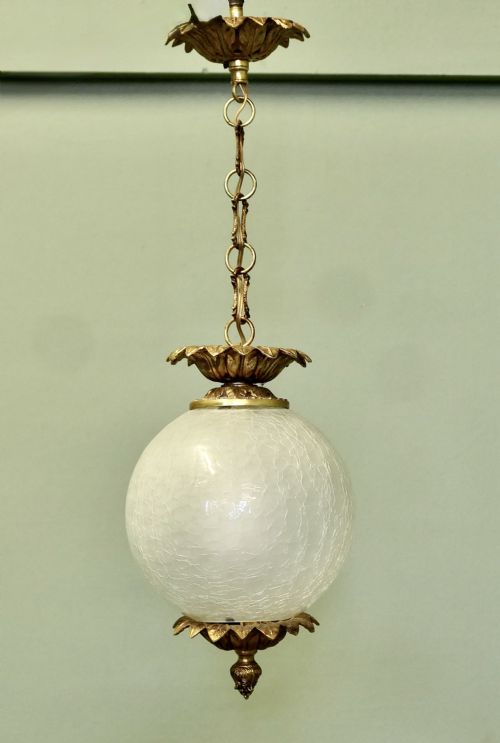
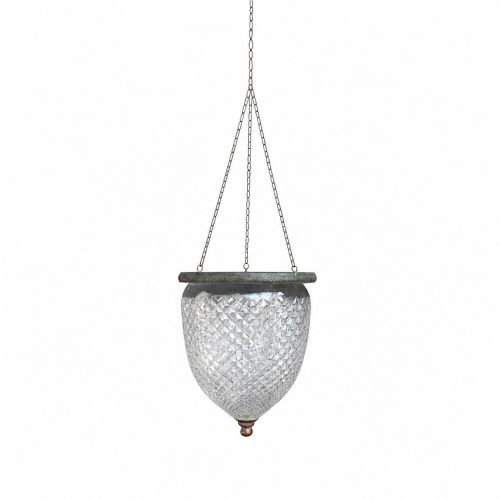
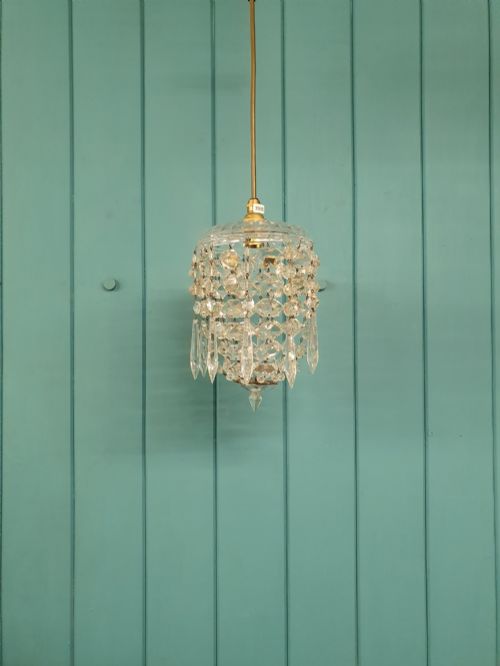
Diffusers and shades utilise cut glass, crystal, frosted glass, opalescent glass, moulded glass, crackle glass, alabaster, or fabric. Workshops combined these materials with hanging prisms, beads, and metal finials to complete each pendant or ceiling light.
Listings span periods from the nineteenth century, Victorian era, and Edwardian period through to nineteen-thirty Art Deco.
What varies in quality
Quality separates through the weight and finish of the brass framework, alongside the precision of the metal casting or spinning. Heavier mounts and well-finished arms demonstrate superior workshop standards.
The character of the glass components defines the upper tier of pieces, seen in hand-cut crystal, moulded slip shades, and original opalescent or pink glass shades. Original matching shades and intact crystal drops elevate a piece above standard examples.
The Shaded Brass Chandelier Glossary
- Plafonnier
- A ceiling light fixture that sits flush or close to the ceiling surface. These often feature glass domes or bowls held by brass mounts.
- Slip shade
- A type of glass shade designed to slip into a metal frame or basket on a ceiling light or chandelier. They are typical of Art Deco lighting fixtures.
- Gasolier
- A multi-arm hanging light fixture originally designed for gas lighting before conversion to electricity. These often date from the nineteenth century.
- Billiard light
- A long ceiling light fixture designed to illuminate a billiard or snooker table evenly. They frequently incorporate multiple shades along a single brass frame.
Shaded Brass Chandelier: Frequently Asked Questions
How do I date a brass chandelier?
You date these fixtures by examining the stylistic clues in the metalwork and shades, such as Victorian leaf motifs, Edwardian brass work, or Art Deco geometric slip shades. Periods span from the nineteenth century through the nineteen-thirties.
Construction methods and wiring provisions also offer guidance, distinguishing early gasoliers from later electrified pendant lights and chandeliers.
Are these lights suitable for low ceilings?
Certain forms fit low rooms better than others, particularly flush plafonniers, compact bowl chandeliers, and small pendant lanterns measuring under ten inches. These designs keep the drop minimal while retaining period character.
Larger multi-arm chandeliers and drop-down rise and fall fittings require greater ceiling height to hang correctly and distribute light.
Can I find matching wall lights?
The inventory focuses on ceiling lights, chandeliers, and pendant lanterns rather than matching wall sconces. You find diverse hanging configurations from single-tier pendants to multi-branch fixtures.
Matching sets depend entirely on individual dealer offerings within the current selection of ceiling lighting.
What is a rise and fall fitting?
A rise and fall mechanism allows you to adjust the height of the pendant light using a weighted pulley or spring system. This design was common in Edwardian and Art Nouveau interiors for practical table illumination.
Such fittings combine functional brass engineering with decorative shades to alter the room ambiance directly.