



Sevres Style Urn Clock
These sevres style urn clock pieces are grand centrepieces that bring nineteenth-century French architectural presence into a room.
Sevres Style Urn Clock
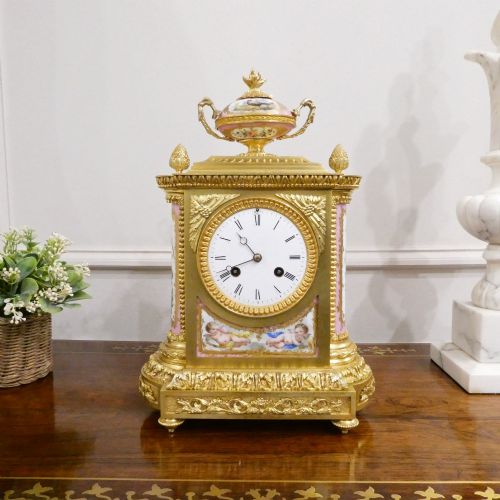
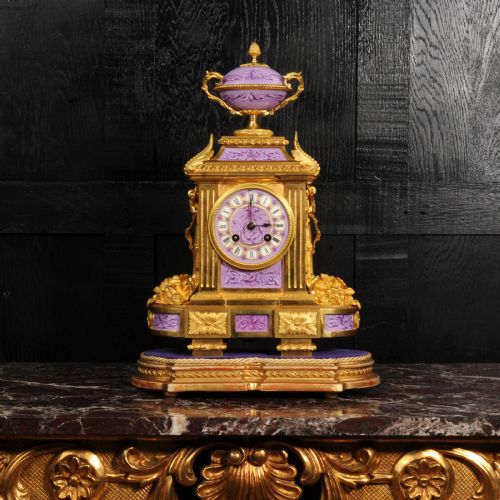
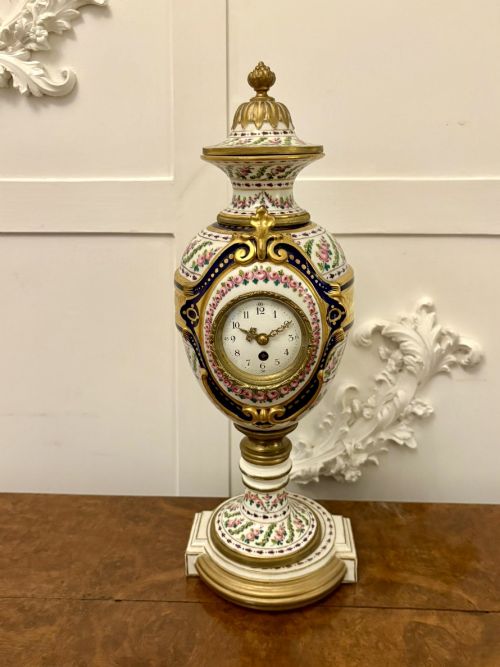
A sevres style urn clock combines a porcelain body shaped like a classical vessel with a working timepiece movement housed within gilt bronze or ormolu mounts. The forms on this page span from the middle of the nineteenth century into the eighteen-nineties, capturing the decorative revivals of the period.
Most examples you will meet take the form of mantel clocks or larger clock garniture sets accompanied by matching side vases under glass domes. They draw on French Rococo and Louis XVI revival styles, translating palatial interior aesthetics into domestic mantelpieces.
How they were made
The makers built these objects using porcelain bodies combined with cast gilt bronze and ormolu mounts, frequently enriched with hand-painted enamel details. Brass and wood also appear in the internal mechanisms and structural supports of the heavier cases.
Artisans applied fire gilding or electrogilding to the bronze mounts to achieve a deep metallic lustre that contrasts with the painted porcelain panels. Complex mechanical movements were housed inside these metal and ceramic housings by specialised clockmakers.
Sevres Style Urn Clock Retail Price Guide 2026
Typical asking prices for sevres style urn clock among the pieces listed under this phrase on Sellingantiques today, from the lower quarter to the upper quarter. They describe what is for sale here now, not the wider market.
Some timepieces hide beneath protective glass domes like nineteenth-century snow globes for the excessively tidy.
What varies in quality
Quality rests in the crispness of the bronze casting and the delicacy of the hand-painted porcelain panels rather than the mere presence of materials. Finer examples display deeply chased foliate mounts and well-preserved enamel dials signed by established makers.
The integration between the ceramic body and the metal mounts indicates the skill of the workshop. Superior pieces maintain tight joins and harmonious proportions between the central urn and its flanking garniture elements.
Jean-Baptiste Delettrez·Achille Brocot·Japy Frers·Vincenti of Paris
The Sevres Style Urn Clock Glossary
- Ormolu
- Gilded bronze produced by applying a mixture of gold and mercury to a bronze base, common in nineteenth-century French decorative metalwork. This technique creates a rich, matte golden surface finish.
- Garniture set
- A decorative matching group consisting of a central clock flanked by two matching vases or candelabra. These sets were designed to display symmetrically on a mantelpiece.
- Mantel clock
- A portable clock designed to stand on the shelf above a fireplace. They often feature elaborate architectural or sculptural cases.
- Enamel
- A glassy substance fused to metal surfaces through firing to create smooth, decorative panels or clock dials. It provides a durable and glossy finish resistant to fading.
Sevres Style Urn Clock: Frequently Asked Questions
What is a sevres style urn clock?
These pieces are nineteenth-century French mantel clocks featuring porcelain urn bodies mounted in gilt bronze or ormolu. They reflect classical revival tastes popular during the Second Empire and Napoleon III periods.
They function as both timekeepers and decorative sculptures designed to anchor the display of a formal room.
How do garniture sets work?
A garniture set pairs a central clock with matching decorative side pieces, such as vases, placed symmetrically on either side. This arrangement created a balanced decorative scheme for nineteenth-century mantelpieces.
The matching elements share identical porcelain painting styles and bronze mount designs to unify the display.
Where were these clocks made?
The pieces originate from France, produced during the nineteenth century by specialist bronze founders and clockmakers. Workshops in Paris collaborated to combine porcelain bodies with intricate metalwork mounts.
Many bear signatures from prominent makers who supplied the luxury goods market of the era.
How should I care for a porcelain clock?
Keep the clock away from direct sunlight and dramatic temperature fluctuations to protect the painted porcelain and delicate enamel dials. Dust the gilt bronze mounts gently with a soft, dry brush without using chemical cleaners.
Mechanical movements require professional servicing every few years to ensure the gear trains remain properly lubricated.