





French Brocot Escapement Clock
These French brocot escapement clock examples are precision timepieces designed to sit proudly upon a mantelpiece, combining mechanical ingenuity with striking nineteenth-century cabinetwork.
French Brocot Escapement Clock
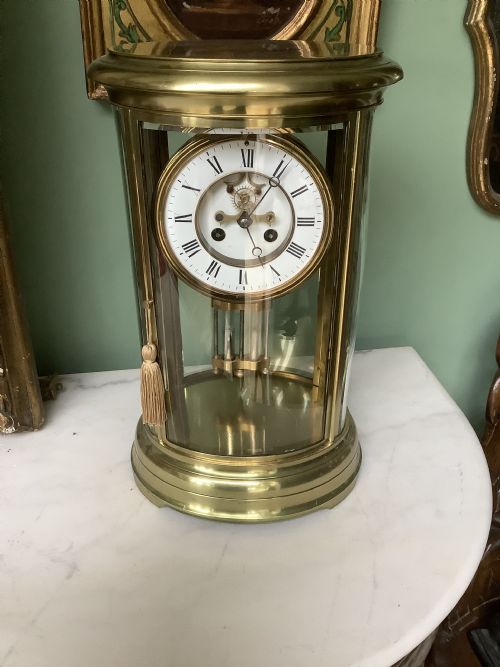
A French brocot escapement clock is a nineteenth-century mechanical timepiece that uses a visible, pallet-based regulating system mounted directly on the visible dial. When collectors search for a French brocot escapement clock, they encounter diverse Victorian and nineteenth-century forms ranging from architectural slate bodies to brass-framed glass chambers.
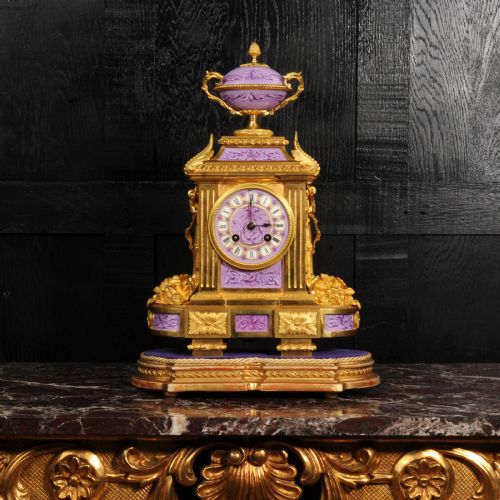
The architectural mantel clock forms appear alongside ornate four-glass column cases, often housing striking mechanisms or perpetual calendar complications. These pieces originate predominantly from French workshops operating during the Victorian era and the Second Empire and Third Republic periods.
The prevalence of four-glass cases on this page demonstrates the popularity of designs that expose the swinging pendulum and the regulating escapement mechanism to full view. Buyers find variations featuring gilt bronze, ormolu, marble, slate, and porcelain panels incorporated into the housing.
Materials and construction
The structural housings rely heavily on cast brass, gilt bronze, slate, and heavy marble, forming robust frames to support intricate gear trains. Glass panels enclose the four-glass models, allowing unhindered observation of the movement from every angle.
Dials frequently incorporate white enamel with painted numerals, sometimes accompanied by Sèvres porcelain plaques or decorative brass filigree. Metal finishes encompass fire gilding, ormolu, and polished brass surfaces that reflect the high standards of nineteenth-century French metalwork.
French Brocot Escapement Clock Retail Price Guide 2026
Typical asking prices for french brocot escapement clock among the pieces listed under this phrase on Sellingantiques today, from the lower quarter to the upper quarter. They describe what is for sale here now, not the wider market.
Listings feature materials including slate, marble, gilt brass, ormolu, and glass across Victorian and nineteenth-century French periods.
Judging quality and craftsmanship
The refinement of the visible escapement mechanism and the precision of the dial layout distinguish superior examples from standard production pieces. Complexity also drives distinction, particularly where perpetual calendars, equation of time complications, or extended duration movements are present.
The quality of the housing materials, from heavy solid marble and slate to finely chased gilt bronze and ormolu mounts, dictates the overall presence of the object. Cases with crisp casting detail and undamaged bevelled glass panes reflect a higher standard of original manufacture.
Achille Brocot·Brocot
The French Brocot Escapement Clock Glossary
- Brocot escapement
- A visible pin-pallet escapement invented by Louis Achille Brocot that allows regulation of the pendulum directly from the dial face. This mechanism is the defining technical feature of these clocks.
- Four-glass clock
- A mantel clock housed in a brass and glass case with bevelled glass panels on the front, back, and sides. This design provides an unobstructed view of the pendulum and movement.
- Ormolu
- Gilded bronze produced by applying a mercury and gold amalgam to a bronze base and heating the object. The technique creates a durable golden finish characteristic of French decorative arts.
- Perpetual calendar
- A mechanism that automatically adjusts for the varying lengths of months and leap years. These complications elevate the mechanical status of the timepiece.
French Brocot Escapement Clock: Frequently Asked Questions
What is a Brocot escapement?
A Brocot escapement is a mechanical regulating device featuring pallet jewels that engage directly with a pin-wheel escapement. It allows the clock to be adjusted easily using a small square arbor on the dial.
This visible arrangement places the mechanics at the front of the clock, making the movement part of the visual display.
How do I wind these clocks?
Most models require a specialised winding key inserted into arbors on the enamel dial to tension the springs or weights. Some movements run for standard eight-day periods, while rarer versions operate for longer durations.
Careful handling during winding ensures the internal gear train and escapement remain properly aligned.
Where should I place a four-glass clock?
These clocks require a stable, level surface such as a mantelpiece or bracket shelf to maintain the precise beat of the pendulum. Because the glass panels expose the entire movement, placement away from high-traffic areas prevents accidental knocks.
Positioning them where natural light can pass through the glass also highlights the swinging pendulum and internal mechanics.
How do I date these clocks?
Dating relies on stylistic clues, materials, and maker signatures found on the dial or movement backplate. The architectural slate pieces and ornate gilt brass cases typically point to the nineteenth century, spanning the Victorian period and the French Second Empire.
Specific design motifs like ships' wheels or porcelain plaques further narrow the period of manufacture.