




Sevres Plaque Credenza
A sevres plaque credenza combines rich timbers with painted porcelain panels, offering a striking display piece for formal interiors.
What a sevres plaque credenza is
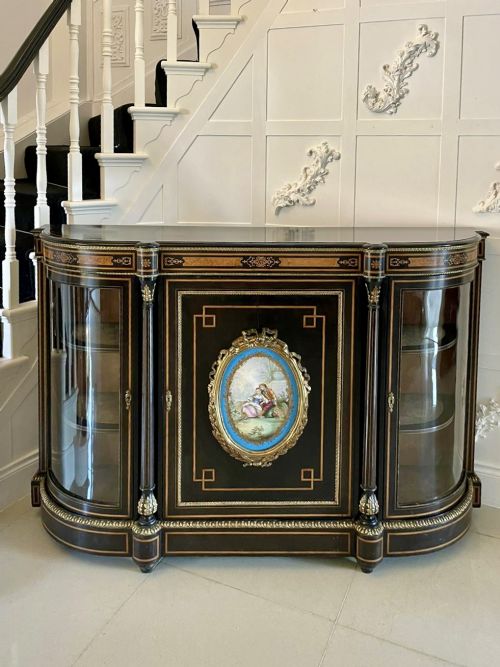
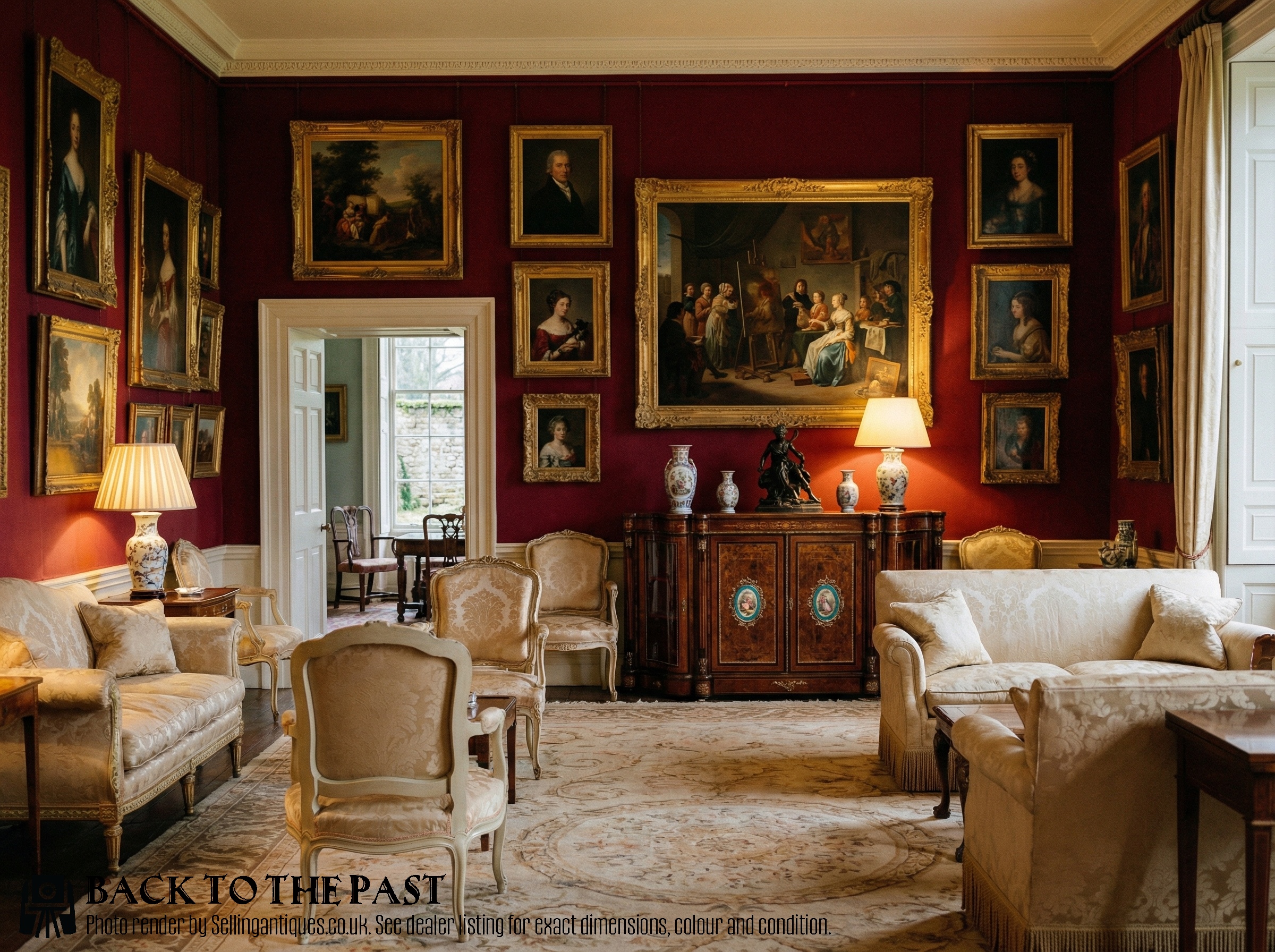
A sevres plaque credenza represents a grand Victorian and mid nineteenth century fusion of cabinet making and decorative porcelain. These pieces typically take the form of side cabinets and credenzas featuring inset painted porcelain panels within timber frames.
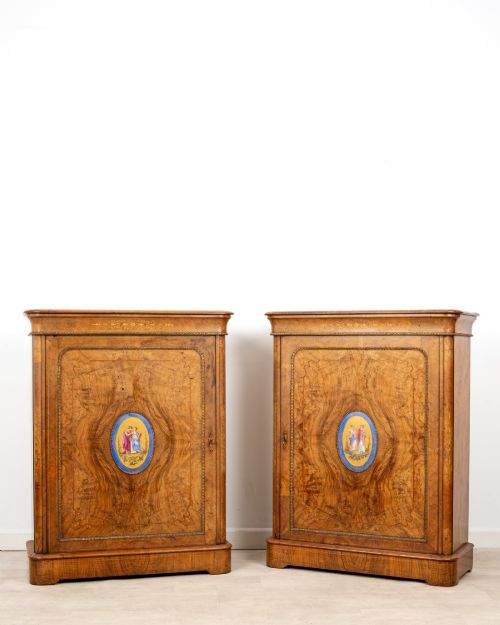
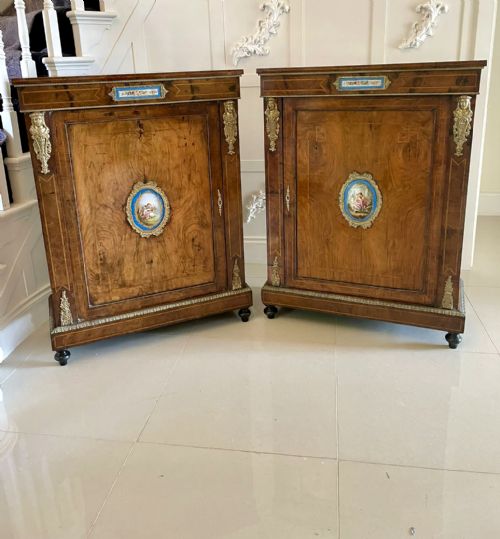
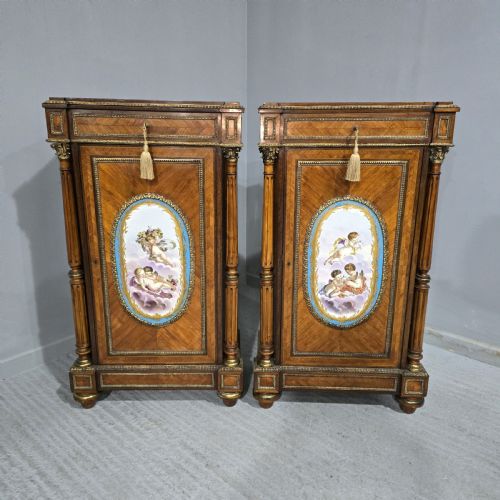
The versions most commonly found here date from the nineteenth century and the Victorian era, often bearing Louis XVI revival or Napoleon III style influences. Cabinets range from single and three door formats to matched pairs of side cabinets.
Makers utilised rich woods such as burr walnut, amboyna and ebonised wood to frame the ceramic plaques. Ormolu mounts and brass details frequently accent the structure, creating a substantial silhouette for a principal room.
How they were made
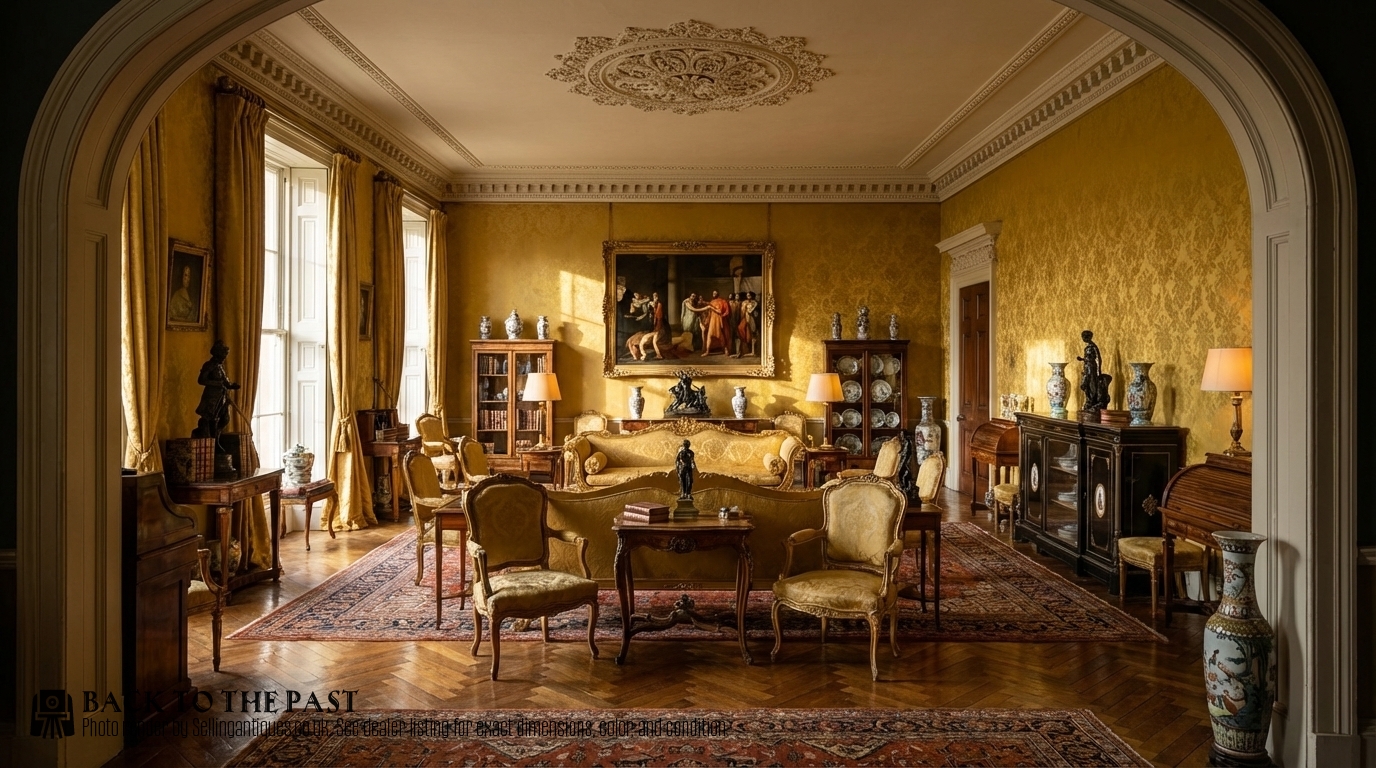
Cabinet makers constructed the foundational carcase from timbers like walnut or applied ebonised finishes to mimic exotic hardwoods. Veneers of burr walnut and amboyna were carefully cut and laid to create decorative grain patterns across the doors and panels.
Craftsmen incorporated fired porcelain plaques into the wooden framework, securing them with ormolu mounts or brass bezels. Glass doors also appear on certain side cabinets, allowing visibility of internal shelving.
Retail Price Guide 2026
Typical UK retail prices for sevres plaque credenza, calculated from the Sellingantiques database of over a million retail prices indexed since 2003. This retail price guide relies exclusively on Sellingantiques data; no external sources or auction records are used, so the figures do not describe the wider market.
A porcelain panel meets its wooden home with a quiet click that has survived since eighteen fifty.
What varies in quality
Quality rests upon the selection and matching of timber veneers, where finely figured burr walnut or amboyna elevates the piece above standard ebonised carcases. The crispness and weight of the ormolu mounts further distinguish higher tier examples.
The painting and firing of the porcelain plaques themselves dictate the artistic merit of the cabinet. Finer specimens display detailed hand painted scenes and superior glaze consistency within their ceramic components.
The Sevres Plaque Credenza Glossary
- Credenza
- A low cabinet or sideboard, typically featuring central doors flanked by side compartments, used for storage and display.
- Ormolu
- Gilt bronze mounts applied to furniture for decorative enrichment, providing metallic contrast to wood and porcelain.
- Ebonised
- Timber treated with a dark finish to resemble ebony, a technique popular during the Victorian period.
- Burr walnut
- Timber taken from a walnut tree growth, yielding intricate and swirling grain patterns favoured for decorative veneers.
Frequently Asked Questions
Where do I place a credenza?
These large cabinets sit best against a substantial wall in a dining room, drawing room or hallway where their decorative porcelain and wood veneers command attention.
Ensure the room has sufficient space to allow the doors to open fully without obstruction from other furniture.
How do I care for the wood?
Maintain the timber surfaces by dusting regularly with a soft, dry cloth and avoiding placement near direct heat sources or strong sunlight.
Treat the polished wood and veneer with appropriate natural waxes periodically to preserve the finish without harming the grain.
Are the porcelain plaques original?
Nineteenth century makers frequently integrated painted porcelain panels into these cabinets as focal points for revivalist designs.
Examining the fit within the ormolu mounts helps determine how the ceramic elements interact with the surrounding timber carcase.
What styles do these pieces follow?
The pieces align primarily with Victorian aesthetics, incorporating Napoleon III and Louis XVI revival motifs into their design.
These stylistic influences appear through symmetrical proportions, classical ormolu mounts and structured timber framing.