
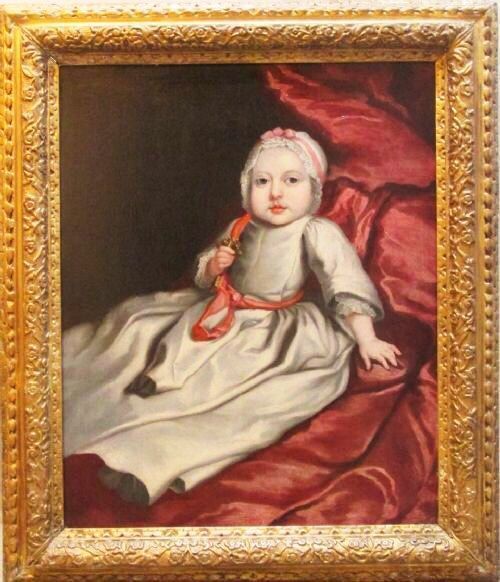


Seventeenth Century Style Artwork
Seventeenth century style artwork brings dramatic chiaroscuro and rich historical portraiture into a room.
Seventeenth Century Style Artwork
These pieces encompass oil paintings and tapestry cushions created in the seventeenth century or echoing its distinct aesthetic through later copies and revivals. A buyer examining seventeenth century style artwork encounters canvases that imitate Dutch Golden Age masters, Flemish Baroque compositions, and Italian Baroque mythological scenes.
The selections available here range from authentic seventeenth century tapestry cushion covers to later reinterpretations painted around nineteen hundred, nineteen twenty, and the Victorian era. Many works represent later studies or copies after notable painters such as Rembrandt, Van Dyck, Peter Paul Rubens, and Daniel Mytens.
Subject matter spans intimate portraits of ladies, still life arrangements featuring period chairs and swords, and grand mythological narratives like Venus Sleeping with Satyrs. These works allow collectors to introduce the brooding shadows and ornate portraiture of the seventeenth century British and continental schools into domestic spaces.
How they were made
Makers utilised oil paint applied to canvas surfaces, building deep shadows and luminous highlights characteristic of Baroque and Dutch Golden Age painting techniques. Wood and giltwood frames, frequently enhanced with gold leaf, enclose many of the canvases to complete the period appearance.
Textile pieces such as tapestry cushion covers combine wool and silk threads woven together to create complex pictorial scenes. Painters working in nineteenth century art schools or earlier studio traditions carefully replicated the brushwork and compositions of seventeenth century masters by hand.
One depicted subject is Sir Jeffrey Hudson, a court dwarf renowned for once being served inside a giant pie.
What varies in quality
The fidelity of the brushwork and the depth of the tonal contrasts distinguish studio copies and later student pieces from more accomplished works. An artist who successfully captures the subtle psychological expression and dramatic light play of a Rembrandt or Van Dyck prototype achieves a far superior visual impact.
The preservation of the underlying canvas, the condition of the oil paint layers, and the integrity of the original wood or giltwood frames significantly influence the standing of each piece. Finer textile items display tight wool and silk weaves with minimal thread loss, maintaining the crispness of the original design.
The Seventeenth Century Style Artwork Glossary
- Chiaroscuro
- A technique employing strong contrasts between light and dark to give subjects a three-dimensional volume. This method defines the dramatic atmosphere of many Baroque and Dutch Golden Age paintings.
- Giltwood
- Wood that has been treated with a thin layer of gold leaf or gold paint for decorative effect. It provides an ornate border for seventeenth century style oil paintings.
- Baroque
- An artistic style originating around seventeen hundred that uses exaggerated motion and clear, easily interpreted detail to produce drama, tension, and grandeur. It appears frequently across Italian and Flemish schools.
- Tapestry
- A form of textile art woven on a vertical loom using wool and silk threads. Cushion covers and wall hangings utilise this technique to depict narrative scenes.
- Provenance
- The chronological history of the ownership of a work of art. Documented lineages help confirm whether a canvas dates to the seventeenth century or represents a later nineteenth century study.
Seventeenth Century Style Artwork: Frequently Asked Questions
What is seventeenth century style artwork?
These pieces include oil paintings and textile works created during the seventeen hundreds or produced later as copies and revivals of Dutch, Flemish, and British masterpieces.
They capture the dark backgrounds, rich fabrics, and dramatic lighting typical of the period.
How should I hang these paintings?
Display oil on canvas works away from direct sunlight and damp environments to protect the pigments and the underlying support fabric.
Pairing them with traditional wood or giltwood frames enhances their historical character within a room.
Are these pieces from the seventeen hundreds?
The selection includes items produced directly in the seventeenth century alongside later nineteenth century school studies and academic copies.
Examine the materials, canvas preparation, and framing techniques to understand the age of each specific object.
What subjects appear in these works?
Common subjects include portraits of notable figures, mythological scenes involving deities and satyrs, and still life compositions.
Many of these compositions pay direct homage to famous painters such as Rembrandt and Peter Paul Rubens.