



Seventeenth Century Drop Leaf
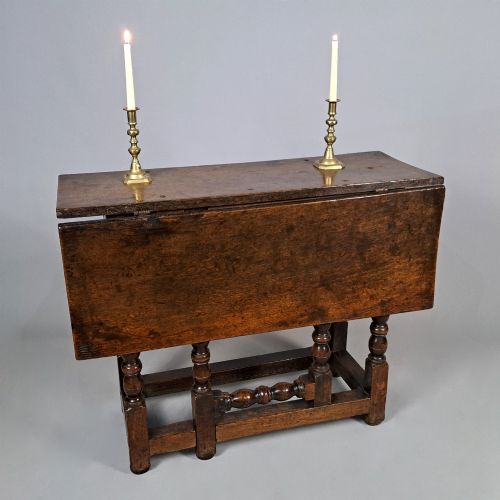
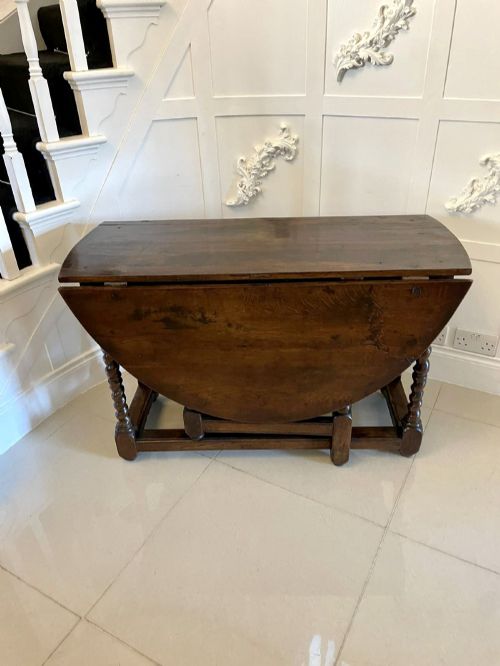
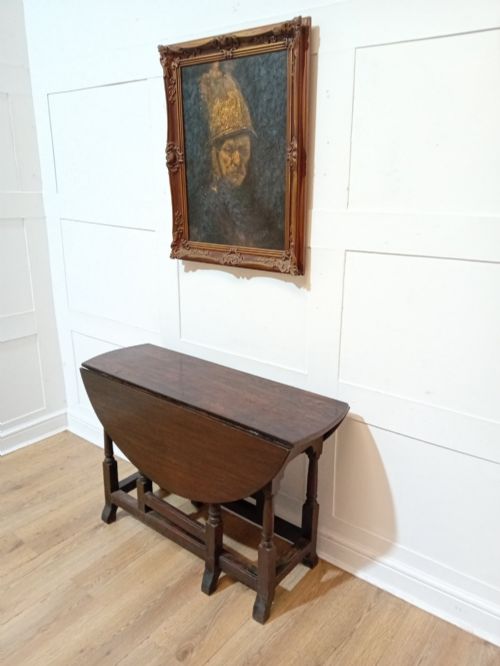
These seventeenth century drop leaf tables are sturdy timber furnishings designed to expand for dining and fold away when space demands it.
Seventeenth Century Drop Leaf
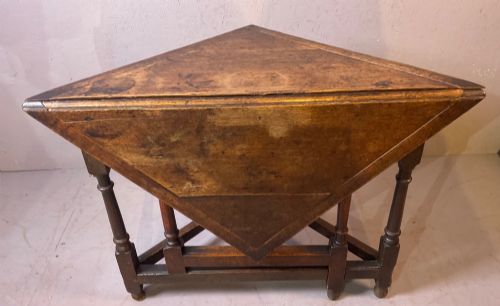
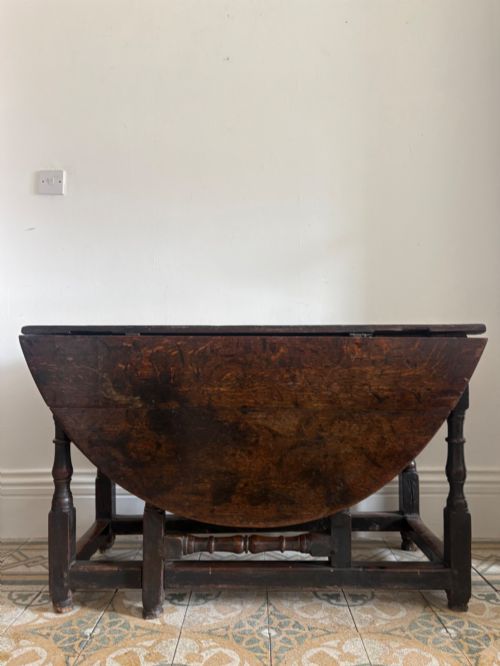
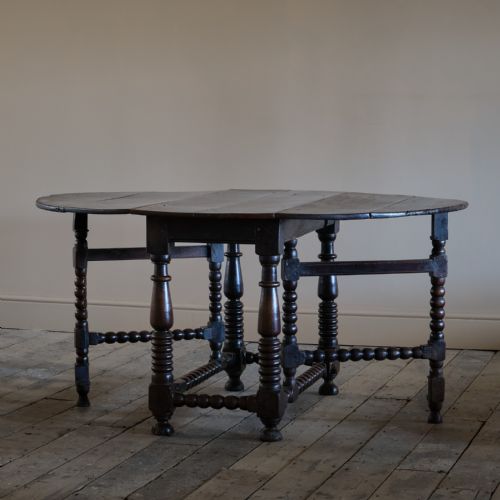
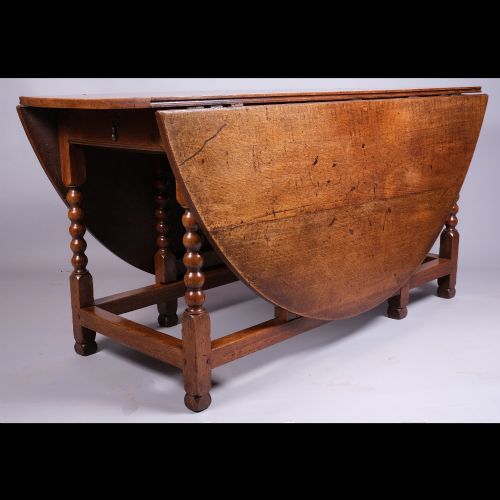
A seventeenth century drop leaf search brings up solid oak and walnut tables designed with folding flaps supported by pivoting swing legs. These pieces appear primarily as gateleg dining tables, supper tables, and smaller side tables originating from the seventeenth century, alongside occasional later interpretations.
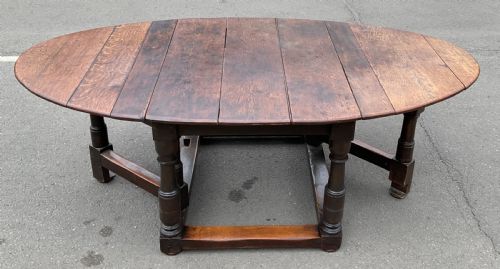
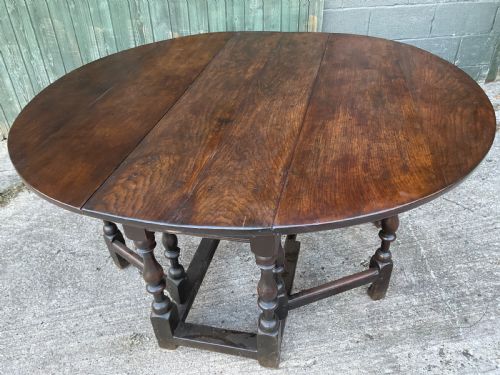
The dominant form on this page is the large oak gateleg dining table, often built to seat six people for meals and supper gatherings. Smaller side tables and compact drop flap variants also emerge, providing versatile surface area within domestic spaces.
How they were made
Cabinet makers built these tables predominantly from solid oak and walnut timber, integrating iron and brass hinges or fixings to support the moving flaps and swing legs. Planks formed the expansive tabletops, while structural frames relied on sturdy timber joints.
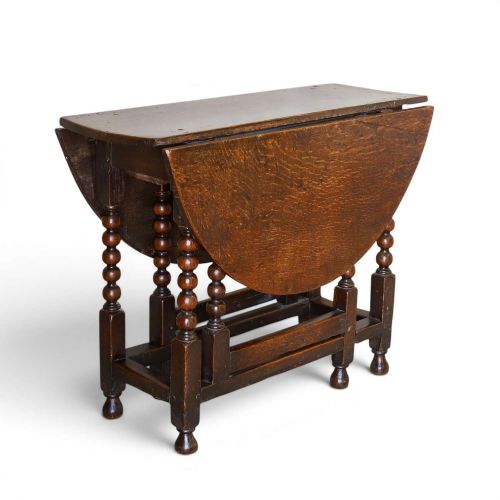
Turnery defined the upright supports, utilising bobbin turned legs and turned baluster legs to add decorative detail to the structural framework. These shaped legs pivoted outward to hold the hinged drop leaves securely in place.
Seventeenth Century Drop Leaf Retail Price Guide 2026
Typical asking prices for seventeenth century drop leaf among the pieces listed under this phrase on Sellingantiques today, from the lower quarter to the upper quarter. They describe what is for sale here now, not the wider market.
Some tables double as supper companions, folding away discreetly once the ale is finished and the guests depart.
What varies in quality
Construction scale and timber selection divide the standard of these tables, separating large dining pieces meant for formal rooms from smaller utility tables. Grain figures in the oak and walnut surfaces dictate visual depth, while the execution of the turnery shapes the overall character.
The structural integrity of the pivoting gate mechanism and the preservation of original plank tops determine the caliber of each piece. Superior examples maintain balanced proportions between the fixed centre section and the folding leaves.
The Seventeenth Century Drop Leaf Glossary
- Gateleg table
- A table with hinged leaves supported by legs that swing outward like a gate to hold the flaps up.
- Bobbin turned
- A style of leg shaping created by carving the timber into a series of rounded, spool-like shapes.
- Baluster leg
- A vertical support member shaped with a swollen or vase-like contour, common in seventeenth century furniture.
- Drop flap
- A hinged section of a tabletop that lowers downward when not needed for extended surface space.
- Credence table
- A specialised folding table style associated with the period, often featuring a semicircular top when open.
Seventeenth Century Drop Leaf: Frequently Asked Questions
What is a gateleg table?
A gateleg table is a form of furniture featuring fixed central leaves and hinged drop leaves on either side. These folding flaps are supported by hinged legs that swing outward to hold the tabletop open.
When not in use for meals, the legs swing back inward and the leaves drop down to save floor space.
How are these tables used?
These tables function primarily as dining or supper surfaces in domestic rooms, expanding to accommodate multiple diners when needed. The folding design allows them to sit compactly against a wall between meals.
Smaller variants serve as side tables or occasional surfaces within living spaces.
What woods were used?
Cabinet makers built these pieces predominantly from solid oak and walnut timber. These dense hardwoods provided the structural strength required for large dining tables and pivoting leg mechanisms.
Iron and brass components frequently appear as hinges or structural supports.
How do I spot bobbin turned legs?
Bobbin turned legs feature distinctive wooden mouldings carved into a sequence of rounded, spherical shapes resembling spools of thread. This form of decorative turnery defines the profile of the vertical supports.
It stands apart from straight or plain baluster legs through its repetitive, rounded silhouette.