


Seventeenth Century Dining Chairs
Seventeenth century dining chairs are robust seating pieces built from solid oak and walnut, offering deep historical character to any room.
Seventeenth Century Dining Chairs
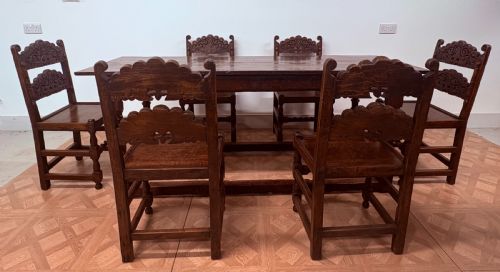
When searching for seventeenth century dining chairs, buyers encounter sturdy seating pieces spanning actual seventeenth century items alongside later revivals from the nineteenth and early twentieth centuries. The primary forms include joined oak backstools, armorial clan chairs, and carved side chairs originating from regions such as Yorkshire, Lancashire, and Wales.
The genuine period examples appear alongside Tudor Revival, William & Mary style, and Victorian revival sets made later. Single chairs, matched pairs, and larger dining sets emerge across the listings in oak and walnut.
How they were made
Makers utilised solid oak and walnut, shaping frames through joined construction rather than modern gluing methods. Regional variations display carved ornamentation typical of local workshops across Britain.
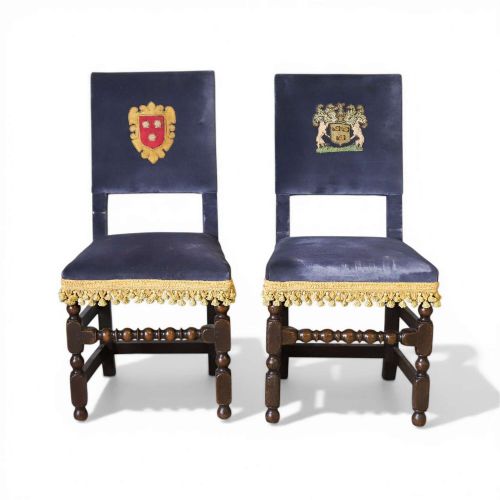
Upholstery materials such as leather, velvet, cane weaving, and tapestry appear alongside metallic fringe, fixed to frames that often feature high backs and turned wooden supports.
The listings feature seventeenth century pieces alongside revival items dated to 1890, 1910, and 1920, constructed in oak and walnut.
What varies in quality
The distinction between items rests in the integrity of the timber and the depth of the original carving on the backstools and side chairs. Regional characteristics, such as the specific regional turning found in Yorkshire or Lancashire pieces, alter the desirability of a set.
Condition of original elements like cane weaving, leather, or velvet upholstery separates standard production items from pieces retaining significant historical fabric.
Waring & Gillow
The Seventeenth Century Dining Chairs Glossary
- Backstool
- An early term for an upholstered or wooden chair without arms, essentially a stool with a back added. These form a large portion of early seating.
- Joined oak
- Furniture constructed using mortise and tenon joints secured with wooden pegs rather than metal nails. This method defines seventeenth century cabinet making.
- Farthingale chair
- A wide, armless chair produced during the seventeenth century to accommodate the wide hooped skirts worn at the time. They feature upholstered seats and backs.
- Cane weaved
- A seating method utilising woven rattan strips fitted into chair frames. This technique provides a light, flexible panel for backs and seats.
- Armorial
- Bearing heraldic crests or coats of arms, often carved into wood or embroidered on upholstery. Such details denote specific family commissions.
Seventeenth Century Dining Chairs: Frequently Asked Questions
Are these chairs comfortable for daily use?
Seventeenth century dining chairs generally feature upright wooden backs and firm seats upholstered in leather, velvet, or cane, offering a very different sitting posture compared to modern cushioned dining seats.
Buyers planning to use them daily often select matched sets or sturdy revival pieces that accommodate extended sitting while retaining their historic aesthetic.
How do I spot a revival piece?
Revival pieces from the nineteenth and twentieth centuries often replicate earlier Jacobean or Tudor styles using machine-cut timber elements and standardised hardware.
Examining the underside, peg construction, and wear patterns helps distinguish seventeenth century originals from later revival interpretations.
What is a backstool?
A backstool is an early form of seating that resembles a stool with the addition of a tall vertical backrest, typically without arms.
These pieces were common in seventeenth century households and served as functional seating around dining tables.
Can I buy them in sets?
Listings include matched pairs and larger sets of four or six chairs, alongside single pieces and occasional armorial items.
Original matching dining sets from the seventeenth century are uncommon, so many larger groups consist of period-appropriate matches or revival sets.