
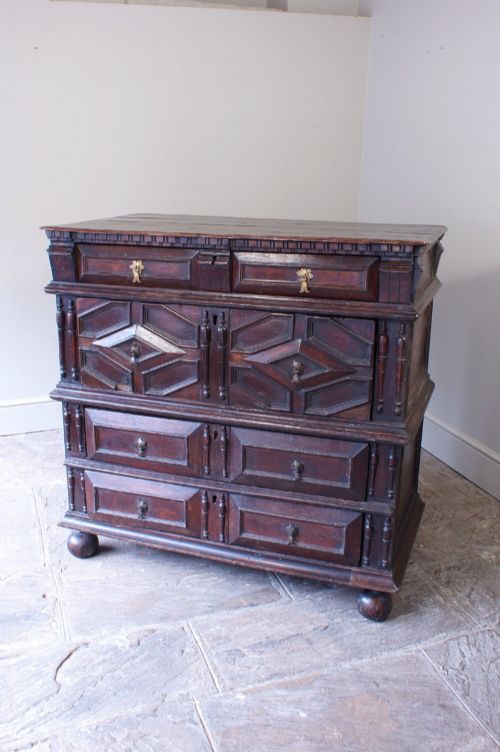


Seventeenth Century Bureau
A seventeenth century bureau brings gravity and working history to a room, offering sloping lids and fitted compartments for daily correspondence.
Seventeenth Century Bureau
When you search for a seventeenth century bureau, you encounter heavy timber writing furniture designed for domestic administration and the secure storage of papers. These pieces span early regional forms in solid timber to elaborate later case furniture produced during the reigns of Charles II and William and Mary.
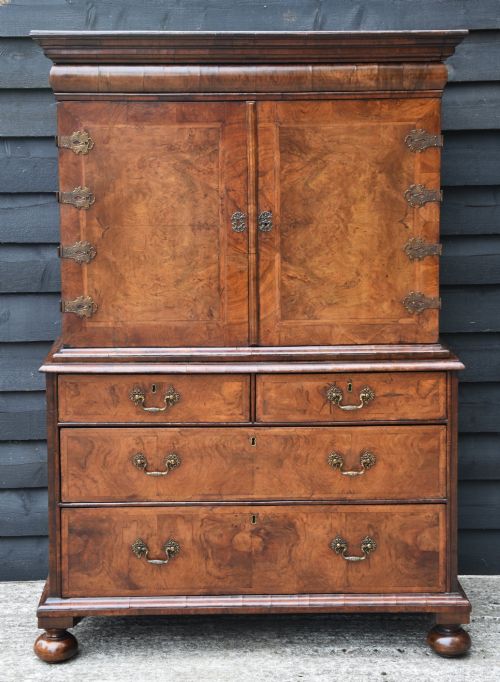
The version you are most likely to meet on this page combines a fall-front desk section with tiers of drawers, executed in oak or walnut with various periods of revival work also present. Alongside dedicated writing bureaux, the selection encompasses related forms such as bureau bookcases, cabinets on chests, and strong boxes.
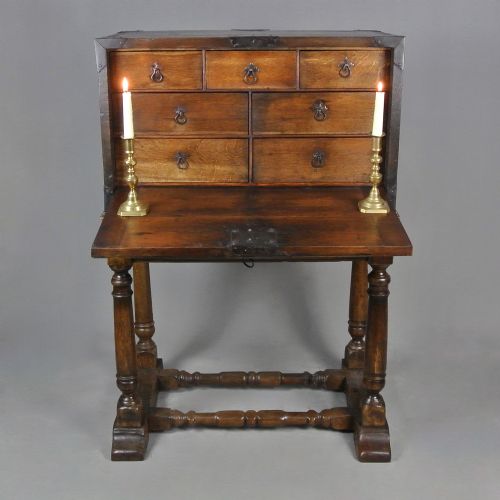
The regional and stylistic origins vary from strict English oak geometries to continental influences like Spanish Renaissance varguenos on stands. Buyers find both period originals dating from the sixteen-fifties onward and later twentieth-century Jacobean revival interpretations.
How they were made
Makers constructed these carcases primarily from solid oak and walnut, often applying burr walnut veneers and intricate wood marquetry or inlay to primary display surfaces. The timber choice dictates the structural weight and the surface grain character visible today.
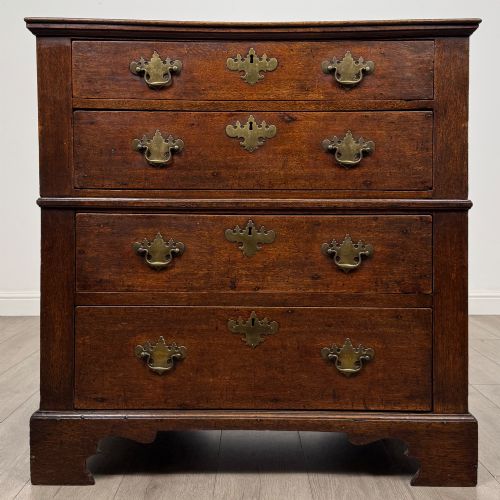
Cabinetmakers utilised brass for drop handles, escutcheons, and hinges, while iron and wrought iron appeared on internal mechanisms, strong boxes, and structural bracing. Surface enrichment relied on geometric moulding, carved panels, and contrasting veneers rather than applied paints.
Listings span four distinct periods: seventeenth century originals, seventeen-hundreds transitional work, nineteen-twenties revivals, and select unmatched dates.
What varies in quality
The sophistication of the timber preparation and veneer selection separates standard utility pieces from exceptional examples. Finer items display carefully matched burr walnut or complex marquetry patterns that wrap across the fall-front and drawer fronts.
Joinery execution and the preservation of original mounts, handles, and stands determine the standing of a piece within the range. The integrity of the internal pigeonholes, small drawers, and secret compartments further defines the standard of craftsmanship.
The Seventeenth Century Bureau Glossary
- Bureau bookcase
- A dual-purpose case piece featuring a sloping writing flap above drawers, surmounted by a shelved upper cabinet with doors. This form evolved to house growing libraries and correspondence collections.
- Vargueno
- A traditional Spanish cabinet with a drop-front lid enclosing numerous small drawers and compartments, typically mounted upon a dedicated wooden stand. These pieces often display ornate ironwork and bone inlay.
- Marquetry
- The art of applying decorative veneer pieces in wood and other materials to form geometric or floral patterns across a surface. Master cabinetmakers used this technique to catch the light on principal facades.
- Strong box
- A heavy timber and iron-banded container designed for safeguarding valuables and important documents before standard domestic safes existed. They rely on robust joinery and secure internal locking mechanisms.
- Geometric moulding
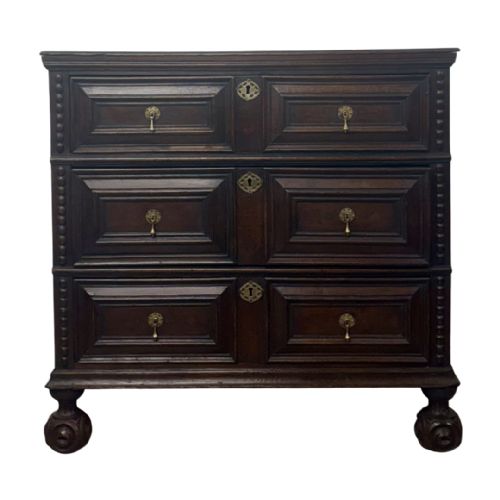
- Raised wooden mouldings applied in rectilinear patterns to drawer fronts and door panels, characteristic of mid to late period case furniture. This technique added depth and shadow to otherwise plain timber surfaces.
Seventeenth Century Bureau: Frequently Asked Questions
How do I identify a period bureau?
Examine the timber construction methods, drawer linings, and overall structural patination. Period pieces display hand-cut joinery and timber movement consistent with centuries of age.
Compare the hardware fixings and secondary woods with documented examples from the same reign or decade. Revival pieces from later centuries often reveal machine processing or inconsistent wear patterns underneath.
Where should I place a bureau?
Position the piece away from direct sunlight and steady heat sources to protect vulnerable walnut veneers and dry oak. Allow sufficient clearance behind the fall-front flap for comfortable writing access.
These desks function well in studies, libraries, or quiet corners of living spaces where the downward slant does not obstruct primary room circulation.
How do I care for walnut veneer?
Maintain a stable room humidity to prevent the delicate burr walnut veneers from lifting or splitting. Dust the surface regularly with a dry, soft cloth rather than applying silicone polishes.
Feed the timber periodically with appropriate wax to nourish the grain and preserve the historic finish built up over generations.