







Seventeenth Century Bed
A seventeenth century bed offers grand timber construction and historic presence, anchoring a room with centuries of authentic English craftsmanship.
Seventeenth Century Bed
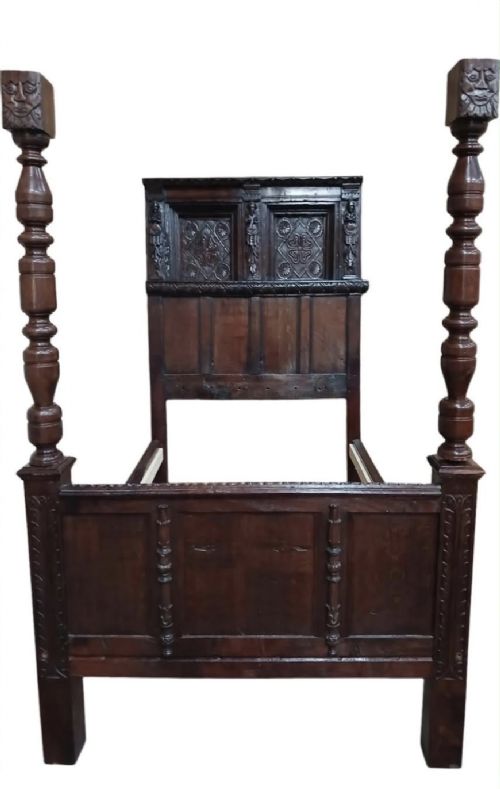
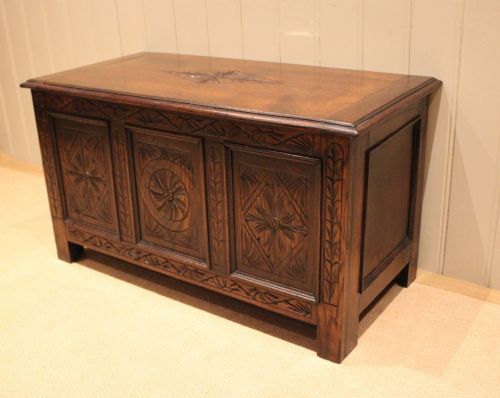
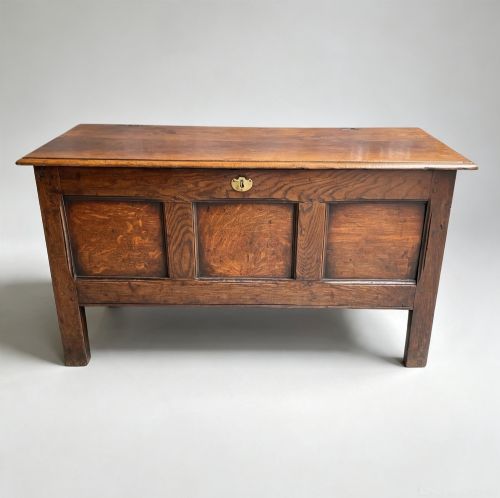
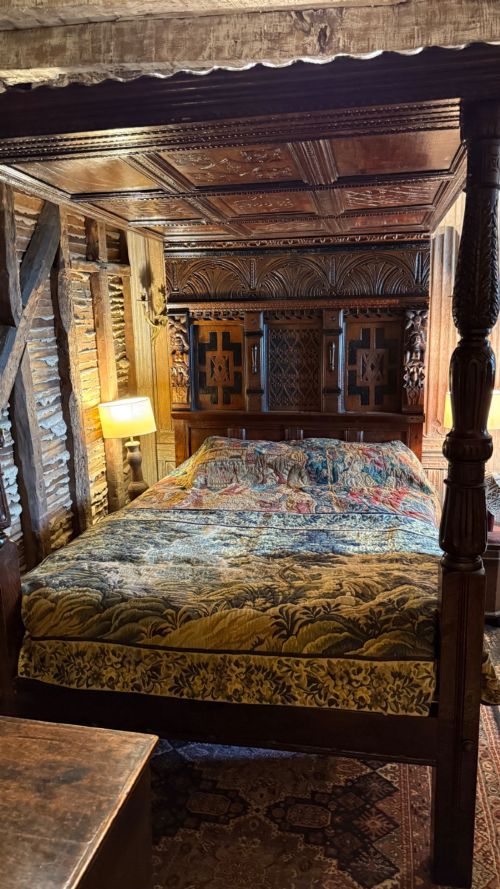
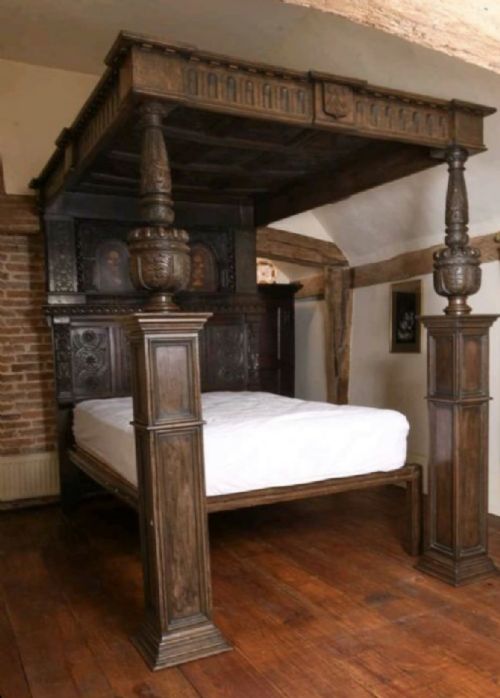
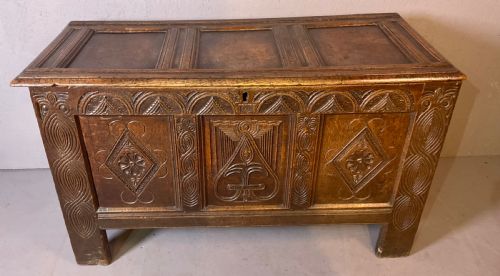
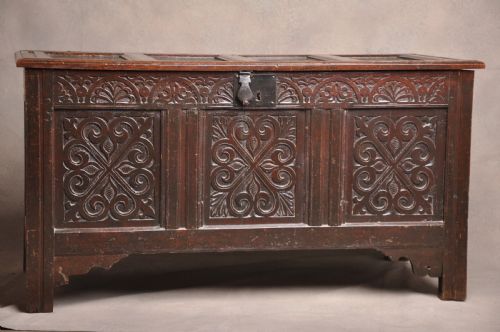
A seventeenth century bed encompasses substantial four poster tester frames and related storage pieces like carved coffers that define the period's domestic interior. Buyers searching for a seventeenth century bed frequently encounter robust oak frames with tester canopies alongside panelled blanket chests from the same era.
The material record shows genuine seventeenth century pieces alongside revival examples from the nineteenth and early twentieth centuries. Surviving frames display architectural joinery, panelled headboards, and proportions designed for historic chamber spaces.
Materials and construction
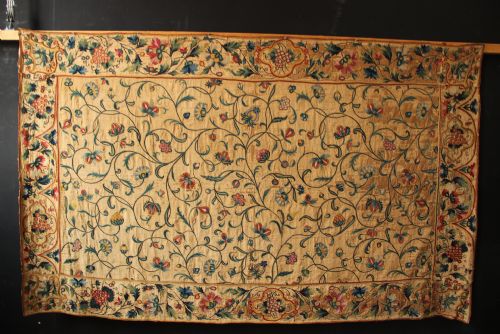
Carpenters utilised native timber, predominantly solid oak supplemented by occasional fruitwood inlay, building frames with mortise and tenon joinery secured by wooden pegs. Iron and brass hardware appears alongside natural textiles including wool and linen used for early crewelwork hangings.
Surface decoration relied on hand carving rather than applied veneers, producing deep relief panels and moulded cornices. Tester beds integrate heavy headboards and structural posts designed to support elaborate fabric tester tops.
Seventeenth Century Bed Retail Price Guide 2026
Typical asking prices for seventeenth century bed among the pieces listed under this phrase on Sellingantiques today, from the lower quarter to the upper quarter. They describe what is for sale here now, not the wider market.
Listings combine seventeenth century examples with revival pieces from 1910 and the nineteenth century, constructed in oak, iron, brass, wool, linen, and fruitwood.
Evaluating construction and survival
Quality rests in the proportion of original timber and the crispness of the hand-carved panels against later replacements or assembled elements. Pieces retaining their structural integrity and period joinery show superior craftsmanship compared to heavily restored examples.
The depth and detail of the carving distinguish finer items, alongside the presence of secondary woods and the extent of original surface patination. Original tester components and authentic textile elements significantly elevate the integrity of a bed.
The Seventeenth Century Bed Glossary
- Coffer
- A heavy wooden storage chest or blanket box constructed with panelled sides and a hinged lid. These pieces share the stylistic vocabulary of contemporary bedframes.
- Jacobean
- The stylistic period spanning the reign of James I, characterised by sturdy proportions and geometric carved decoration. This aesthetic heavily influences seventeenth century furniture design.
- Crewelwork
- Traditional embroidery executed in wool yarn on a linen or cotton twill ground. Surviving examples form historic wall hangings and bed furnishings from the period.
Seventeenth Century Bed: Frequently Asked Questions
How do I care for historic oak?
Maintain a stable room temperature and humidity to prevent the solid timber from splitting or warping over time. Apply traditional beeswax sparingly to nourish the grain without building up modern synthetic layers.
Avoid placing timber furniture near direct heat sources or in strong sunlight. Dust regularly with a soft, dry cloth to protect the historic patina.
Will a historic bed fit modern mattresses?
Many surviving four poster beds accommodate standard modern mattress sizes, though custom support bases are often required inside the historic frame. Check internal dimensions carefully before purchasing.
Historic bed dimensions differ from modern standards, occasionally requiring bespoke mattress manufacture to fit the timber uprights and rails accurately.
What is a crewelwork hanging?
Crewelwork consists of multicoloured wool embroidery stitched onto a sturdy linen foundation. These textiles provided insulation and decoration in historic chambers.
Original textiles require protection from direct light and dust to preserve the delicate wool fibres and historic dyes.
How do I distinguish revival pieces?
Nineteenth and twentieth century revival items often feature machine tooling marks, different joint construction methods, and lighter surface patination than seventeenth century work. Examine the interior construction and timber seasoning for clues.
Style names such as Jacobean Revival indicate later reproduction work rather than original seventeenth century manufacture, though construction standards can still be high.