
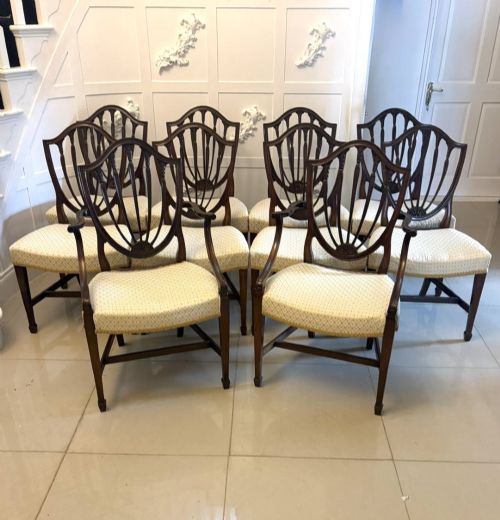
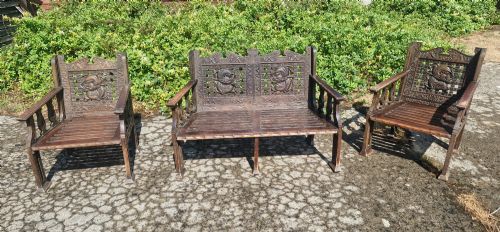
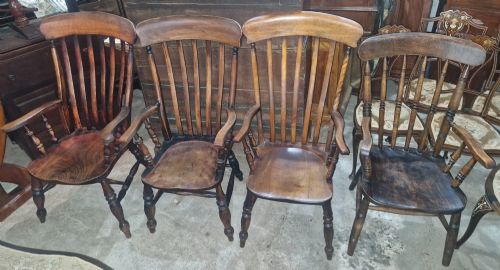
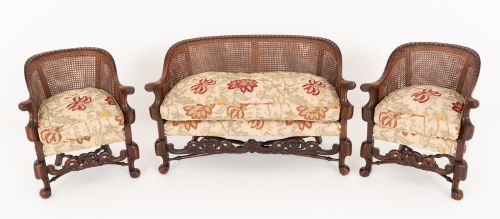
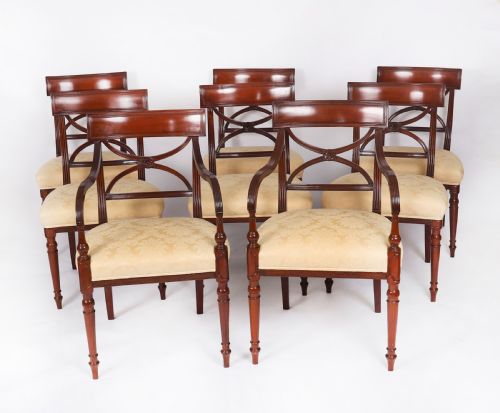
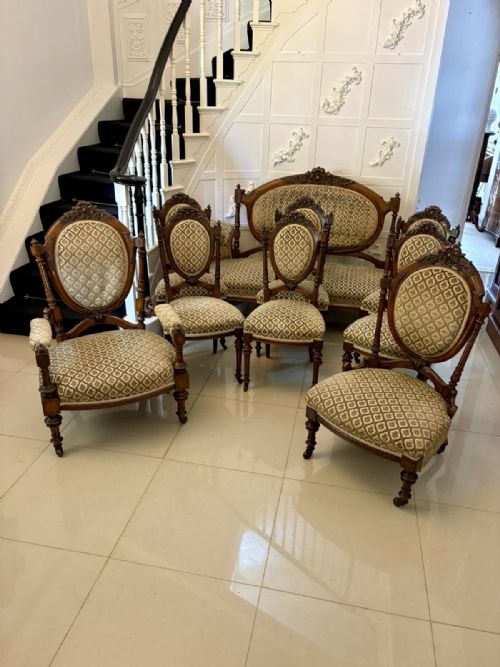
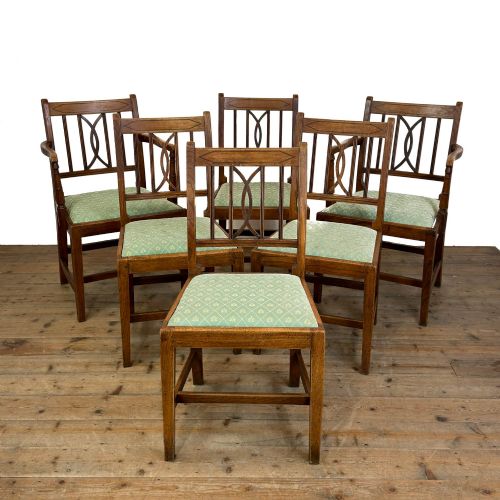
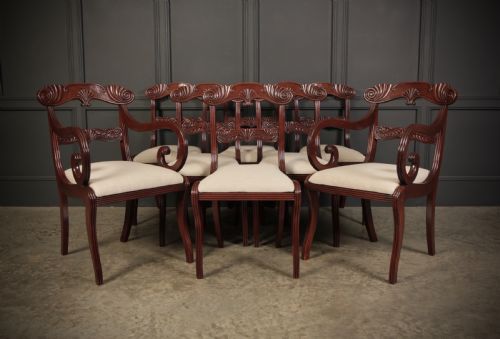
Set of Wooden Armchairs
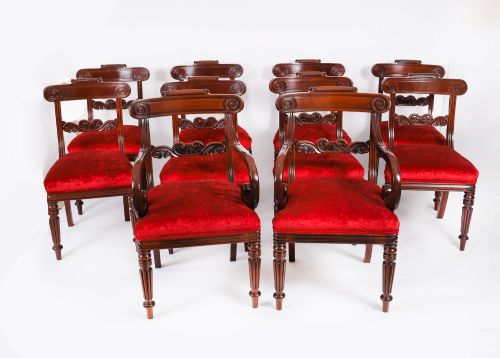
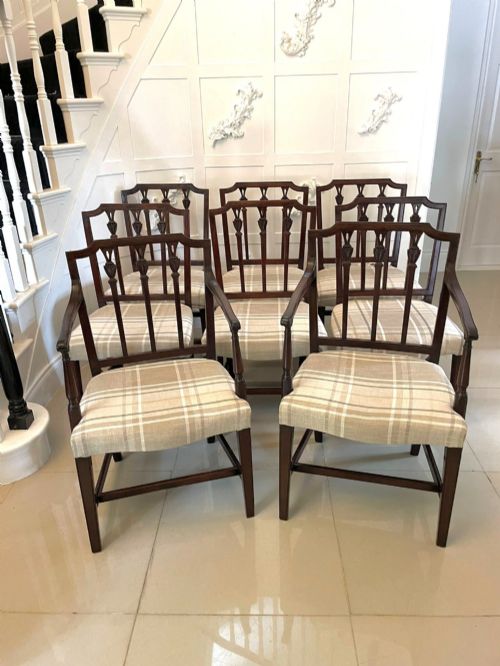
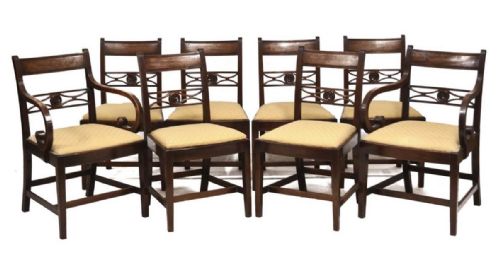
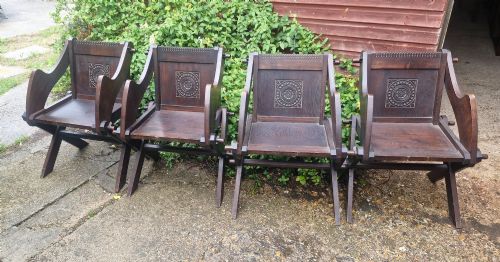
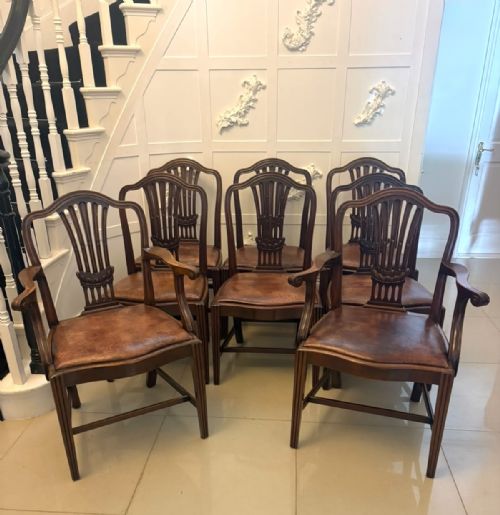
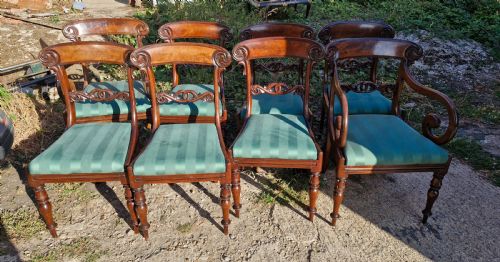
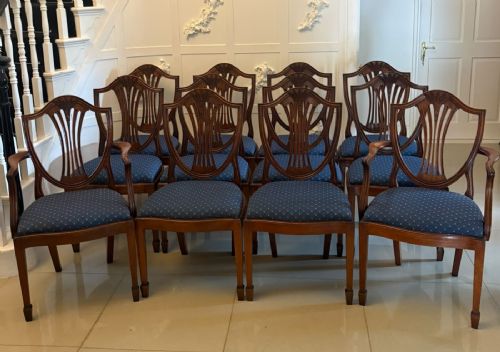
These seating groups deliver matched pairs of carvers and single chairs across dining rooms and parlours, meeting the demand for a set of wooden armchairs.
Set of Wooden Armchairs
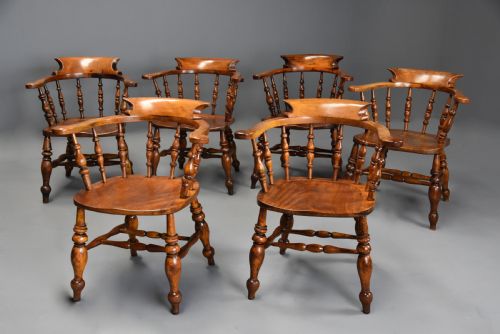
When you search for a set of wooden armchairs, you encounter configurations that range from modest groupings of four up to twelve or sixteen matching seats. These pieces predominantly take the form of dining sets combining single chairs with matching carvers, alongside dedicated suites of Windsor, captain's, or smoker's bow armchairs.
Woods and Construction
Makers utilised solid timbers native and imported, selecting mahogany for formal dining seats and combining ash, elm, yew, and alder for vernacular Windsor and ladderback forms. Brass fittings appear occasionally on castors or hardware, while seats frequently incorporate rush, carved wood, or upholstery in leather, fabric, and velvet.
Traditional joinery methods such as mortise and tenon construction secure the frames, while steam-bending shapes the curved backs of Windsor armchairs and hoop-back captain's chairs. Crinoline stretchers and H-stretchers reinforce the leg assemblies of country seating to withstand daily wear.
Listings feature mahogany, oak, elm, ash, and yew across Georgian, Victorian, and Edwardian periods.
Evaluating the Seating
The hierarchy of these chairs rests on the ambition of the design and the integrity of the timber. Formal mahogany dining sets with carved shield backs or elaborate splats demand sophisticated cabinet-making, whereas provincial Windsor chairs rely on the balance of turned spindles and the grain pattern in combined yew and elm.
Completeness dictates the standing of a group, distinguishing assembled collections from sets born together with matching patination and uniform wear. Crispness in carved details and the retention of original stretchers, seats, and timber surfaces separate standard utility items from works of higher craftsmanship.
Maple And Co
The Set of Wooden Armchairs Glossary
- Carver
- An armchair designed to match a set of single dining chairs, traditionally placed at the heads of a table.
- Smoker's Bow
- A low-backed Windsor armchair with a rounded continuous arm and spindle rail, popular in the nineteenth century.
- Shield Back
- A chair back shaped like a heraldic shield, characteristic of late eighteenth-century dining furniture.
- Crinoline Stretcher
- A curved under-framing brace linking the legs of a Windsor chair to provide structural rigidity.
- Ladderback
- A chair back featuring multiple horizontal wooden slats between the upright posts.
Set of Wooden Armchairs: Frequently Asked Questions
What is a carver chair?
A carver is an armchair built to match a set of single dining chairs. They were traditionally positioned at the head and foot of a dining table.
In larger sets, two carvers typically accompany six or eight single chairs to maintain a unified appearance around the room.
How do Windsor armchairs differ?
Windsor chairs utilise a heavy wooden seat base into which legs and back spindles are wedged directly. They rely on turned parts and steam-bent bows rather than a conventional joined frame.
Ash, elm, yew, and alder feature prominently in their construction, giving them a distinct provincial character compared to formal mahogany dining seats.
How can I date these chairs?
Dating relies on combining timber choices, joinery techniques, and prevailing styles such as George III shield backs or Victorian balloon frames. Subtle shifts in leg turning and back splat design help place a set within a specific decade.
Comparing the wear patterns and construction details across all pieces in a set confirms whether they originated together.
Are these sets entirely matching?
Many sets comprise an original grouping born together in a workshop, while others are assembled later from matching components of the same period. Listings indicate whether a group forms an exact uniform set or a matched collection.
Checking the timber grain, proportions, and minor structural variations reveals if chairs were manufactured as a single commission.