




Set of Three Side Tables
A set of three side tables offers a compact stacking solution that tucks away until needed, bringing period character to any corner.
Set of Three Side Tables
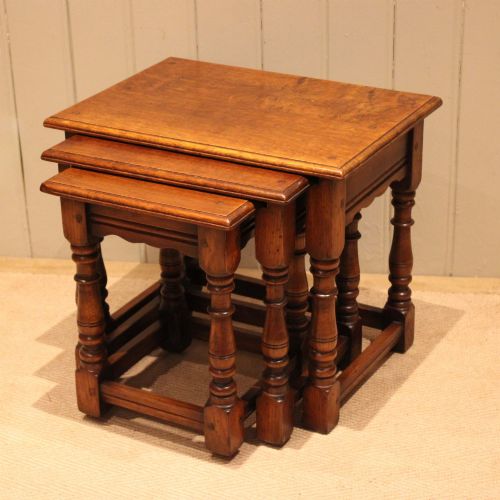
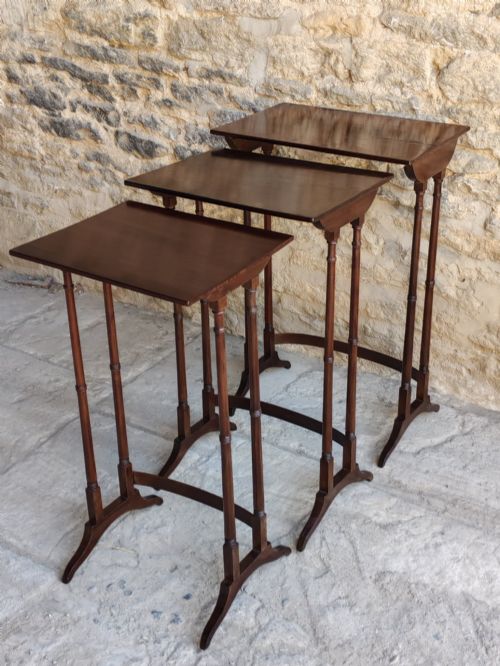
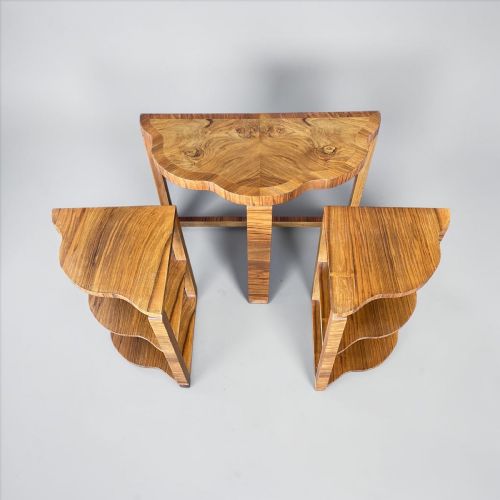
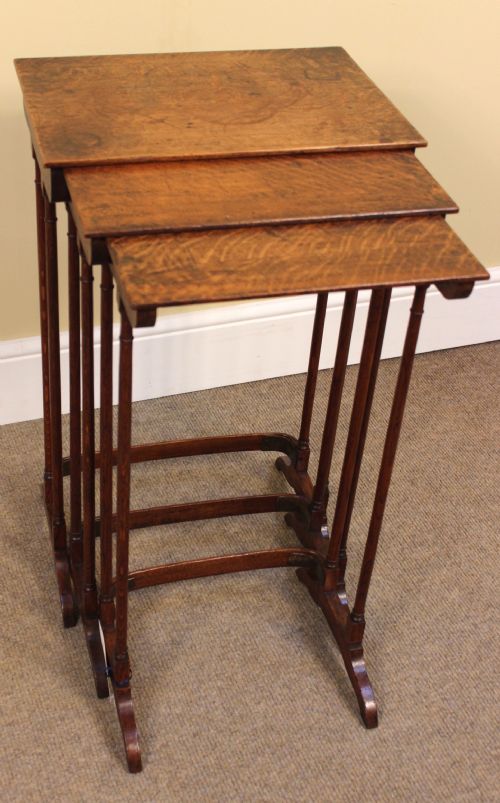
When you search for a set of three side tables, you are looking at stacking nests designed to save space while providing multiple surfaces. These pieces appear across various eras, from Georgian and Victorian designs to Edwardian and Art Deco interpretations.
You are most likely to meet mahogany or oak examples originating from the Edwardian period or the early twentieth century. These configurations function as lamp tables, coffee tables, or occasional surfaces that slide neatly beneath one another.
Materials and construction
Cabinet makers utilised dense timbers such as mahogany, rosewood, oak, and walnut to build these stacking sets. Timber selection determined both the weight of the frame and the richness of the grain visible on the top surface.
Joinery techniques ranged from simple pegged joints in earlier oak pieces to fine inlay work and lacquered finishes seen in later Edwardian and Art Deco examples. Walnut veneer and gold leaf occasionally appear on more decorative iterations.
Materials recorded include mahogany, oak, rosewood, walnut, lacquer, and gold leaf across various nesting formats.
Assessing quality and craftsmanship
The distinction between ordinary and superior pieces lies in the precision of the nesting mechanism and the stability of the smaller tables when pulled out independently. Better examples maintain tight joints and balanced proportions across all three tiers without rocking.
Surface finishing and timber selection further separate standard production from high-grade workshop output. Finer tables display carefully matched wood grains, subtle inlay, and clean carving rather than heavy, uniform staining.
Heal's
The Set of Three Side Tables Glossary
- Nest of tables
- A group of graduated tables designed to fit one beneath another to save floor space. This form became particularly popular during the Georgian and Edwardian periods.
- Inlay
- The technique of embedding pieces of contrasting timber, shell, or metal into a solid wood surface to form decorative patterns. Edwardian makers utilised this method extensively on mahogany tops.
- Chinoiserie
- European imitation of Chinese artistic motifs, frequently involving lacquer and gold leaf. Examples appear on twentieth-century tables adopting Queen Anne style influences.
- Veneer
- A thin layer of superior wood glued to a base timber to provide a decorative exterior. Burr walnut veneer creates distinctive swirling patterns on table tops.
Set of Three Side Tables: Frequently Asked Questions
How do I use a set of three side tables?
These tables stack together as a single unit to save space in a sitting room or hallway. When guests arrive, you simply pull out the smaller tables to hold drinks or lamps.
They function best beside a sofa or armchair where surface space is limited. Their mobility allows you to move them around the room as occasional tables during the evening.
What is the difference between Edwardian and Georgian tables?
Georgian versions typically feature heavier mahogany frames with straightforward lines and solid timber construction. They reflect the formal design standards of the late eighteenth and early nineteenth centuries.
Edwardian examples often incorporate lighter proportions, delicate string inlay, and occasionally satinwood or walnut. These later pieces show the influence of revival styles adapted for smaller middle-class homes.
How do I identify Art Deco tables?
Art Deco pieces display geometric forms, clean lines, and distinct materials from the interwar period. They depart from traditional period revival shapes in favour of stylised motifs.
You may encounter teak surfaces carved with animal figures or streamlined walnut structures. These tables rely on bold silhouettes rather than intricate surface carving.
Are these tables sturdy enough for daily use?
Solid timber construction in oak and mahogany provides the necessary strength for routine placement of lamps and cups. The smaller nested tables derive stability from closely fitted stretcher rails beneath the top.
While vintage frames handle normal domestic weights, avoiding excessive loads on the smallest tier preserves the glue joints. Regular use benefits from placing them on level flooring to prevent rocking.