



Geometric Wooden Side Tables
Geometric wooden side tables bring pattern and utility together, spanning Victorian parquetry to Art Deco oak forms.
Geometric Wooden Side Tables
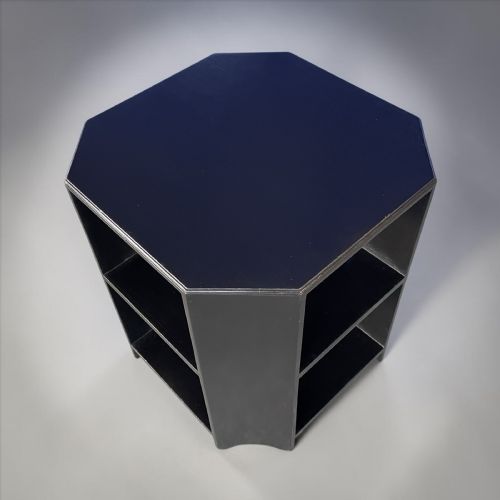
When you search for geometric wooden side tables, you encounter an array of occasional tables, lamp tables, and small bedside pieces spanning several centuries. The selection ranges from late Georgian hand-painted tops to 1930s Art Deco octagonal tables and Victorian parquetry designs.
You are most likely to meet pieces from the nineteenth century and the 1930s on this page. These take forms such as nests of tables, hexagonal Syrian and Moorish tables, and compact three-tiered centre tables suited to daily placement.
Materials and Construction
Cabinet makers utilised a diverse palette of timbers including walnut, oak, satinwood, ebonised wood, and various specimen woods. These were constructed into solid bases or veneered surfaces to support intricate decorative programmes.
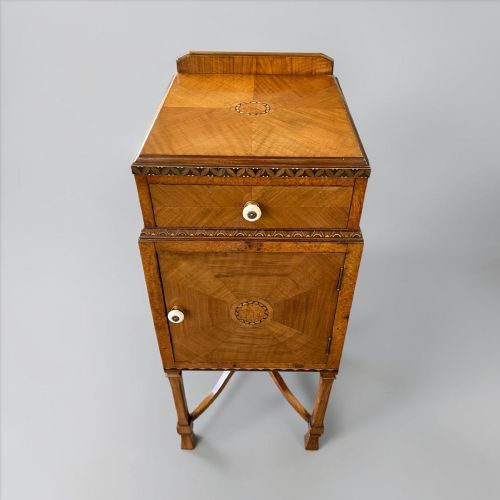
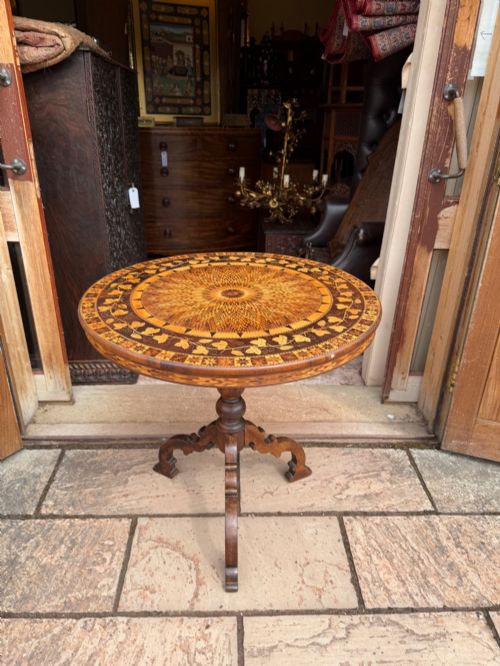
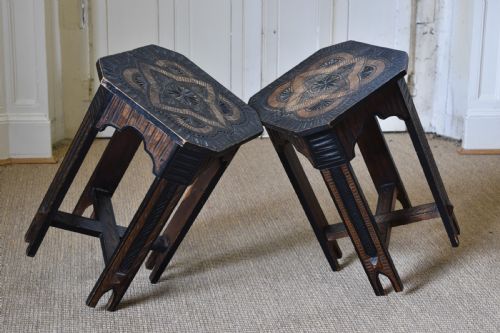
Decoration relied heavily on marquetry, parquetry, and inlay utilising bone, mother of pearl, and contrasting woods, alongside chip carving and hand-painted geometric motifs.
A late Victorian combination table doubles as a smokers' cabinet, keeping your parlour habits neatly geometric.
Assessing Quality and Execution
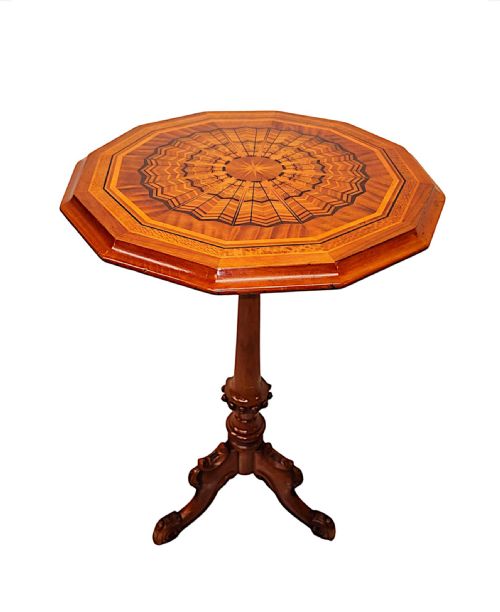
The distinction between tiers of quality rests upon the precision of the inlay and the selection of timber veneers. Specimen wood arrangements and complex parquetry require exact joinery and alignment to succeed.
Execution of decorative surface work, such as Moorish bone and mother of pearl detailing or Italian Sorrento geometric patterns, dictates the distinction between standard production and master craftsmanship.
Gillows·Heal's·Anton Seuffer
The Geometric Wooden Side Tables Glossary
- Parquetry
- Geometric mosaic woodwork arranged in regular patterns like squares, triangles, or lozenges. This technique creates structured surface decoration across table tops.
- Marquetry
- The art of applying small pieces of veneer to a structure to form decorative patterns and pictures. It differs from parquetry by forming pictorial or floral designs alongside geometric ones.
- Specimen wood
- Furniture constructed from or inlaid with a multitude of different native and exotic timbers. Collectors prize these for their natural colour variations.
Geometric Wooden Side Tables: Frequently Asked Questions
What periods do these tables represent?
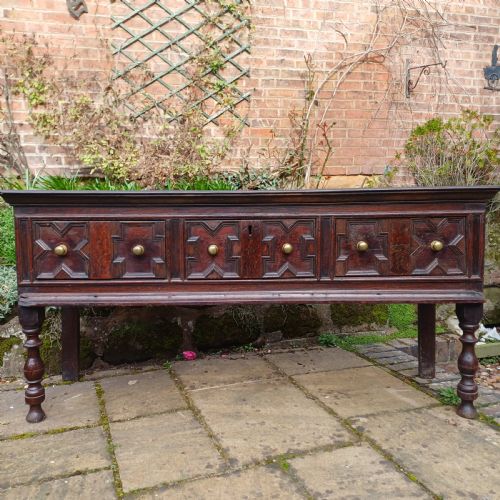
The pieces span from the late seventeenth century through the Georgian and Victorian eras into the early twentieth century and the 1930s.
Victorian and Edwardian examples sit alongside earlier oak pieces and later Art Deco designs.
How were hexagonal tables used?
Hexagonal and octagonal tables served as occasional, lamp, or centre tables in Victorian and Moorish revival interiors.
Their multi-sided shapes accommodated intricate parquetry and mother of pearl inlay visible from multiple angles.
What distinguishes parquetry from inlay?
Parquetry uses geometric wood tiles assembled to cover a surface in repeating patterns like cubes or zigzags.
Inlay involves recessing individual pieces of contrasting materials, such as bone or exotic woods, into a solid wooden background.
Where do inlaid specimen tables originate?
Many originate from nineteenth-century Italian workshops, particularly Sorrento, known for elaborate micro-mosaic geometric patterns.
Others stem from British production or international makers utilising native timbers.