









Set of Six Framed Art
These matching sets of six framed art span centuries of printmaking and painting, offering instant wall symmetry and cohesive character.
Set of Six Framed Art
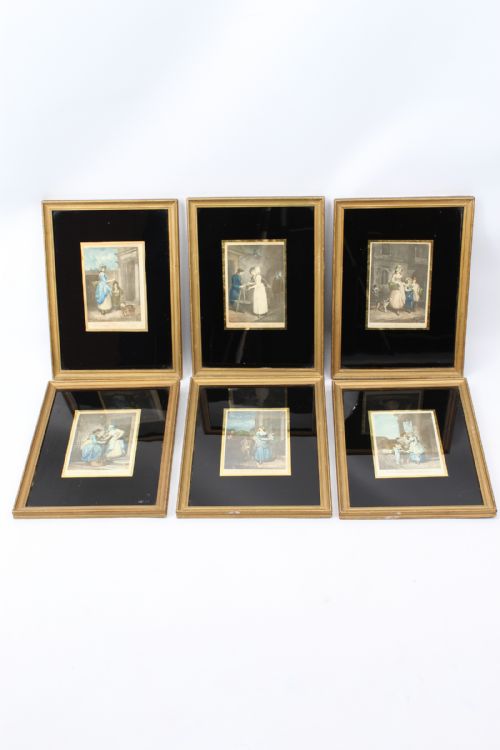
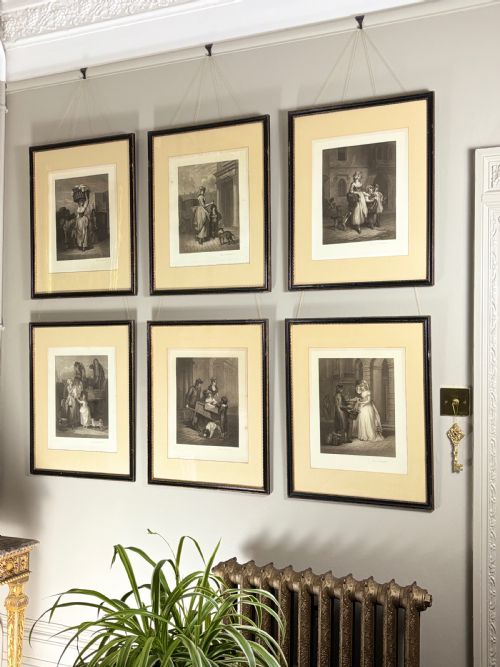
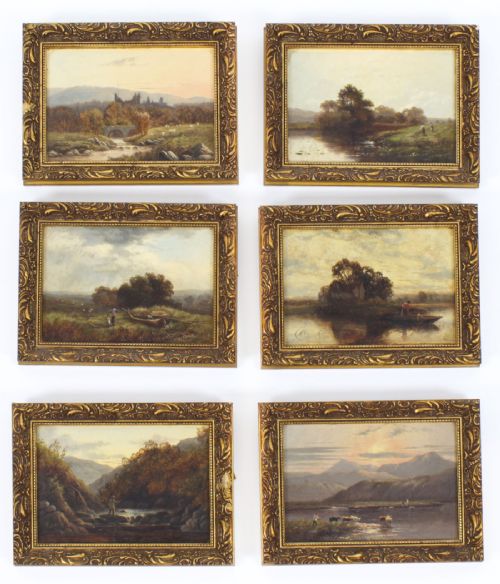
A set of six framed art brings together coordinated groups of prints, watercolours, and engravings designed to create an immediate focal point on a wall. Buyers searching for a set of six framed art encounter matching multiples ranging from Regency wax portraits and Cries of London prints to river landscapes and theatrical decoupage.
The format traditionally unites narrative series, such as coastal scenes, bird studies, or Grand Tour gouaches, framed to hang in symmetry. These groups rely on period uniformity, whether originating in the eighteenth century or during the Edwardian era.
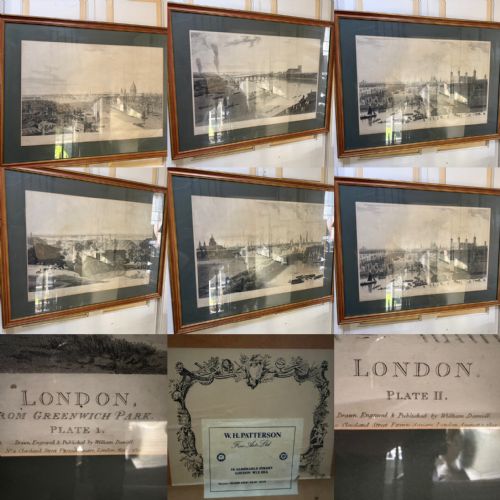
The selection on this page demonstrates how varied these groupings can be, encompassing lithographs, mezzotints, and ink works across styles from Georgian to Art Nouveau.
Materials and methods
Paper forms the primary surface for these works, whether supporting delicate watercolour washes, ink, or wax relief portraits. Printmakers utilised engraving, aquatint, and lithography to produce uniform multiples before hand-colouring or mounting the sheets.
Frames rely heavily on wood, including burr walnut and giltwood finished with gold leaf, protecting the paper behind glass. These protective surrounds often reflect the specific period of the artwork, from simple moulded timber to decorative gilt profiles.
Set of Six Framed Art Retail Price Guide 2026
Typical asking prices for set of six framed art among the pieces listed under this phrase on Sellingantiques today, from the lower quarter to the upper quarter. They describe what is for sale here now, not the wider market.
The material palette recorded in the archive combines traditional substrates of paper and wood with delicate applications of gold leaf and wax.
Judging quality in grouped works
Quality rests on the crispness of the original impression in printed works or the finesse of the brushwork in watercolours and gouache. Consistency across all six pieces determines the integrity of the set, as disparate fading or mismatched framing disrupts the visual rhythm.
The material quality of the housing matters equally, with original period frames carrying more distinction than later replacements. The preservation of the paper beneath the glass, free from heavy staining or foxing, defines the better examples.
Thomas G Appleton·Simon François Ravenet·Victor Adam·F Petitjean
The Set of Six Framed Art Glossary
- Mezzotint
- A printmaking process where the copper plate is roughened to achieve rich dark tones and subtle gradations of light. It allows for deep, velvety shadows particularly favoured for portraits.
- Aquatint
- An intaglio printmaking technique that produces tonal areas resembling watercolours through acid-biting resin on a plate. It was frequently utilised for topographical views and landscapes.
- Gouache
- An opaque water-based paint composed of pigment and a binding agent, often featuring added white for opacity. It yields vibrant matte surfaces seen in topographical and architectural studies.
- Lithography
- A planographic printing process based on the repulsion of oil and water on a flat stone or metal plate. It enabled artists to render fluid, hand-drawn lines with great fidelity.
- Decoupage
- The art of decorating a surface with paper cut-outs, varnished or lacquered over time. In theatrical contexts, it created layered, tactile imagery popular in the nineteenth century.
Set of Six Framed Art: Frequently Asked Questions
How should I hang a set of six framed art?
Arranging six pieces typically involves a balanced grid of two rows of three or a linear horizontal sequence to maintain visual harmony. Spacing should remain consistent between each frame to anchor the grouping properly on the wall.
Consider the scale of the furniture below the arrangement to ensure the grouping anchors the space effectively without appearing lost or overcrowded.
Are these frames original to the art?
Framing varies across historical pieces, with some retaining their period wood or giltwood surrounds while others have been reframed later for preservation. Examining the backing and joinery helps determine the age of the housing relative to the paper.
Matching frames across all six pieces are essential for a uniform look, even if individual mouldings show minor signs of historical wear.
How do I care for antique paper art?
Works on paper require protection from direct sunlight to prevent fading of inks, watercolours, and pigments over time. Maintaining stable indoor humidity levels also protects the paper and prevents warping inside the glazed frame.
Dust wooden frames gently with a dry cloth and avoid using liquid cleaners near the glass edges to protect the paper substrate.
What subjects are most common in these sets?
The evidence shows a strong preference for topographical views, natural history subjects such as birds and coastal scenes, and theatrical or classical portraiture. These narrative themes were produced in series specifically designed to be viewed together.
Botanical studies, grand tour landmarks, and allegorical prints also feature prominently among historical multi-plate publications.