




19th Century River Prints
These 19th century river prints capture waterways on paper through etching, lithography, and steel engraving, offering collectors historic views of Thames valleys, London reaches, and rural channels.
19th Century River Prints
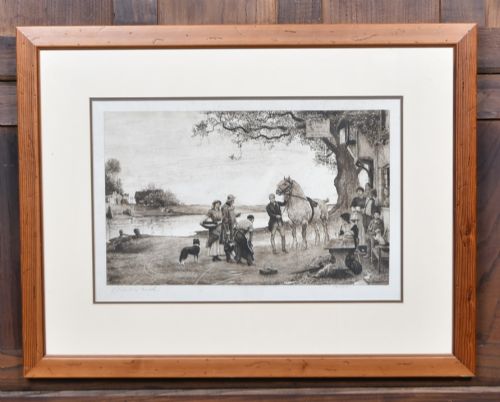
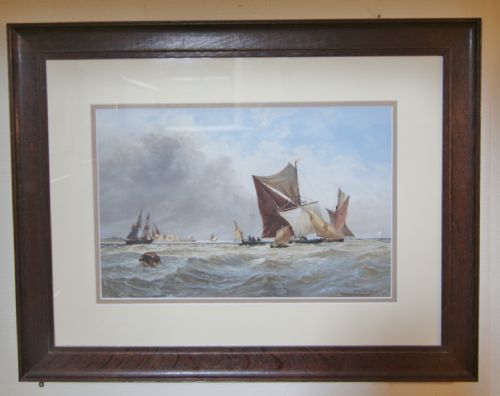
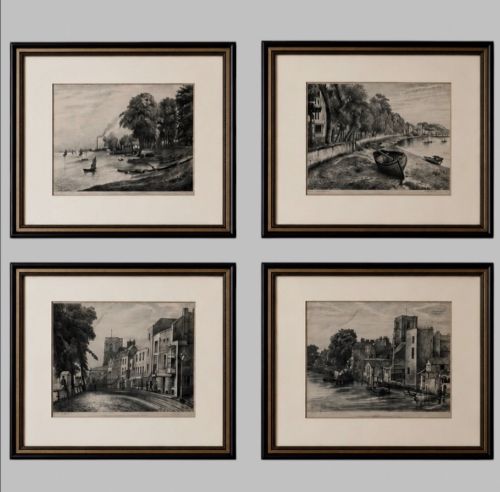
When you search for 19th century river prints, you encounter works on paper depicting waterways, ranging from individual etchings and lithographs to sets of framed views. These works document historic river scenes, including specific locations like the Thames and Chelsea.
The selections span periods from the Georgian era through the Victorian period, reflecting evolving graphic techniques of the nineteenth century. Alongside works on paper, the inventory includes related watercolours, oil paintings, and pearlware jugs featuring poetic panels.
How they were made
Makers produced these works using paper supports with printing techniques such as lithography, steel engraving, and etching, often employing specialised printers like William Day. Artists also utilised watercolour pigment and oil on canvas for related painted depictions of countryside and coastal scenes.
Framing utilised materials like oak and gold leaf to house the paper prints and watercolours, while ceramic pieces like pearlware jugs incorporated moulded bodies with lustre decoration.
19th Century River Prints Retail Price Guide 2026
Typical asking prices for 19th century river prints among the pieces listed under this phrase on Sellingantiques today, from the lower quarter to the upper quarter. They describe what is for sale here now, not the wider market.
Materials span paper, wood, glass, gold leaf, watercolour pigment, oak, and pearlware.
What varies in quality
Differentiation across the range rests on the precision of the engraving or lithographic impression and the clarity of the printed topographical detail. Sharpness of line in an etching or fidelity in a multi-sheet lithograph set distinguishes standard output from finer examples.
The prestige of the artist or printer involved, such as identified figures like Robert W. Macbeth or J.C. Burgess, alters the standing of a piece. Presentation elements like period framing in gold leaf or oak further influence the character of the object.
Alfred Young Nutt·Robert W. Macbeth·TB Hardy·William Day·J.R. Thompson·Henri Joseph Harpignies
The 19th Century River Prints Glossary
- Lithography
- A planographic printing method using a stone or metal plate to produce multiple image impressions. This technique allowed artists to circulate detailed topographical views efficiently.
- Etching
- A printmaking process where acid cuts into unprotected parts of a metal plate to hold ink. It produces fine, highly expressive lines valued by nineteenth-century printmakers.
- Steel engraving
- A technique using a steel plate instead of copper to allow for thousands of sharp impressions. Publishers utilised this method for detailed book illustrations and map views.
- Pearlware
- A type of refined earthenware developed in the late eighteenth century featuring a faint blue-tinted glaze. It served as a popular base for printed and painted ceramic jugs.
19th Century River Prints: Frequently Asked Questions
How do I identify a steel engraving?
Steel engravings show exceptionally fine, precise lines and often possess a crisp platemark impressed into the paper surrounding the image.
Printers used this durable metal plate method throughout the nineteenth century to capture intricate topographical details of rivers and towns.
Were these prints originally published as sets?
Many graphic works of this period appeared as bound volumes or portfolio collections before individual sheets were separated for framing.
Publishers frequently issued topographical series depicting sequential views of major waterways like the River Thames.
How should I display antique paper prints?
Display these works away from direct sunlight to prevent fading of the paper support and any applied watercolour pigments.
Ensure framing uses acid-free mounts to protect the historic paper from chemical degradation over time.
What distinguishes an etching from a lithograph?
Etchings rely on incised metal lines holding ink to create a distinct plate impression and tactile ink layer on the paper surface.
Lithographs depend on chemical grease-and-water interactions on a flat stone surface, producing softer tonal gradations without deep plate indentation.