



Framed Thames Landscape Art
Framed thames landscape art captures the changing light and commerce of the capital's river through historical oils and watercolours.
Framed Thames Landscape Art
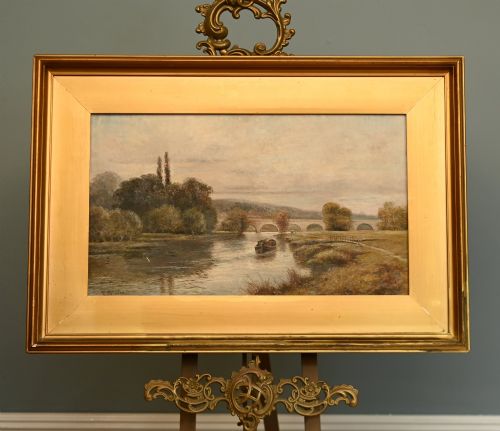
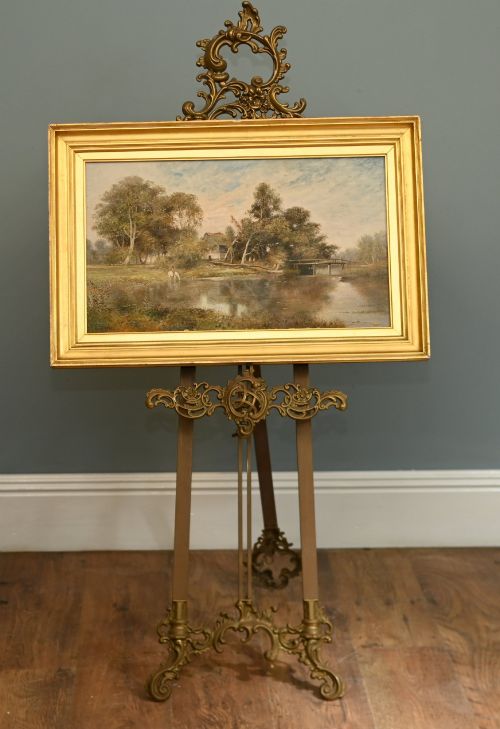
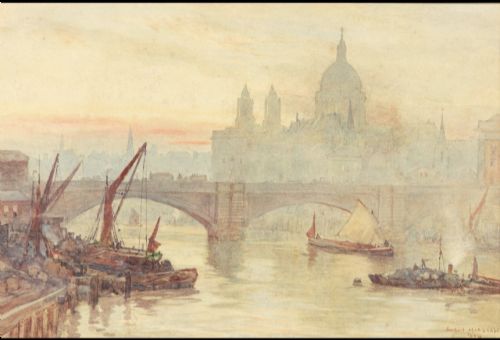
Framed thames landscape art encompasses works depicting the river from rural reaches like Windsor and Marlow to the bustling industrial pools of London. Collectors encounter watercolours and oil paintings spanning from the Georgian period through the Victorian era and into the mid twentieth century. These pieces record historical bridges, maritime traffic, and riverside architecture through various regional interpretations.
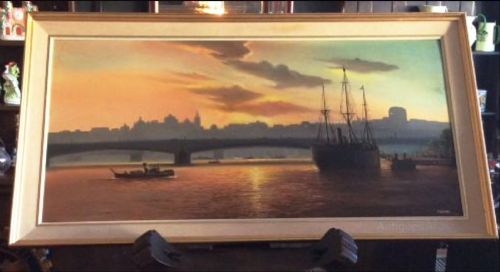
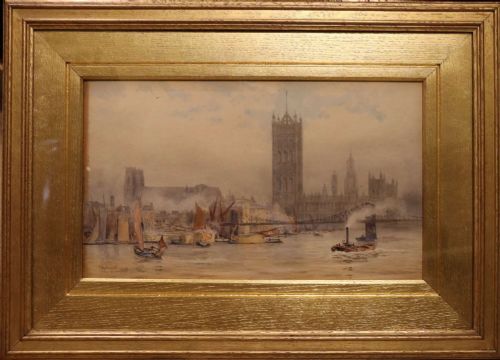
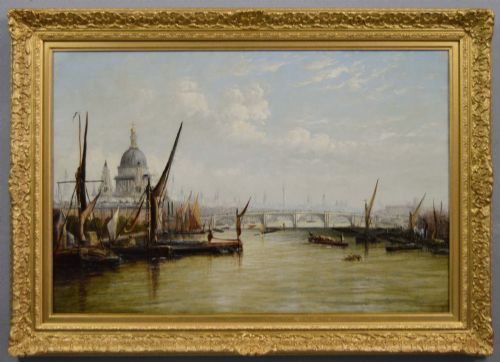
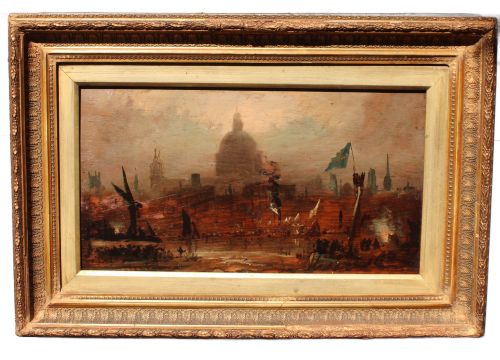
The selections on this page heavily feature Victorian and Edwardian watercolours alongside nineteenth century oil paintings on canvas or board. Subject matter ranges from quiet village lock scenes to panoramic urban vistas featuring landmarks like St Paul's Cathedral and the Houses of Parliament. Framed prints and lithographs also appear, offering accessible documentation of historic river views.
Materials and Methods
Artists relied primarily on oil paint on canvas or board, and transparent watercolour applied to paper, capturing atmospheric conditions along the water. Canvases are frequently housed in traditional wood frames enhanced with gold leaf gilding, while watercolours sit behind protective glass.
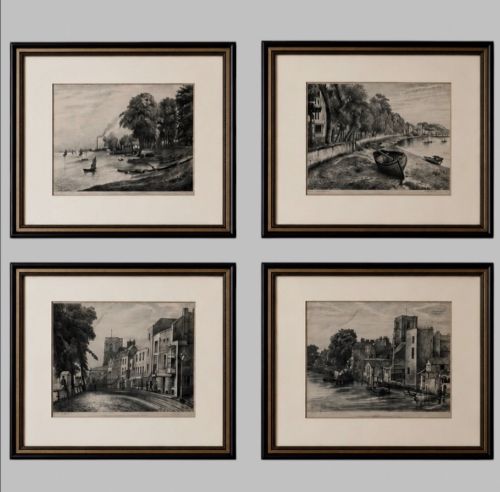
Printmakers utilised lithography and aquatint engraving to multiply topographical views, sometimes applying hand colouring to the printed paper sheets. Each medium reflects the standard studio practices of its respective period, from Georgian print runs to Victorian plein air painting.
Framed Thames Landscape Art Retail Price Guide 2026
Typical asking prices for framed thames landscape art among the pieces listed under this phrase on Sellingantiques today, from the lower quarter to the upper quarter. They describe what is for sale here now, not the wider market.
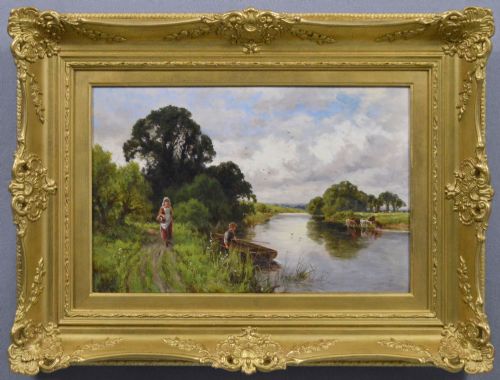
Several artists captured children fishing near Thameside villages, proving that dodging river traffic was a historic local pastime.
Evaluating Quality and Execution
Quality rests upon the artist's handling of light, atmospheric depth, and the specific topographical accuracy of the river architecture. Finer works display confident brushwork and a sophisticated balance between natural landscape elements and human activity on the water.
The integrity of the original framing, particularly period wood and gold leaf mouldings, contributes significantly to the overall standing of a piece. Condition issues such as foxing on old paper or stable craquelure on aged oil paint influence how successfully a work has survived its age.
Henry H Parker·Charles William Wyllie·Robert Winchester Fraser·Francis Moltino·Edward Henry Eugene Fletcher
The Framed Thames Landscape Art Glossary
- Aquatint
- An intaglio printmaking technique that produces tonal areas resembling watercolour washes. It was frequently employed for eighteenth and nineteenth century topographical prints.
- Foxing
- Brown spots caused by chemical reactions that commonly develop on antique paper and watercolours over time. Proper conservation helps stabilise this natural ageing process.
- Impasto
- Paint applied thickly to a canvas so that it stands out from the surface. This technique adds tactile texture to industrial riverscapes and skies.
- Lithography
- A planographic printing process using a stone or metal plate to produce multiple image impressions. It gained wide popularity for nineteenth century townscape prints.
- Topographical
- Representing specific real places with geographical accuracy rather than purely imaginary scenes. Many river views document historical buildings that have since been altered or demolished.
Framed Thames Landscape Art: Frequently Asked Questions
What periods do these river paintings cover?
The selections span multiple centuries, starting from early studies and Georgian prints up through Victorian watercolours and twentieth century oils.
Most items originate from the nineteenth and early twentieth centuries, reflecting a peak period for British landscape painting.
How were these artworks originally framed?
Period pieces typically feature wooden frames, frequently finished with gold leaf gilding to complement the traditional imagery.
Watercolours are mounted behind glass to protect the delicate paper from moisture and environmental dust.
What subjects appear most frequently in the views?
Artists focused heavily on London landmarks, historical bridges like Waterloo and Blackfriars, and busy commercial shipping traffic.
Other works explore quieter rural stretches of the waterway, depicting locks, Windsor Castle, and riverside villages.
How do watercolours differ from the oil paintings?
Watercolours utilise translucent pigments on paper to capture light skies and atmospheric river mists, requiring glass for protection.
Oil paintings utilise heavier pigments on canvas or board, offering rich textures and deeper colour saturation.