
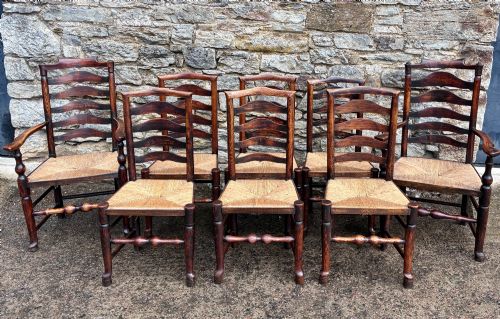
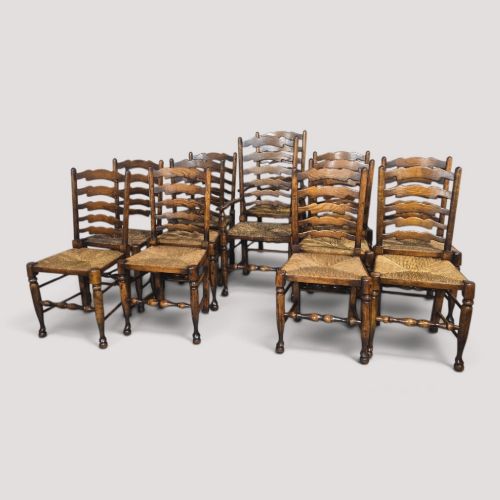
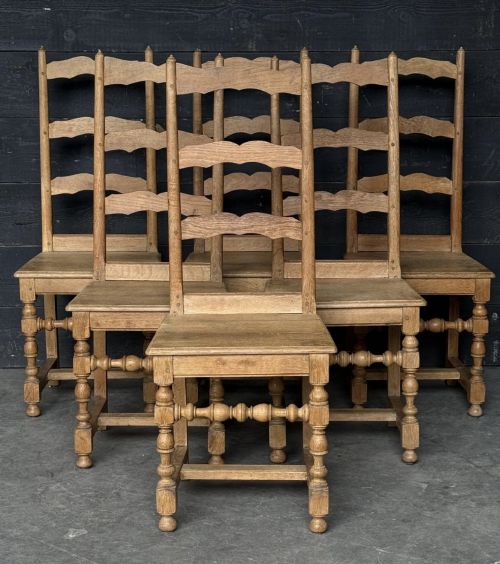
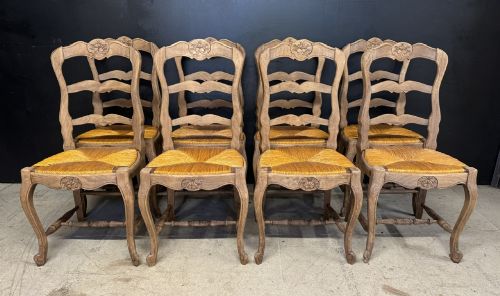
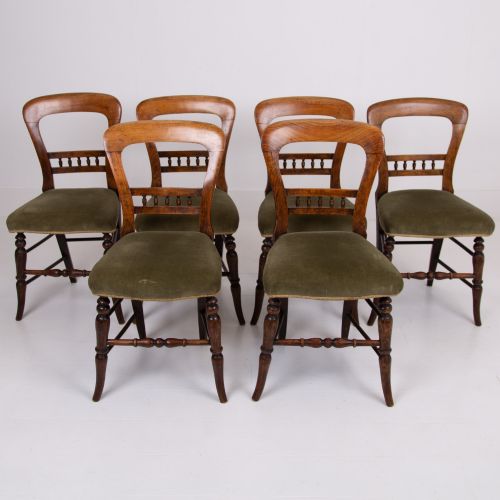
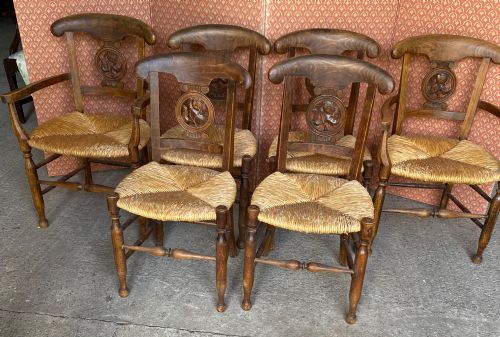
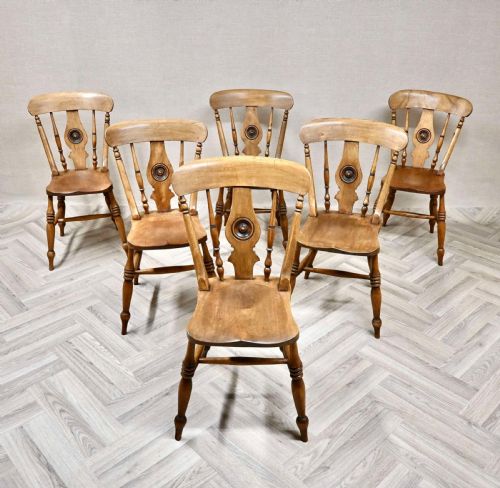
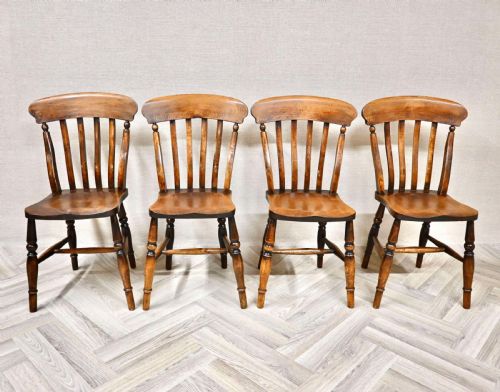
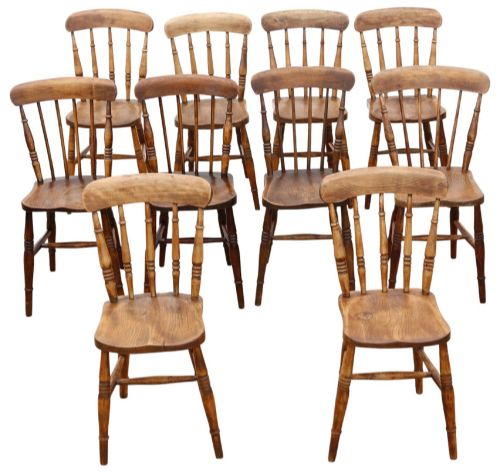
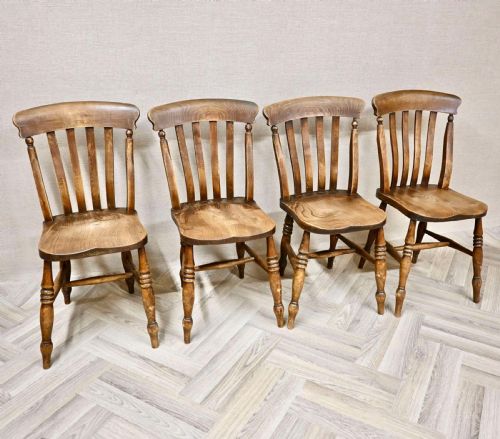
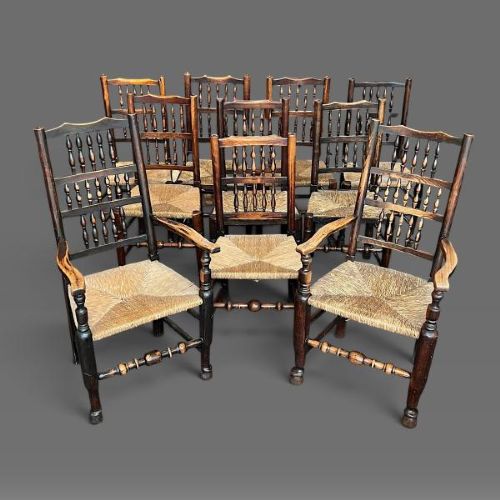
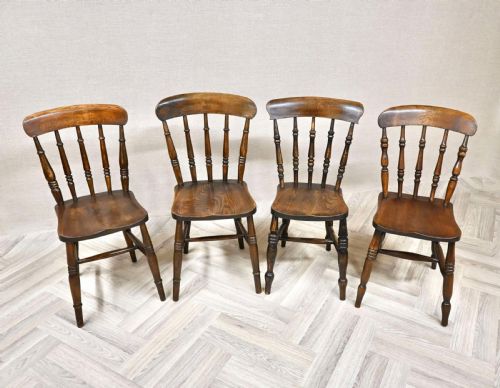
Set of Farmhouse Chairs
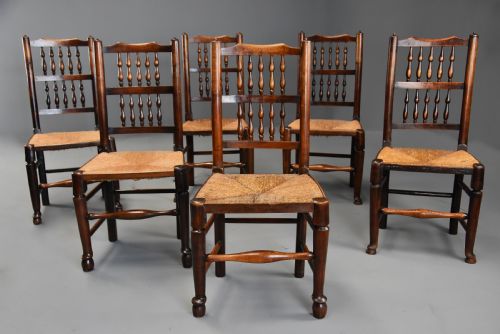
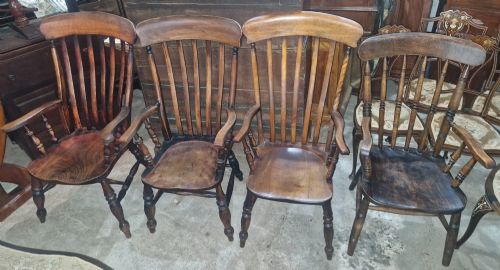
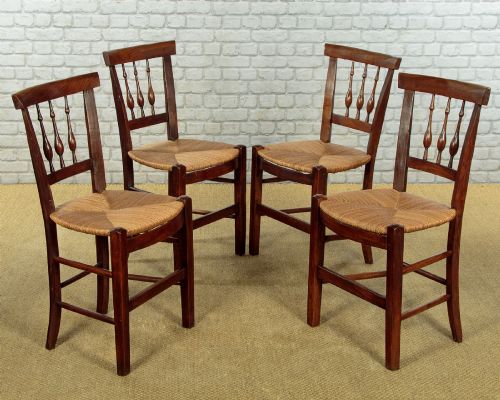
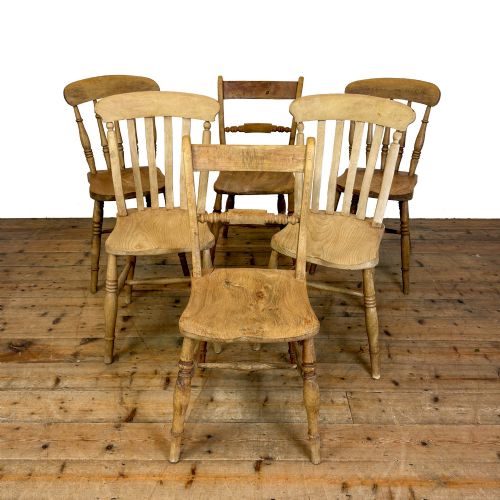
These set of farmhouse chairs bring honest utility to the table, fashioned from sturdy timbers to serve generations of daily meals.
Set of Farmhouse Chairs
A set of farmhouse chairs comprises matching or assembled groups of seating originally built for domestic labour and country dining. The selections span English, French, and vernacular traditions, originating predominantly in the nineteenth century alongside Victorian and Georgian periods.
Buyers frequently encounter Windsor variants featuring bow or lath backs, alongside ladder back and spindle back forms. These sets range from concise groups of four up to extended dining sets of ten or twelve pieces.
Regional styles emerge clearly across the selection, encompassing Thames Valley stick backs, Lancashire ladder backs, and Shropshire country models. Many groupings present as harlequin sets, gathered together by shared vernacular character rather than factory uniformity.
Materials and Construction
Chair makers relied on native hardwoods selected for specific structural demands, pairing flexible ash with durable elm seats and sturdy beech spindles. Oak and pine also feature prominently in heavier frames and country dining configurations.
Traditional joinery methods unite turned legs with sculpted solid timber seats, frequently utilising wedge-tenon joints and steam-bent components for Windsor hoops. Certain variants incorporate rush seating woven directly onto the frame for added resilience.
Listings feature eighteenth-century Georgian origins through to twentieth-century country vernacular, constructed in elm, oak, beech, ash, and rush.
Distinctions in Standard
Quality rests upon the integrity of the timber and the depth of natural surface patina accumulated through decades of domestic use. Pieces retaining their original turned stretchers and unblemished seat saddles command higher regard.
The harmony of an assembled set influences its standing, with closely matched timber grains and balanced proportions separating utilitarian seating from superior country craftsmanship.
Worksop best model
The Set of Farmhouse Chairs Glossary
- Harlequin set
- A collection of chairs assembled to match in style, period, or material, though not originally manufactured as a single batch. These groupings share common vernacular traits while displaying slight individual variations in turning and height.
- Windsor chair
- A form constructed with a solid wooden seat into which the legs and back spindles are directly bored and wedged. Regional variations include hoop backs, comb backs, and lath backs.
- Spindle back
- A chair back composed of multiple slender turned wooden rods set between a top rail and the seat. This construction provides robust support with minimal weight.
- Ladder back
- A seating design featuring horizontal slats or rails set between two upright rear posts. These slats are often curved to fit the sitter's spine.
- Rush seat
- A seating surface woven from dried marsh grasses twisted into cords. This technique creates a resilient, textured pad common in traditional country chairs.
Set of Farmhouse Chairs: Frequently Asked Questions
What defines a set of farmhouse chairs?
These chairs comprise sturdy dining and kitchen seating rooted in vernacular country traditions, constructed primarily from native timbers like elm, ash, and beech. They reflect utilitarian designs developed for everyday domestic life.
Most examples date from the nineteenth century, encompassing regional Windsor, ladder back, and spindle back forms suited to communal dining spaces.
How do I care for antique wooden chairs?
Maintain these pieces by keeping them away from direct heat sources and sudden humidity shifts, which can cause timber to split and joints to loosen. Regular dusting with a dry cloth preserves the finish.
Apply occasional applications of traditional beeswax to nourish the wood and protect the historical surface patina without sealing the pores.
What is a harlequin set?
A harlequin set is a collection of chairs that share a common period, style, or material but were not originally manufactured together as a single uniform batch. They offer a cohesive look through similar forms while displaying individual handcrafted variations.
Collectors often assemble these groups to seat larger numbers around a dining table without requiring a factory-matched suite.
How can I tell the age of these chairs?
Dating relies on observing construction techniques, tool marks, and timber wear patterns indicative of specific manufacturing periods like the Georgian or Victorian eras. Hand-turned components and pegged joinery generally point to earlier vernacular production.
Comparing the style of the backrest and the method of seat construction against documented regional types helps narrow the decade of origin.