




Set of Crystal Goblets
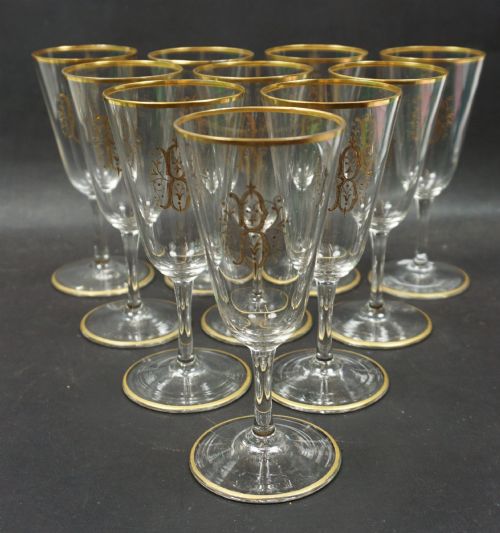
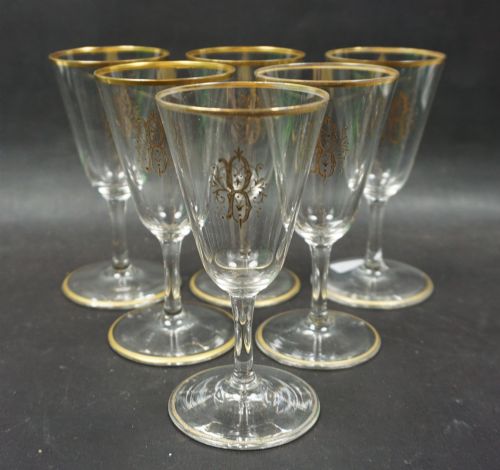
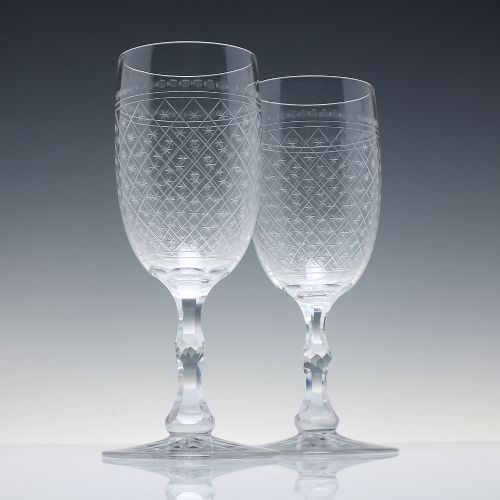
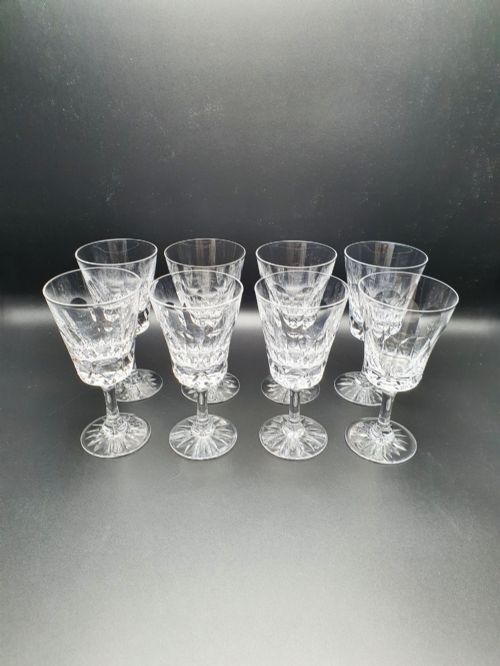
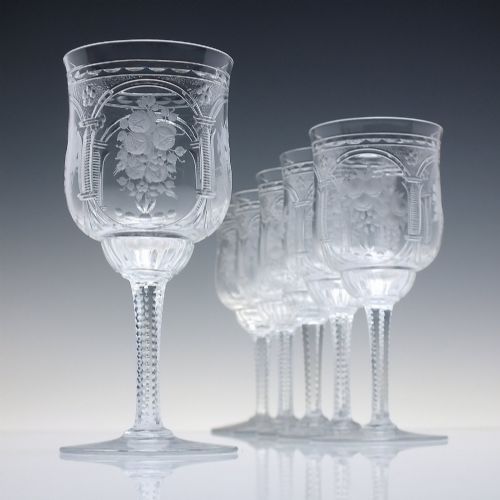
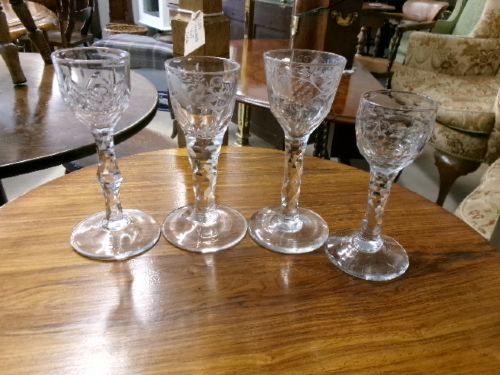
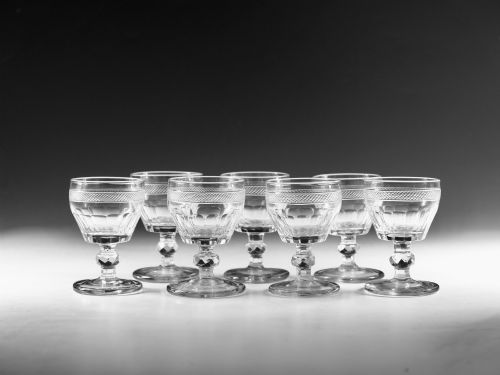
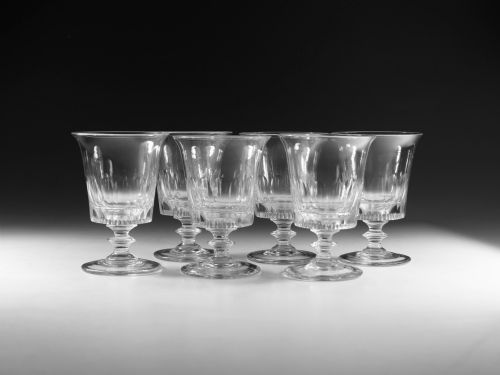
These set of crystal goblets are drinking vessels that bring both weight and clarity to the table, and collectors prize them for their brilliant light and cut surfaces.
Set of Crystal Goblets
When you search for a set of crystal goblets, you encounter drinking vessels spanning several centuries, with Victorian and Georgian examples appearing frequently alongside early twentieth-century creations. The forms range from heavy rummers with square lemon squeezer feet to tall engraved wine glass goblets and delicate cordial services.
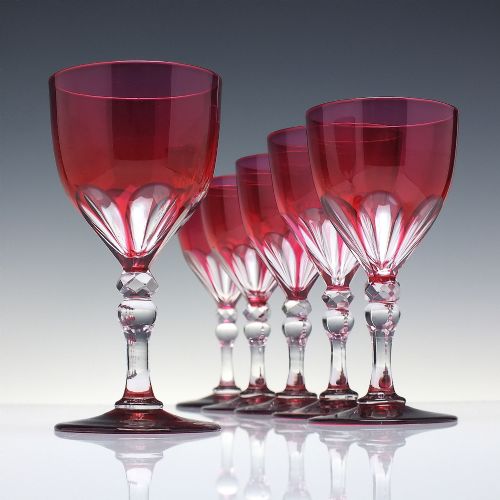
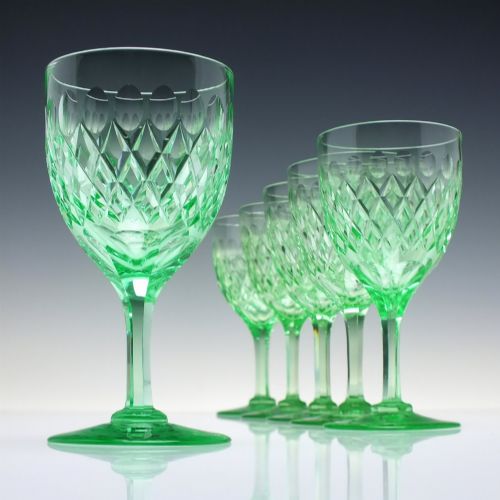
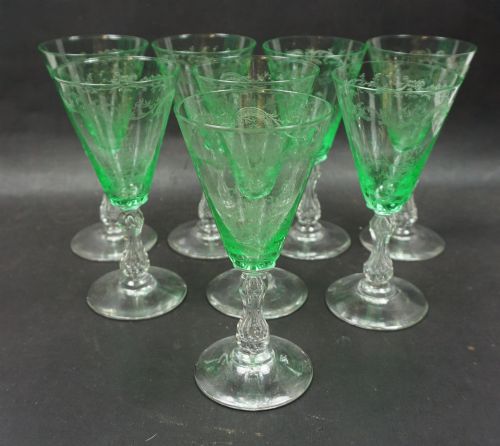
The assortment includes English, French, and German works, featuring makers such as John Walsh Walsh, Stevens & Williams, Baccarat, St. Louis, and Theresienthal. Buyers frequently meet coloured variations, including cranberry, vaseline, uranium green, and emerald hues, alongside clear lead crystal.
These items served for wine, port, rum, and liqueurs in domestic settings across the eighteenth, nineteenth, and twentieth centuries. The selection on this page demonstrates how form evolved from Georgian faceted stems to Art Nouveau and Art Deco motifs.
Distinctions in quality
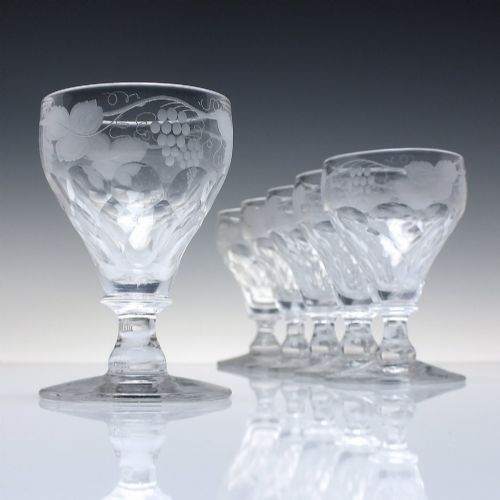
Quality rests upon the crispness of the wheel-cut facets and the depth of the intaglio engraving, where finer pieces display sharp lines without surface ripple. The clarity of the lead crystal and the uniformity across a matched set determine the standing of the work.
Weight and balance distinguish superior vessels, particularly in Georgian and Victorian rummers where thicker bases and well-proportioned stems provide stability. The presence of specialised techniques, such as heavy gilding or complex enamel work, separates standard production from high-end services.
Set of Crystal Goblets Retail Price Guide 2026
Typical asking prices for set of crystal goblets among the pieces listed under this phrase on Sellingantiques today, from the lower quarter to the upper quarter. They describe what is for sale here now, not the wider market.
Listings span from the Georgian era through Victorian, Edwardian, and Art Deco periods, featuring lead crystal, uranium glass, and enamel decoration.
John Walsh Walsh·Stevens & Williams·Baccarat·Saint Louis·Theresienthal·Webb Corbett
The Set of Crystal Goblets Glossary
- Rummer
- A large heavy drinking glass popular in the eighteenth and nineteenth centuries, often featuring a short stem and bucket-shaped bowl. They served for ale, wine, or punch.
- Lemon squeezer foot
- A square, moulded glass base with indented corners resembling a kitchen lemon squeezer, characteristic of Georgian and early nineteenth-century tablewares.
- Intaglio
- A technique where the design is carved into the surface of the glass rather than raised above it, creating frosted recessed details.
- Opaque twist
- A decorative stem formation enclosing fine white or coloured enamel threads twisted within the clear glass rod, seen in eighteenth and nineteenth-century pieces.
- Hock glass
- A tall stemmed vessel traditionally used for German white wine, often featuring coloured glass bowls adorned with enamel or cut designs.
Set of Crystal Goblets: Frequently Asked Questions
How do I clean antique crystal goblets?
Wash these vessels by hand in warm water using mild soap, avoiding sudden temperature changes to protect the material.
Place a towel at the bottom of the sink to cushion the wide foot bases during cleaning.
Can I use these glasses for daily dining?
Many people choose to use these items for special meals, provided they handle the heavy lead crystal and delicate stems with care.
Hand washing remains essential to preserve the engraved details and gold enamel work over time.
How do I distinguish Georgian from Victorian pieces?
Georgian examples often feature heavier lead content, thicker faceted stems, and square lemon squeezer feet. Victorian pieces frequently display naturalistic engraved foliage, cranberry or vaseline colours, and diverse stem styles.
Examining the pontil mark at the base helps determine the manufacturing period and technique.
What is a harlequin set?
A harlequin set consists of matching glass forms in varied colours or subtle pattern differences, assembled to create a vibrant table display.
This approach was common in Victorian households that preferred mixed colour schemes over uniform clear crystal services.