

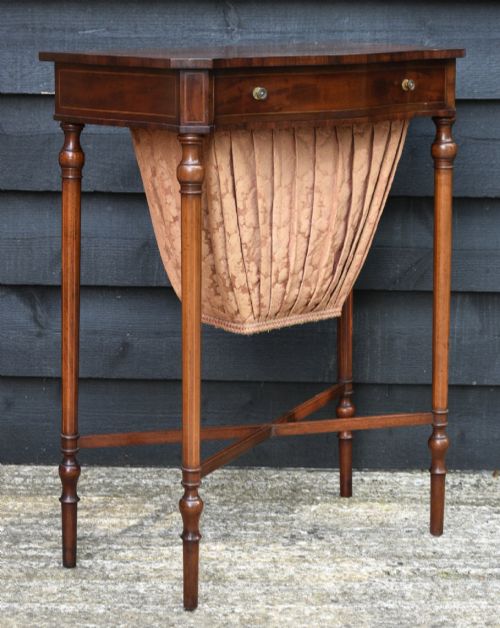
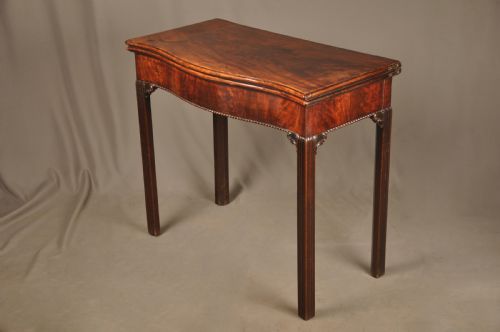
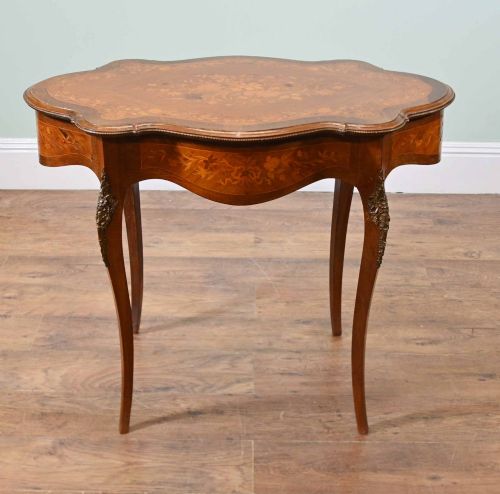
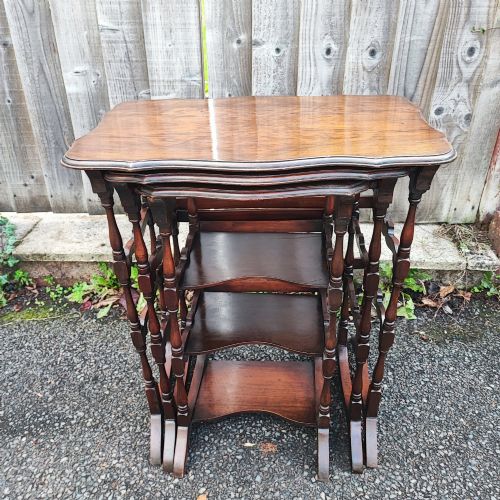
Serpentine Wood Table
A serpentine wood table brings curving lines and rich timbers into a room, offering both practical surface space and a graceful silhouette.
Serpentine Wood Table
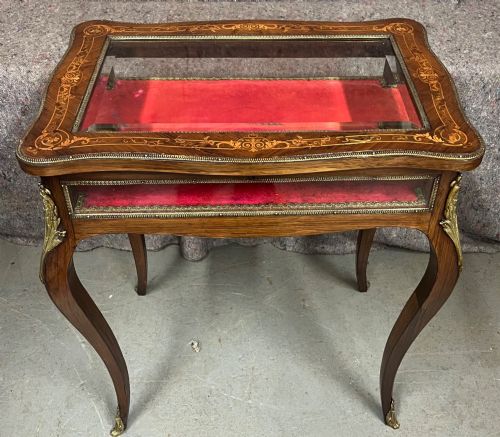
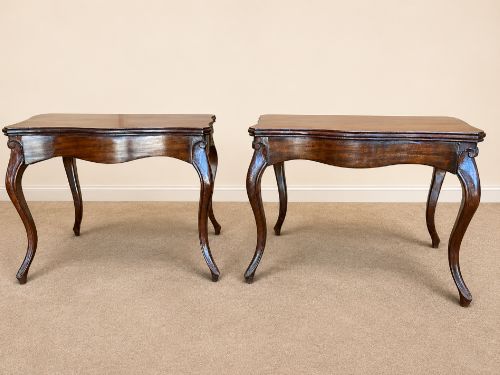
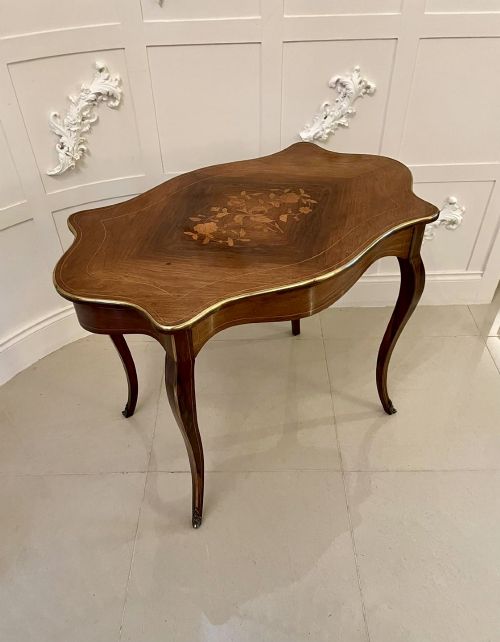
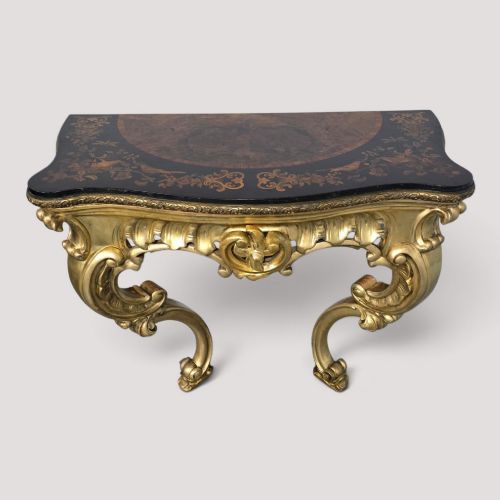
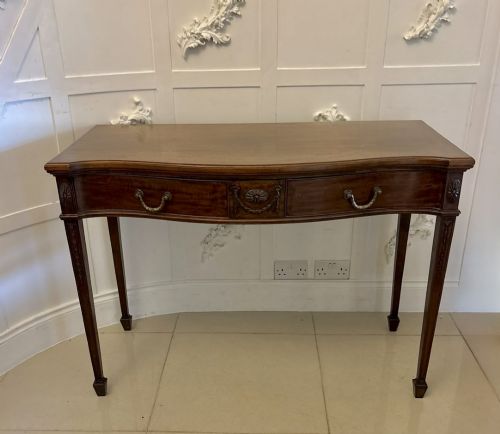
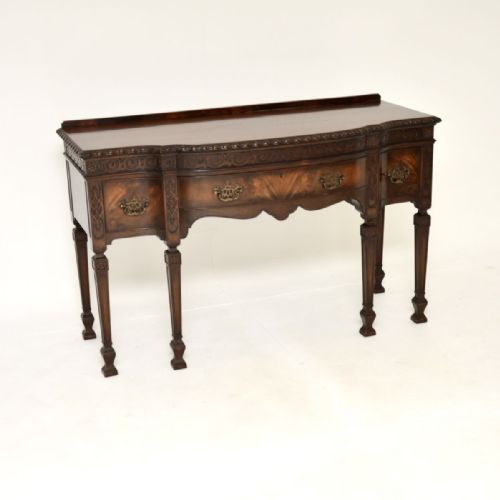
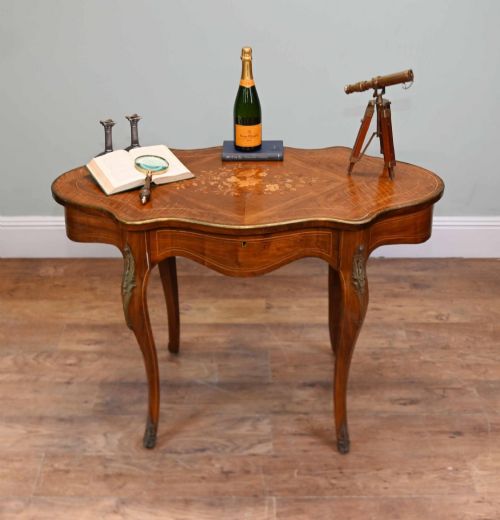
Buyers on this page are most likely to encounter mahogany and walnut examples from the eighteenth and nineteenth centuries, often showing shaped fronts or marquetry inlay. The selection includes French Rococo and Louis XV revival designs alongside traditional British forms.
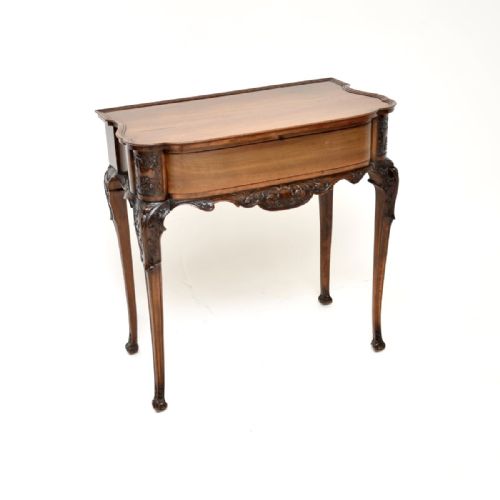
Origins span British workshops and French makers, incorporating sideboards, occasional tables, and occasional lamp tables. Each piece relies on the skill of the cabinetmaker to shape the timber along the characteristic undulating contour.
How they were made
Makers utilised solid timbers and veneers such as mahogany, walnut, burr walnut, satinwood, rosewood, and kingwood over robust carcases. Marquetry inlay, floral details, and cross-banding added decorative contrast to the primary wood.
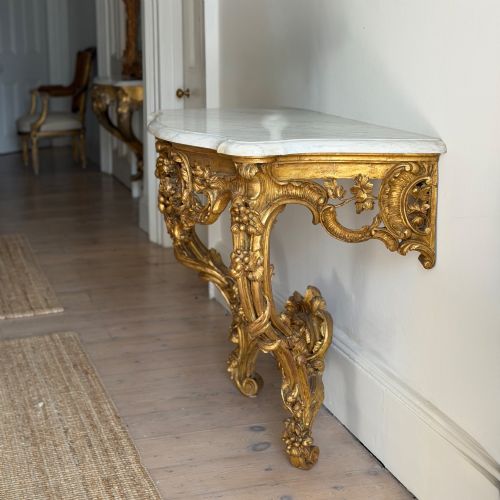
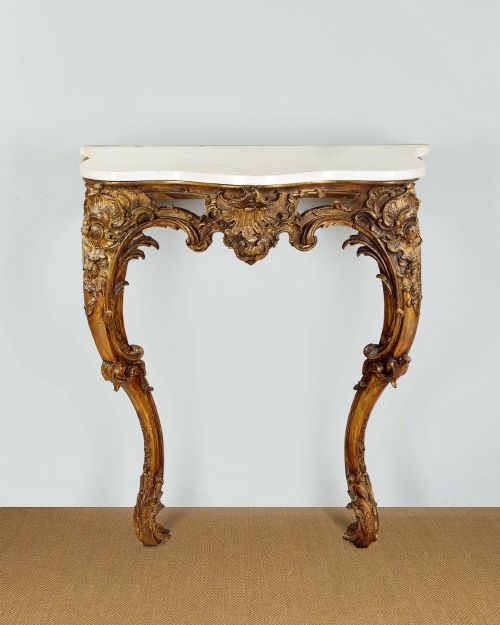
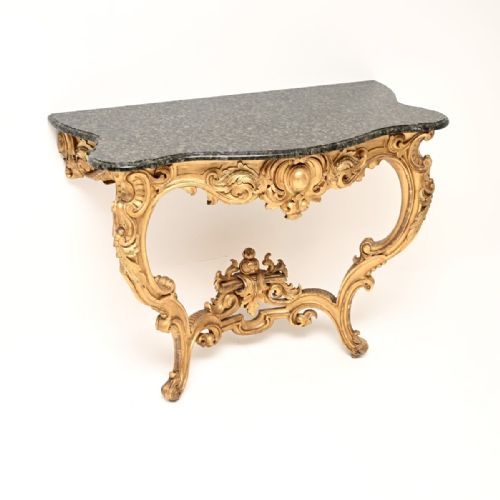
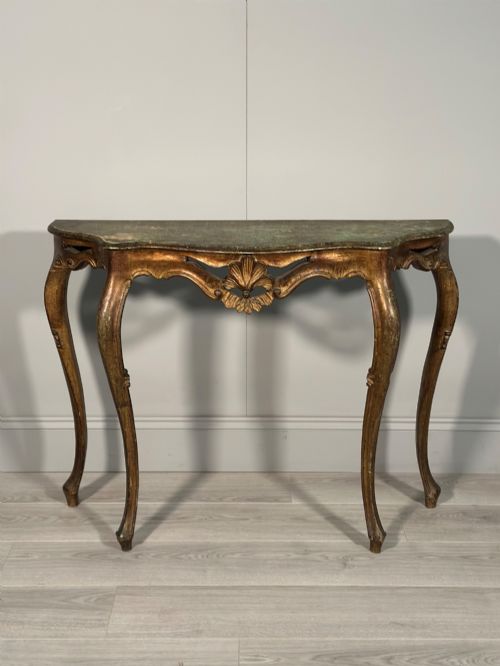
Brass fittings, ormolu mounts, and marble tops frequently accompanied the wooden frames, particularly in French and revival pieces. Carved wooden details on bases and consoles required precise hand-tooling to match the curving lines of the tabletops.
Serpentine Wood Table Retail Price Guide 2026
Typical asking prices for serpentine wood table among the pieces listed under this phrase on Sellingantiques today, from the lower quarter to the upper quarter. They describe what is for sale here now, not the wider market.
Some nineteenth-century walnut tables hide clever folding mechanisms for cards, secretly doubling as games arenas after tea.
What varies in quality
The sophistication of the timber figure and the precision of the marquetry inlay set the finer examples apart from simpler utilitarian pieces. Burr walnut and figured mahogany show greater depth of grain and careful selection by the maker.
The execution of the serpentine curve itself demands high joinery skill, distinguishing fluid, harmonious contours from rigid or blocky shaping. Refined carving on bases, console supports, and card table legs reflects the original workshop's standing.
The Serpentine Wood Table Glossary
- Serpentine
- A furniture front or tabletop shaped with a curving line, convex at the sides and concave in the middle. This contour requires precise cutting and joining of timber.
- Marquetry
- Decorative patterns created by fitting thin pieces of wood veneer and other materials onto a structural surface. It often depicts floral or geometric designs.
- Console table
- A table designed to stand against a wall, frequently supported by wall brackets or ornate legs. These pieces often feature marble tops or elaborate carved decoration.
- Card table
- A folding table designed for gaming or playing cards, usually featuring a hinged top that opens to reveal a baize-lined playing surface.
- Cross-banding
- A narrow strip of veneer laid around the border of a tabletop or drawer front with the grain running perpendicular to the main panel.
Serpentine Wood Table: Frequently Asked Questions
What is a serpentine wood table?
A serpentine wood table is a piece of furniture defined by its curving front edge, which moves inward and outward in a gentle wave.
These tables appear in various forms like card tables, side tables, and desks across Georgian, Victorian, and Edwardian eras.
How do I style a serpentine wood table?
These tables work well against a hallway wall or as a centrepiece in a reception room, where their curving lines soften straight architectural walls.
Pair them with traditional lamps or decorative mirrors to complement the mahogany, walnut, or marquetry surfaces.
What woods were used for these tables?
Cabinetmakers primarily used mahogany and walnut, frequently selecting burr walnut or satinwood for enhanced grain patterns and decorative contrast.
Exotic timbers like kingwood and rosewood also appear alongside brass mounts and marble tops on French and revival pieces.
How do I date a serpentine wood table?
Dating relies on identifying the prevailing style, timber choices, and construction methods characteristic of periods like Georgian, Victorian, or Edwardian.
Eighteenth-century examples often display restrained mahogany craftsmanship, while Victorian and Edwardian pieces frequently incorporate heavier carving or elaborate marquetry.